

Gaspard LEZIN
Chargebacks and Disputes: A Merchant's Prevention Guide
Learn how to prevent chargebacks and disputes with this essential merchant guide. Protect your business in 2026.
Global chargebacks are no longer a back-office nuisance. Mastercard's 2025 benchmark puts disputed and charged-back debit and credit card volume at $34 billion, with global chargebacks projected to reach 261 million transactions in 2025 and 324 million by 2028. That scale matters because a merchant isn't just losing a sale, they're also paying for the dispute itself, and the average U.S. merchant cost is $128 per chargeback when internal work and third-party fees are included Mastercard chargeback research.
The confusing part is that people use dispute and chargeback as if they mean the same thing. They don't. A dispute is the customer's complaint to the issuer, a chargeback is the formal reversal that follows if the issuer moves the money back. That gap is where most merchants lose time, because they wait for the chargeback to land instead of solving the customer's problem while the issue is still soft.
Table of Contents
What Chargebacks and Disputes Actually Are
A merchant can treat a chargeback like a refund with paperwork attached, but that shortcut causes mistakes. The better mental model is a restaurant table complaint, then a formal bank reversal. First, the diner tells the host the meal was wrong. If the issue keeps escalating, the bank steps in and pulls the money back while it investigates.
Dispute first, chargeback second
That sequence matters because the first call is the cheapest moment to solve the problem. Mastercard-linked research says 73.6% of disputes still become chargebacks Heartland on disputes and chargebacks. That means only 26.4% are resolved before the case becomes a formal chargeback, so the pre-chargeback window is the critical point.
Practical rule: If the customer is still talking to support, the case is still salvageable. Once the issuer has formally reversed the funds, you're already in recovery mode.
A lot of merchant teams mislabel every complaint as a chargeback. That creates bad habits. If support, billing, and fulfillment think the only job is to “win” later, they miss the chance to fix descriptor confusion, shipping silence, or refund delays before the bank gets involved.
Why the naming matters
Think of a dispute as a warning light and a chargeback as the tow truck. The warning light doesn't always mean the car is totaled, but if you ignore it, you pay more later. The same thing happens here, because a merchant can often clear up confusion with a fast explanation, a corrected descriptor, or proof that the item is on the way.
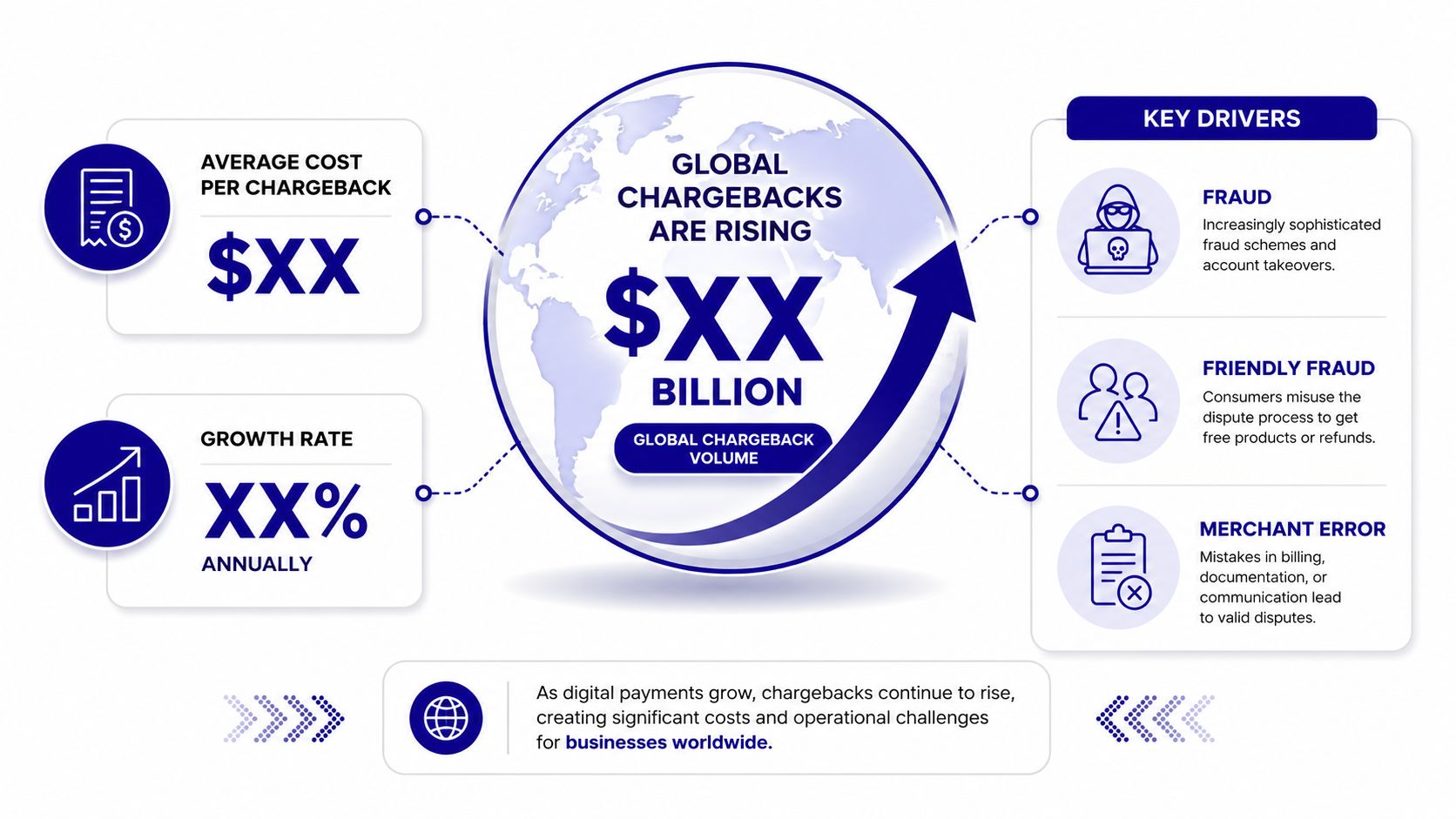
The key takeaway is simple. Disputes are the start of the story, chargebacks are the formal middle, and prevention starts before either one happens. If your team only understands the bank's reversal, you're already late.
How the Dispute Lifecycle Works Step by Step
A chargeback case usually starts with a customer complaint and ends with a bank decision, but the merchant experiences it as a chain of handoffs. Each handoff is a checkpoint where support, billing, or fulfillment can still slow the escalation.
One purchase, six handoffs
Take a $120 digital product sale. The customer contacts the issuer and says the purchase looks wrong. The issuer reviews the complaint, and if it qualifies, the case moves into the formal chargeback flow. Mastercard says the merchant's response window is typically 20 to 45 days after notification, depending on the network rules Mastercard chargeback response guidance.
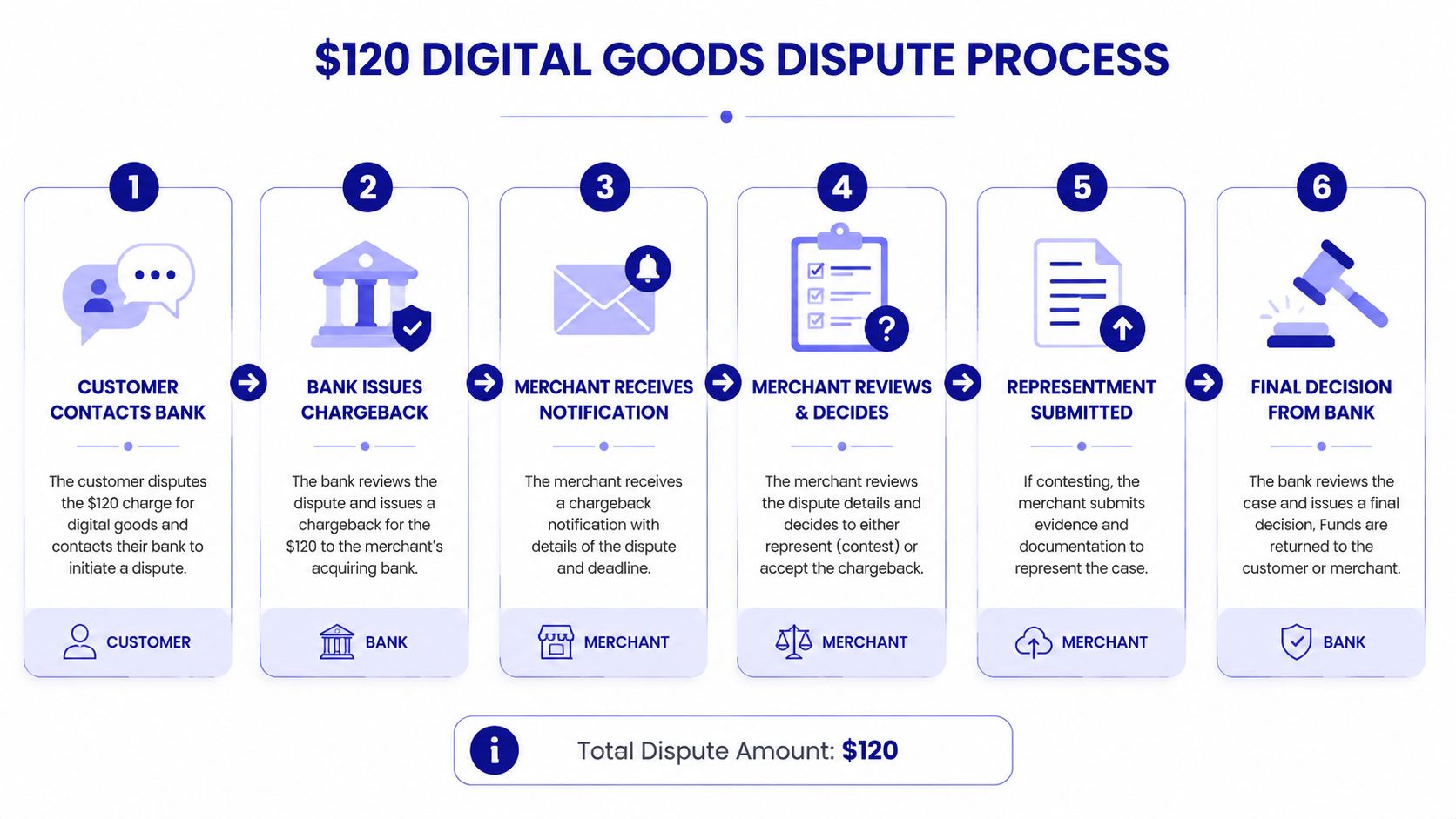
The bank's complaint window and the merchant's rebuttal window run on different clocks. A cardholder may still be inside the filing period while the merchant is already working against a shorter response deadline. That timing gap is why the first reply matters so much.
What happens at each stage
Customer raises the complaint. The issuer hears the issue first, not the merchant.
Issuer opens the formal case. At this point, money can move out of the merchant's control.
Merchant gets notice. This is often the first moment a support team learns the case exists.
Merchant decides. Accept the loss, or send evidence back.
Issuer reviews the response. The documents either close the case or move it further along.
Final decision lands. If the issue keeps moving, the network rules decide the next step.
The merchant's strongest position usually comes from the earliest reply. A clear response can sometimes stop the complaint before it turns into a full reversal, which is why the pre-chargeback window is the critical opportunity. That is also the stage where operations matter most. If the descriptor is confusing, the shipping notice is silent, or the customer cannot recognize the purchase, the case can escalate before anyone reaches the formal rebuttal stage.
A payments team should treat that early window like a phone call before a tow truck arrives. Once the bank has taken over, the merchant is already in recovery mode. If you want a practical example from another industry, see Logivo's invoice dispute guide.
The Real Cost of a Chargeback to Your Business
The refund amount is only the visible part of the loss. Mastercard's 2025 analysis says the average U.S. merchant cost per chargeback is $128, made up of $82 in internal costs and $46 in third-party fees Mastercard cost analysis. That still leaves out the lost product, the time your team spends gathering proof, and the drag on your operations calendar.
The hidden bill behind each case
The internal side is usually what people underestimate. Someone has to read the notice, pull transaction records, check delivery, answer support threads, assemble evidence, and decide whether the case is even worth fighting. The external side is easier to spot, because fees show up on account statements, but the labor burden usually costs more in real life than teams expect.
Practical rule: A chargeback you win can still be an expensive win. Recovery doesn't erase the time cost, the fee cost, or the distraction cost.
That's why win rate can be a misleading KPI. A team can boast about recovery while still bleeding time and fees on cases that should have been stopped earlier. The stronger question is whether the business is reducing the number of disputes that ever need a formal answer.
What to compare before you fight
When a case lands, compare three things before you spend hours on it:
The disputed amount, because tiny cases rarely justify long manual work.
The evidence strength, because weak records usually lead to wasted effort.
The repeat pattern, because the same complaint often points to an operations issue, not a one-off fraud event.
If your business handles invoices or recurring billing, Logivo's practical invoice dispute guide is useful because it shows how much of the problem can be solved by clearer billing communication before a case hardens into a formal dispute, and it's a good companion read for merchant ops teams: Logivo's invoice dispute guide.
The main shift is simple. Don't ask only whether you can win. Ask whether the case should have existed at all.
Evidence That Wins Representment Cases
Strong evidence is boring evidence. It doesn't sound emotional, and it usually doesn't try to argue that the customer is unreasonable. It shows what happened, when it happened, and how the merchant fulfilled the order.
Build the file from the transaction outward
The most useful records are the ones tied directly to the sale:
Transaction data, including the timestamp and authorization trail.
Delivery proof, especially tracking, delivery confirmation, or service completion logs.
Customer communication, including refund discussions, support replies, and complaint history.
Billing details, especially the descriptor the cardholder saw.
Identity or device signals, when they help connect the purchase to the buyer.
A screenshot of a delivered package beats a vague policy page almost every time, because it addresses the actual claim. If the issue is “I never got it,” proof of shipment is more persuasive than a general promise to ship quickly. If the issue is “I don't recognize this,” a clear billing descriptor matters more than a long explanation written after the fact.
Emotional rebuttals usually lose
Merchant teams often waste time writing defensive stories. That rarely helps. Banks want records that map to the reason for the dispute, not frustration from the business side.
The strongest representment package answers one question fast, “What record proves this exact customer's claim is wrong?”
For compliance-heavy merchants, the documentation discipline behind this overlaps with broader recordkeeping practices. Suby's compliance documentation guidance is relevant here because the same habit, keeping clean records early, also makes dispute defense far easier later.
A winning package doesn't need drama. It needs order, consistency, and evidence that a human reviewer can follow in seconds. If the evidence folder feels chaotic on your side, it will feel weak on the issuer's side too.
Why Most Disputes Start With Operations, Not Fraud
A chargeback often begins before anyone in your team thinks about fraud. The customer may be confused by the descriptor, waiting on a shipment, or frustrated by a slow refund reply, and those are usually operations and support problems first.
Small fixes remove a lot of noise
Clearer merchant information can reduce dispute volume because customers are less likely to ask the bank what a charge was Disputely on disputes and chargebacks. The same source says better delivery tracking can cut non-delivery disputes by about 25%. Those are basic controls, not special projects.
The pattern is easy to miss. A customer who does not recognize a charge often contacts the bank before they contact you. A customer waiting on a package with weak tracking does the same. If support replies slowly, the complaint hardens, and by the time the notice arrives, the customer has already moved the issue out of your control.
Who should own prevention
Fraud teams should handle fraud checks. Operations teams should handle descriptors, fulfillment updates, and refund clarity. Support should answer quickly enough that the customer feels heard. Those functions overlap, and when a merchant treats them as separate silos, the gaps end up costing money.
A useful way to sort the problem is by layers. Recognition sits at the front. Fulfillment sits behind it. Fraud sits behind both. If the first two layers are unclear, the same dispute pattern keeps coming back, even when fraud is not involved.
For teams that want a fraud-focused companion to this topic, the payment fraud overview helps separate true fraud controls from general dispute hygiene. That split matters, because many complaints are really service or communication failures that happen to surface through the card network.
Dispute prevention belongs to the whole business. If the customer cannot recognize the charge, cannot track the order, or cannot get a clear answer, the bank becomes the easiest place to complain.
Timing, Deadlines, and Window Math You Cannot Ignore
A chargeback can start like a customer service issue, then turn into a deadline problem before anyone on your team notices. The customer and the merchant operate on different timelines, and the bank's clock often starts running before your internal review is done.
The two windows are different
Cardholders generally have 120 days to dispute a transaction, though the exact start point depends on the network and the dispute type Chargeback Gurus on time limits. Merchant response deadlines are usually much shorter, and they are measured from the moment the merchant is notified. Mastercard's response guidance puts that window at 20 to 45 days after notification. Boulevard's support documentation also notes that consumer dispute windows commonly run up to 120 days from purchase, depending on the card brand.
A missed detail here creates a bad habit. Teams wait for the notice, then wait for the next meeting, then ask support to dig for files. By then, the merchant's answer window may already be closing. “I just got it yesterday” does not help if the clock started earlier.
Common Card Network Dispute and Response Windows | Customer Filing Window | Merchant Response Window |
|---|---|---|
Visa | Commonly up to 120 days from the processing date, with some shorter cases | Often 30 days after the chargeback moves forward, Chargeback Gurus on time limits |
Mastercard | Commonly up to 120 days, with some shorter cases | Often 45 days to respond, Chargeback Gurus on time limits |
American Express | Commonly up to 120 days, depending on the issue | Often 20 days to respond, Chargeback Gurus on time limits |
Discover | Commonly up to 120 days from the processing date | Often 30 days to respond, Chargeback Gurus on time limits |
The working habit that protects you
Treat day one as evidence collection day. Save the order record, shipping details, support logs, and the exact descriptor the cardholder saw. If your team has to reconstruct the story later, you have already spent time you cannot get back.
A merchant also needs a rule for monitoring. The Visa acquirer monitoring program overview is useful because it shows how repeated dispute activity can draw attention at the network level, which makes timing discipline part of basic operations rather than a last-minute response task. That same discipline also helps when a case involves a charge card, and the Receipt Router guide to charge cards is a useful refresher for merchants that need to separate billing behavior from ordinary card flow.
The cleanest rule is simple. The filing window belongs to the cardholder, the rebuttal window belongs to the merchant, and both deadlines run on their own schedule.
How Suby Helps Merchants Handle Disputes
Suby is payment infrastructure for the global internet economy. It lets businesses accept payments by card or crypto through one API, offers native integrations with Discord and Telegram for subscriptions and paid access, and lets merchants settle to a bank account or in stablecoins like USDC depending on what they choose. That gives the business one payment layer to work with, instead of stitching together separate tools for checkout, delivery, and payout tracking.
One payment record, fewer loose ends
A dispute is easier to handle when the original transaction record is complete. If a checkout, paylink, or invoice lives in one system, the merchant can keep the method, timestamp, customer details, and fulfillment trail together instead of hunting through different dashboards. That matters because the first question in any case is usually simple, did the customer recognize the charge, and can you prove what happened?
Suby's official documentation also states that it is PCI-DSS Level 1-certified and SCA-supported, and that it includes dispute handling as part of the product stack. Pricing depends on the payin method used, so there isn't a single flat rate, and the pricing page is the right place to check exact figures before you choose a flow Suby pricing.
A practical response pattern
A merchant can use a simple sequence.
First contact. Reply fast and solve the underlying complaint if you can.
Pre-chargeback stage. Pull the order record, delivery proof, and customer messages together.
Formal chargeback. Submit the evidence package only if the math and the records justify it.
Escalation. Consider further action only when the disputed amount and the evidence quality make the next step sensible.
That sequence matters because the dispute problem usually starts before the bank opens the case. If the customer cannot recognize the merchant name, if the receipt is unclear, or if the support handoff breaks down, the fight begins in operations. By the time the chargeback lands, the merchant is already answering a question that should have been fixed earlier.
For a parallel example outside card payments, Receipt Router's charge card guide is useful because it shows how billing clarity and payment wording can reduce confusion before a dispute starts. The same idea applies here, clarity in the customer-facing record does more work than a late-stage argument.
Suby's role here is straightforward. It gives merchants a single payment layer for cards and crypto, plus settlement choices that fit the business. In dispute work, fewer moving parts usually means fewer missing records.
A Practical Prevention and Response Plan
The best chargeback plan is not a legal memo. It's a set of habits your team can follow on a busy week. Prevention comes first, because once the issuer opens the case, your options narrow fast.
Three tiers of action
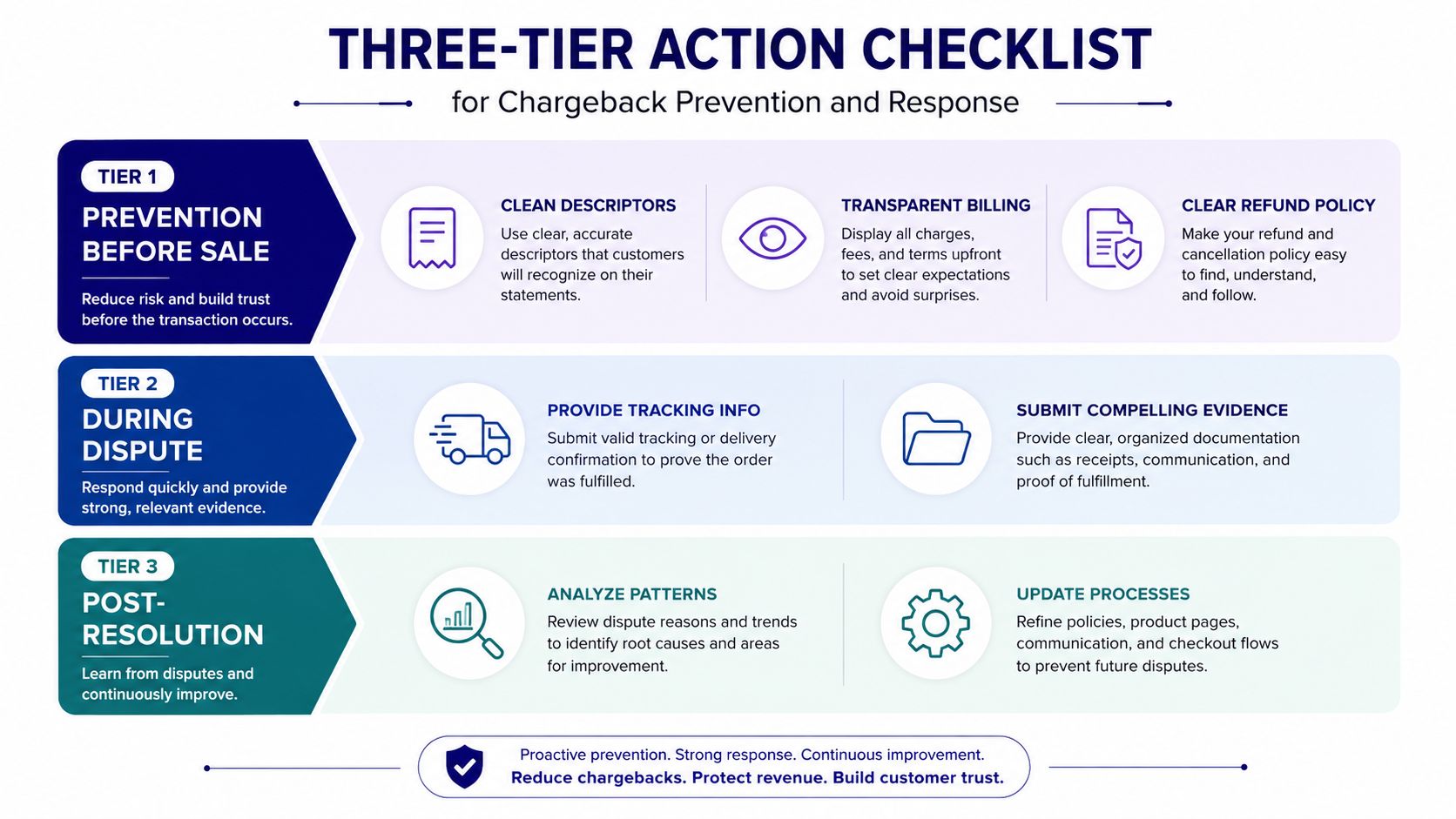
Before the sale. Clean up descriptors, make refund terms easy to find, and keep shipping expectations honest.
During the dispute window. Answer the customer quickly, share tracking or fulfillment proof, and fix confusion before it reaches the bank.
After a chargeback arrives. Assemble records, file only when the evidence is strong, and learn which products or policies keep generating the same complaint.
What to inspect every week
Look at the last batch of disputes and ask which ones were avoidable. If a charge says the customer didn't recognize the merchant, the fix is probably billing clarity. If the complaint is missing delivery confirmation, the fix is probably shipping communication. If the same issue repeats, the problem is almost always in operations before it's in fraud.
For teams building a stronger support layer, the e-commerce customer support guide is a useful companion because faster, clearer support is often what stops a complaint from turning into a formal reversal.
The mindset shift is simple. Don't wait to become good at disputes after the money is already gone. Build the records, the response habit, and the customer communication flow now, and you'll have fewer cases to fight later.
If you want a single payment stack that can accept cards or crypto, route payments into a bank account or stablecoins, and keep dispute records easier to manage, take a look at Suby. It's built for businesses that want customers to pay how they prefer while the business receives funds the way it wants.
