

Gaspard LEZIN
Where to Sell Digital Products for Free: 10 Options
Compare where to sell digital products for free, including creator platforms, marketplaces, paylinks, fees, trade-offs, and setup tips for 2026.
Where should you sell a digital product if “free” only means free before the first customer pays?
That question exposes the main weakness in most guides to where to sell digital products for free. A platform can waive monthly fees while taking a transaction fee, revenue share, payment-processing charge, or control over the customer relationship. Your best choice depends on what you sell, whether you need built-in discovery, how much tax and compliance work you want to handle, whether you need recurring billing, how much storefront control matters, and whether you can bring your own audience.
The market is large enough to support different selling models. The global digital goods market was valued at USD 124.32 billion in 2025 and is projected to reach USD 511.43 billion by 2031, with a projected 26.60% CAGR, according to Mordor Intelligence's digital goods market analysis. Buyers already pay for digital access regularly, with 68% of internet users aged 16 and older paying for digital content monthly, according to Whop's digital product statistics.
Below are ten practical options, organized around real selling situations. You'll find fast creator storefronts, specialist marketplaces, software billing platforms, subscription publishing tools, and direct payment infrastructure. No single option is best for every product, so choose based on how demand will reach you and what you want to manage yourself.
Table of Contents
1. Lemon Squeezy
Lemon Squeezy is the strongest choice for software licenses, subscriptions, and one-time digital products when you want a Merchant of Record to handle operational complexity. It provides a hosted storefront and embeddable checkout, while its Merchant of Record model handles sales tax, VAT, and GST responsibilities across relevant markets. It also supports fraud controls, chargebacks, buyer support, license management, and digital-file delivery through one selling flow.
That setup matters for software sellers. You can sell a license, manage access, and offer recurring billing without assembling several separate services. Buyers receive digital products quickly, and you can use a no-code storefront if you don't need a fully custom commerce stack. For creators comparing the best platforms for selling digital products, Lemon Squeezy sits closer to software commerce than to a social tip page.
Best fit and trade-offs
The platform has no monthly fee, but sellers pay per transaction. That makes the entry point accessible, while the transaction cost can feel substantial on inexpensive products or small software add-ons. Lemon Squeezy also offers less built-in marketplace discovery than creator marketplaces, so you'll usually need to bring visitors through content, email, partnerships, or paid acquisition.
Practical rule: Choose Lemon Squeezy when tax handling and license operations matter more than marketplace traffic.
Its best use case is a software business with international customers, recurring plans, or a product that needs license administration. It's less compelling for a simple low-priced printable where a lightweight creator storefront may leave you with a better total margin.
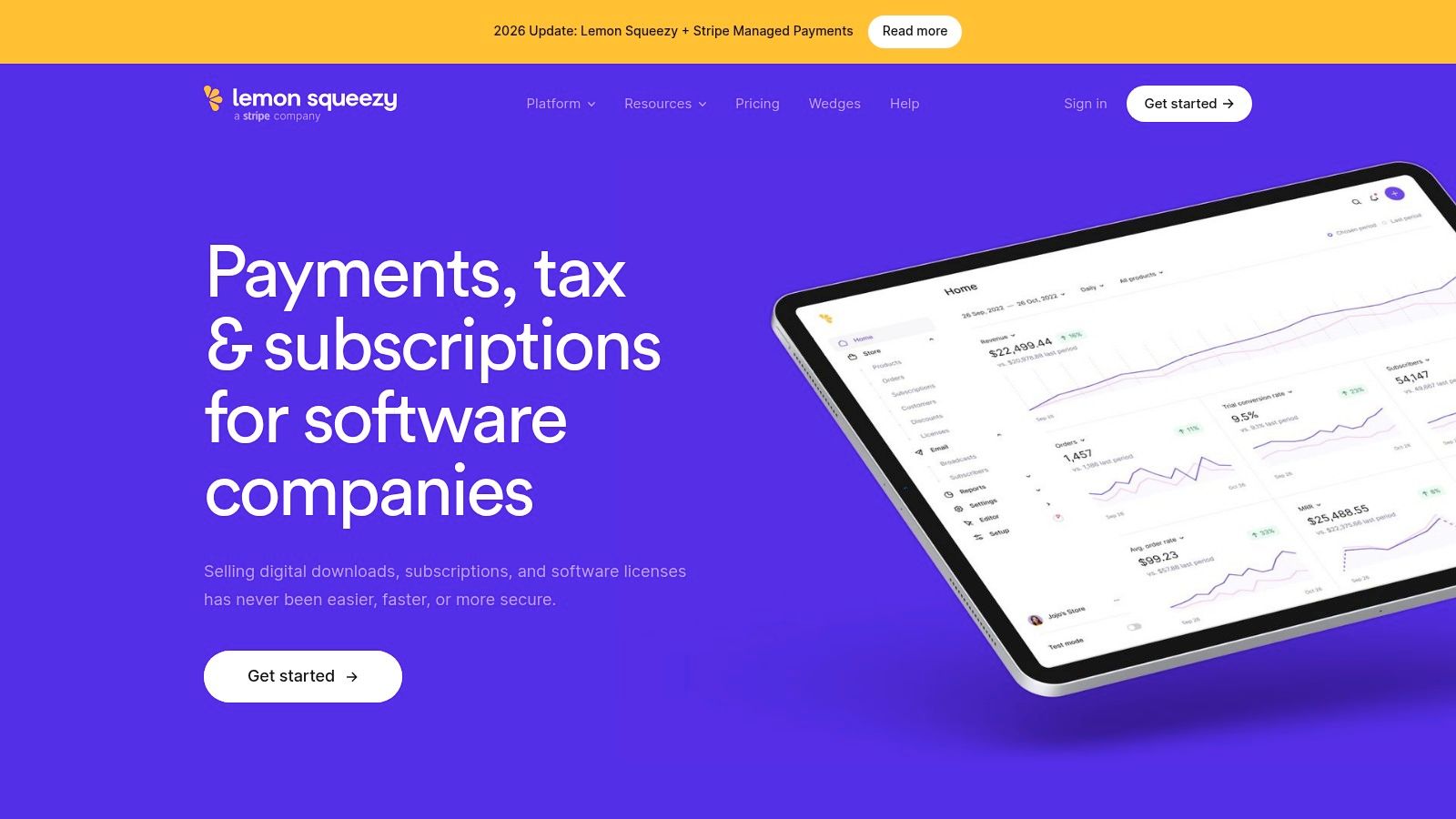
Visit Lemon Squeezy if you want a hosted software checkout with Merchant of Record support and no monthly platform commitment.
2. Paddle
Paddle is built for SaaS companies and software businesses that need more than a basic download page. It combines checkout, subscription billing, invoicing, tax compliance, refunds, buyer support, and payment operations under a Merchant of Record model. That can reduce the legal and administrative work involved in selling software across borders.
Its billing tools are the main reason to choose it. Paddle supports trials, metered billing, dunning, proration, upgrades, downgrades, multi-currency pricing, and analytics. These features suit products where customers change plans, usage varies, or failed payments need structured recovery. A solo creator selling a single ebook may find the platform more elaborate than necessary, but a growing software company can use the additional billing controls.
Choose billing depth over simplicity
Paddle doesn't charge a monthly platform fee, but its per-sale pricing includes a fixed USD 0.50 component, which can weigh more heavily on small-ticket products. The right comparison isn't just “free plan versus paid plan.” You should estimate the total cost of your typical order value, refunds, recurring renewals, and support requirements.
A software company can justify that cost when Paddle replaces separate tax, invoicing, subscription, and payment workflows. A creator selling inexpensive templates probably can't.
Go to Paddle when international SaaS billing, tax compliance, and subscription management are central to the business.
3. Gumroad
Gumroad remains one of the fastest routes for selling ebooks, design files, music, courses, memberships, and other downloadable products. You create a product page, upload the files, connect the checkout, and share the link. The hosted experience means you don't need to build a separate store before testing demand.
The platform also supports subscriptions and memberships, file hosting, instant delivery, and an optional Discover marketplace. That marketplace can help your product reach buyers beyond your existing followers, although discovery-based sales carry a higher take rate than sales you generate yourself. Gumroad has also operated as a Merchant of Record since January 1, 2025, according to the product positioning supplied for this comparison, which can reduce some seller-side tax administration.
Fast launch, limited control
Gumroad's main advantage is speed. It works especially well when you already have an audience on a newsletter, social profile, YouTube channel, or personal site and need a reliable product link quickly. The trade-off is customization. You get fewer storefront controls than with a full commerce builder, and the platform's economics become more important as your catalog grows.
This guide to selling digital products online is useful context if you're still deciding whether a hosted checkout or a more independent store suits your audience.
Gumroad is a clear recommendation for creators who value low setup effort and hosted delivery. Review the current fee schedule before launching, especially if your products are inexpensive or you expect to use Discover heavily. Start at Gumroad.
4. Payhip
Payhip is the best all-purpose pick for creators who want a proper storefront without paying a subscription upfront. Its free plan includes core selling features, and the platform supports unlimited products and revenue. You can sell downloads, courses, coaching, memberships, and physical products from one hosted store.
The store builder offers themes and product pages, while additional tools cover coupons, email marketing, affiliates, and tax workflows for EU and UK VAT. That combination gives Payhip more merchandising depth than a simple link-in-bio page. It also makes the platform suitable for a creator whose catalog may expand from one PDF into courses, bundles, memberships, or coaching.
Watch the combined cost
The free tier applies a 5% platform fee, and payment processors add their own charges. Payhip relies on PayPal and card processing through Stripe, so you need to evaluate the combined platform and processor cost rather than treating the free plan as costless. Your payout setup also depends on maintaining the connected payment accounts.
Payhip works best when you want control over your store but don't want to pay a monthly subscription while validating the business. It gives you room to create a more complete customer journey, including offers, discounts, affiliate promotion, and follow-up email.
The downside is that marketplace discovery isn't the product's central strength. You'll need to drive traffic through your audience, search content, partnerships, or social channels.
Visit Payhip if you want a flexible, free-to-start storefront with unlimited products and a visible platform fee on the free plan.
5. Ko-fi
Ko-fi suits creators who want to combine tips, digital downloads, commissions, and memberships on one lightweight page. It works particularly well for artists, writers, developers, educators, and online personalities who already communicate with followers through social platforms.
Its Shop supports digital downloads, while one-time donations and memberships give your audience more than one way to support you. Posts, updates, audience messaging, and basic analytics help turn the page into a modest creator hub rather than a standalone product catalog. Setup is quick, and you don't need a monthly subscription to start selling.
A useful companion to social content
Ko-fi's model is simple. The free plan uses a 5% service fee, making it easy to understand before payment-processing costs. That clarity helps when you're testing small digital items, but the platform doesn't offer the same storefront control as a full e-commerce system.
Discovery is also limited compared with large marketplaces. Ko-fi works best as the destination behind a social profile, livestream, newsletter, or community. Your audience finds you elsewhere, then uses Ko-fi to tip, buy a file, commission work, or join a membership.
A lightweight shop is valuable when your audience already knows where to find you.
Choose Ko-fi for a personal brand with varied support options, not for a large catalog that depends on category search. It's a strong starting point for small digital products and recurring creator support. Set up your page at Ko-fi.
6. Buy Me a Coffee
Buy Me a Coffee is designed for quick creator monetization through social links. Its page combines one-off support, memberships, and a Shop for digital downloads called Extras. If your main sales channel is a profile link, newsletter footer, livestream description, or community post, you can get a simple offer in front of your audience without building a full storefront.
The platform has no required monthly cost and uses a 5% platform fee. Its creator page and payout tools keep the operating model easy to understand, while the Extras feature handles digital downloads. This makes it suitable for a small collection of guides, presets, printables, sound files, or other compact products.
Choose speed over merchandising
Buy Me a Coffee isn't built for deep catalog management. Store design and customization are limited, and you won't get the same merchandising depth as a dedicated storefront. It also isn't a discovery-led marketplace, so the platform won't solve an audience problem by itself.
That limitation is useful if you don't want to spend time designing a store. You can treat the page as a conversion destination and keep your main brand, content, and community elsewhere. The product is a practical companion to an existing social presence, rather than a complete commerce operation.
Pick Buy Me a Coffee when you need a simple page for support, memberships, and a few digital downloads. Choose another platform if you need a polished catalog, advanced product organization, or marketplace search.
7. itch.io
itch.io is the clear specialist choice for indie games, game assets, development tools, and experimental digital projects. Its audience already understands digital downloads, early access, bundles, community pages, and creator-led releases. That context gives game makers a better fit than a general creator storefront.
The platform uses an open revenue-share model. Creators choose the percentage they give to itch.io, which provides more control than a fixed marketplace commission. You can also use pay-what-you-want pricing, bundles, pre-orders, early access, embeddable widgets, and community pages.
Use the audience that understands your format
The trade-off is reach outside the indie game ecosystem. itch.io has a focused audience, not a general-purpose buyer base for every kind of digital product. Payment-processing and payout costs can also vary depending on the route used, so creators need to review the final settlement economics.
itch.io works especially well when community participation matters. A game developer can publish a playable build, collect feedback, update the product, and use bundles or flexible pricing to encourage discovery. An artist selling generic business templates would be better served by a broader design marketplace or creator storefront.
The platform also gives creators unusual control over the relationship between product price and platform share. That doesn't eliminate fees, but it lets you make a deliberate decision about how much the marketplace earns from each sale.
For games and game-adjacent products, start with itch.io. Its niche audience and flexible revenue-share model match products that benefit from community discovery and ongoing releases.
8. Bandcamp
Bandcamp is the right platform for musicians and labels selling albums, tracks, subscriptions, and merchandise. It isn't a general digital-product store, and that focus is its advantage. Music buyers already understand the storefront format, artist pages, downloads, physical merchandise, fan subscriptions, and name-your-price releases.
Artists can sell digital music and physical products together, distribute download codes, and communicate with fans. Built-in discovery and editorial features can help musicians reach listeners who aren't already on an artist's mailing list. The platform also provides analytics that help artists understand purchasing behavior and fan engagement.
The product category decides the winner
Bandcamp's marketplace context makes it unsuitable for ebooks, templates, courses, or software. It also uses revenue sharing and payment-processing charges, so low-priced tracks need careful pricing. A name-your-price model may expand access, but it can also make average order value less predictable.
For an independent musician, the platform offers a more natural buying environment than a generic download service. A listener can discover an artist, purchase a release, subscribe for ongoing access, and buy merchandise without leaving the artist's page.
Choose Bandcamp if music is the product and discovery among music buyers matters. Don't use it as a general answer to where to sell digital products for free, because its tools and audience are intentionally music-first.
9. Substack
Substack is best for recurring editorial content, including paid newsletters, podcasts, video, and member-only posts. It combines publishing, audience communication, subscription billing, and discovery, so you can build the product and its distribution channel in the same environment.
Free publications don't incur a platform fee, while paid subscriptions carry a 10% platform fee, plus Stripe processing charges. Paid plans can use monthly and yearly tiers, although Substack's minimum paid subscription price is USD 5 per month or USD 30 per year, according to the supplied product details. Those thresholds make it better suited to ongoing content than to a low-priced one-off download.
Publishing is the storefront
Substack's Notes and network features can help readers discover publications, but the platform is still primarily a publishing environment. Its value comes from regular posts, podcast episodes, videos, and member-only access rather than a broad product catalog.
This overview of creator monetization platforms helps frame the central choice. A recurring content business needs publishing cadence, subscriber communication, and retention workflows, not just a payment button.
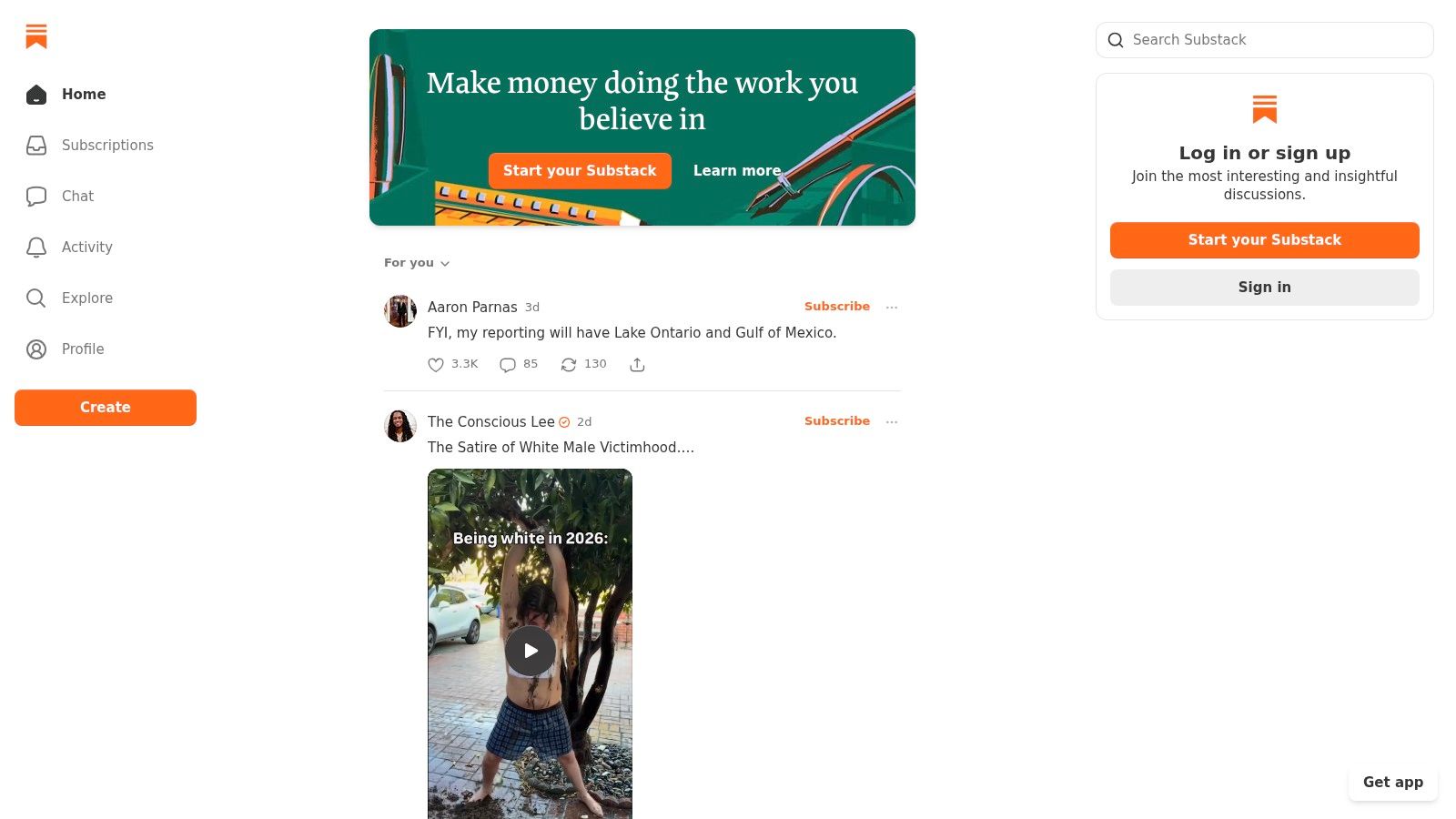
Use Substack when the product is a publication and your revenue depends on continuing subscriber value. Choose a storefront instead when you mainly sell files, licenses, or standalone courses.
10. Envato Market
Envato Market is a strong choice for themes, plugins, code, video, audio, templates, and other creative assets. Its network includes specialized destinations such as ThemeForest and CodeCanyon, giving sellers access to category search and buyers who are already looking for production-ready assets.
Authors can set prices in many categories, publish updates, provide support, and benefit from the network's taxonomy. That built-in buyer intent is the main reason to accept marketplace economics. You don't need to create every customer visit through social content or search marketing.
Discovery comes with a large margin trade-off
Envato Market has a high author fee. The supplied comparison lists the author fee at 50% as of 2026, so you should model that deduction before choosing the platform. The marketplace can provide demand at scale, but sellers compete directly with other products and often need to maintain documentation, compatibility, updates, and customer support.
Margin check: A free listing isn't cheap if the marketplace takes half of the sale and your product needs ongoing support.
Envato is most useful when net-new discovery matters more than maximum margin or full audience ownership. It's a particularly natural fit for developers and designers whose customers search by asset type, software compatibility, or creative category.
List on Envato Market when category search and access to buyers outweigh the cost of a high revenue share. For an audience-led creator business, a direct storefront may produce better long-term control.
Top 10 Free Platforms to Sell Digital Products, Comparison
Platform | Business model / Primary offering | Core features | Target audience | Pricing model / note | Unique selling point |
|---|---|---|---|---|---|
Lemon Squeezy | Merchant of Record checkout & storefront | No-code storefront, embeddable checkout, subscriptions, license management, instant digital delivery | Creators & software sellers | No monthly fee; per-sale pricing | MoR that offloads tax/compliance and buyer ops |
Paddle | Merchant of Record billing platform | Subscriptions, trials, metered billing, dunning, invoicing, analytics | SaaS and software vendors | No monthly platform fee; per-sale fees (includes fixed $0.50 component) | Mature SaaS billing + MoR tax/invoicing handling |
Gumroad | Creator storefront & checkout (MoR since 2025) | Hosted product pages, subscriptions, file hosting, optional marketplace Discover | Solo creators selling downloads, courses, memberships | No monthly fee; pay when you sell | Very fast setup with optional discovery channel |
Payhip | Hosted storefront for digital & physical goods | Store builder, EU/UK VAT tools, PayPal & Stripe support, coupons, affiliates | Creators selling downloads, courses, memberships, merch | Free Forever plan available; platform fees on free/Plus tiers; relies on Stripe/PayPal | Free plan + unlimited products on all plans |
Ko-fi | Lightweight creator tipping/shop platform | Shop for digital downloads, one-time donations, memberships, posts, basic analytics | Creators accepting tips and small digital sales | No required monthly fee to start; 5% service fee model | Simple, quick-to-launch lightweight shop |
Buy Me a Coffee | Tip-first creator platform with Shop | Tips, memberships, simple Shop (Extras), creator page | Social-first creators seeking quick monetization | No monthly cost; 5% flat platform fee | Extremely fast setup optimized for social links |
itch.io | Indie game marketplace & hosting | Open revenue share, pay-what-you-want, bundles, pre-orders, embeddable widgets | Indie game developers and asset creators | Creator-controlled platform revenue share; payout varies by route | Creator sets platform percentage (open revenue share) |
Bandcamp | Music-first marketplace and store | Digital music downloads, merch, fan subscriptions, download codes | Musicians and labels | Revenue share + processor fees affect payouts | Strong discovery and industry-focused audience for music |
Substack | Publishing platform with paid subscriptions | Paid subscriptions, podcasts/video support, member posts, analytics | Writers and podcasters selling subscriptions | 10% platform fee on paid subscriptions + Stripe processing fees | Integrated publishing + payments with built-in discovery/network effects |
Envato Market | Large digital asset marketplace network | Author-driven item listing, updates/support system, category search | Theme, template, code, and asset authors | No monthly fee; authors pay a sales cut (high author fee noted) | Massive buyer audience and category-specific marketplaces |
Choose the Lowest-Total-Cost Selling Path
The cheapest platform isn't the one with the lowest advertised monthly price. It's the option that leaves your business with the right margin after platform fees, revenue share, payment processing, refunds, delivery, support, and compliance work.
Start with the product. Choose Bandcamp for music, itch.io for games and game assets, and Envato Market for themes, code, and creative assets when marketplace discovery is central. These platforms place your product where buyers already search, but you accept category competition and a share of each sale.
Choose a creator storefront when speed and simplicity matter. Gumroad is direct and quick for downloads, Payhip gives you more store and marketing controls, Ko-fi combines products with tips and memberships, and Buy Me a Coffee works well as a social-link destination. These tools are practical when you already have an audience and can send people to your checkout.
A Merchant of Record makes more sense when taxes, billing, refunds, and international operations create the burden. Lemon Squeezy fits software licenses and recurring digital sales, while Paddle is better for SaaS businesses with trials, usage-based billing, plan changes, dunning, and more advanced subscription operations.
Use a publishing platform when the product is recurring content. Substack connects publication, subscriptions, member-only posts, podcasts, video, and discovery. It isn't the best choice for a standalone download because its workflow is built around ongoing reader value.
Compare the full operating model
Before you choose, compare these areas:
Upfront cost: Confirm whether the platform has a monthly subscription, an upfront charge, or a free starting tier.
Transaction cost: Separate platform fees from payment-processing fees. A stated platform percentage may not include processor charges.
Revenue share: Marketplace commissions can exceed the cost of a lightweight storefront, but marketplaces may supply discovery you'd otherwise need to buy or build.
Delivery: Check whether the platform hosts files, manages license access, gates courses, or requires an external delivery tool.
Subscriptions: Confirm support for recurring payments, trials, upgrades, downgrades, failed-payment recovery, and member access.
Audience ownership: Determine what customer data you can export and how much of the relationship remains inside the platform.
Support and compliance: Decide whether you want to manage tax obligations, refunds, disputes, and buyer support yourself or pay for a managed model.
For direct sales, evaluate Suby as one product with four ways to use it. Suby Payments is an API-first payment stack for accepting card and crypto payments through one checkout. Suby Crypto is a crypto payment gateway that handles the swap, sponsors gas, and settles to a non-custodial wallet or the Suby balance. Suby Gating provides paid access for Discord, Telegram, downloads, and courses. Suby Invoicing lets clients choose how to pay while the business chooses how to receive funds.
Suby provides an API that lets any business accept payments by card or crypto. It also offers native integrations with Discord and Telegram for subscriptions, paid access, and online communities. Customers can pay by card, wallet, bank, or crypto, while the business can choose to receive funds through a bank account or in stablecoins such as USDC, subject to the official documentation. One possible flow is a customer paying by card while the business receives USDC, but that's only one settlement option.
Suby pricing depends on the payment method used, not one universal flat rate. The official documentation lists cards at 4% + USD 0.40 per successful transaction, crypto at 1.5% per transaction, and bank or stablecoin payouts with an additional 1%, so check the official Suby pricing page for exact current figures before making a decision. The documentation also states that products can be priced in USD or EUR, with card payments charged in the product currency and crypto payments converted automatically using real-time Pyth oracle rates. See the Suby API documentation for the supported payment flow.
Complete this launch check
Before publishing your product, test the entire customer journey:
Product delivery: Download the file, join the gated space, or activate the license using a buyer account.
Checkout: Test successful payments, failed payments, mobile checkout, and the currencies your customers use.
Refund handling: Write a clear refund policy and confirm how you'll process and communicate refunds.
Tax responsibility: Identify whether the platform handles relevant obligations or whether you must register, collect, and report them.
Payout timing: Confirm when funds become available and whether your chosen payout method adds a separate charge.
Customer support: Prepare answers for access problems, duplicate payments, delivery failures, and account changes.
Audience links: Add the product to your newsletter, profile, community, website, and other channels where existing followers already find you.
The best answer to where to sell digital products for free is therefore practical, not universal. Pick the platform that matches your product, your source of demand, and the operational work you're prepared to own.
Suby gives digital sellers a direct payment layer with API, PayLink, Discord, and Telegram access models, while customers can pay by card or crypto and businesses can choose suitable payout methods. Visit Suby to evaluate its Payments, Crypto, Gating, and Invoicing options for your digital product business.
