

Gaspard LEZIN
The 12 Best Platforms for Selling Digital Products in 2026
Discover the best platforms for selling digital products. Our 2026 guide reviews top options for creators, SaaS, and online businesses.
The global market for digital products is bigger than ever. From ebooks and software to online courses and exclusive community access, creators and businesses are looking for streamlined ways to sell their work to a worldwide audience. But the payment infrastructure hasn't always kept up. High fees, currency conversion headaches, and slow bank payouts can create significant friction, especially for internet-native businesses that need to move quickly and efficiently.
Choosing the right platform is a critical business decision. It's not just about listing a product and waiting for a sale. It’s about ensuring a smooth, trustworthy checkout experience for your customers and receiving fast, predictable revenue for your business. An ideal platform should handle the complex parts of payments, like global card processing, tax compliance, and secure payouts, so you can focus on creating great products. This guide is designed to help you find that perfect fit.
We will break down the 12 best platforms for selling digital products, analyzing their distinct strengths, weaknesses, and ideal use cases. Each entry includes detailed insights on key features, pricing, and practical considerations to help you make an informed choice for your specific business model. We've included screenshots and direct links for every platform to make your research easier. When considering a platform, remember that effective forms are crucial for any digital product business, from lead capture to checkout. For a deeper dive into tools that can serve this purpose, explore the best online form builder tools available today. Let’s find the right home for your creations.
1. Suby
Suby establishes itself as a premier, well-rounded choice among the best platforms for selling digital products, especially for businesses operating on a global scale. It's engineered for internet-native companies, developers, and creators who need a streamlined, modern payment infrastructure. Suby uniquely bridges traditional and digital finance by allowing customers to pay with standard credit cards (Visa/Mastercard), bank transfer, or crypto while businesses receive settlements to their bank account, or directly in stablecoins (USDC, EURC) to their wallet. This model bypasses the complexities of international bank transfers, SWIFT delays, and foreign exchange volatility, making cross-border commerce predictable and efficient.
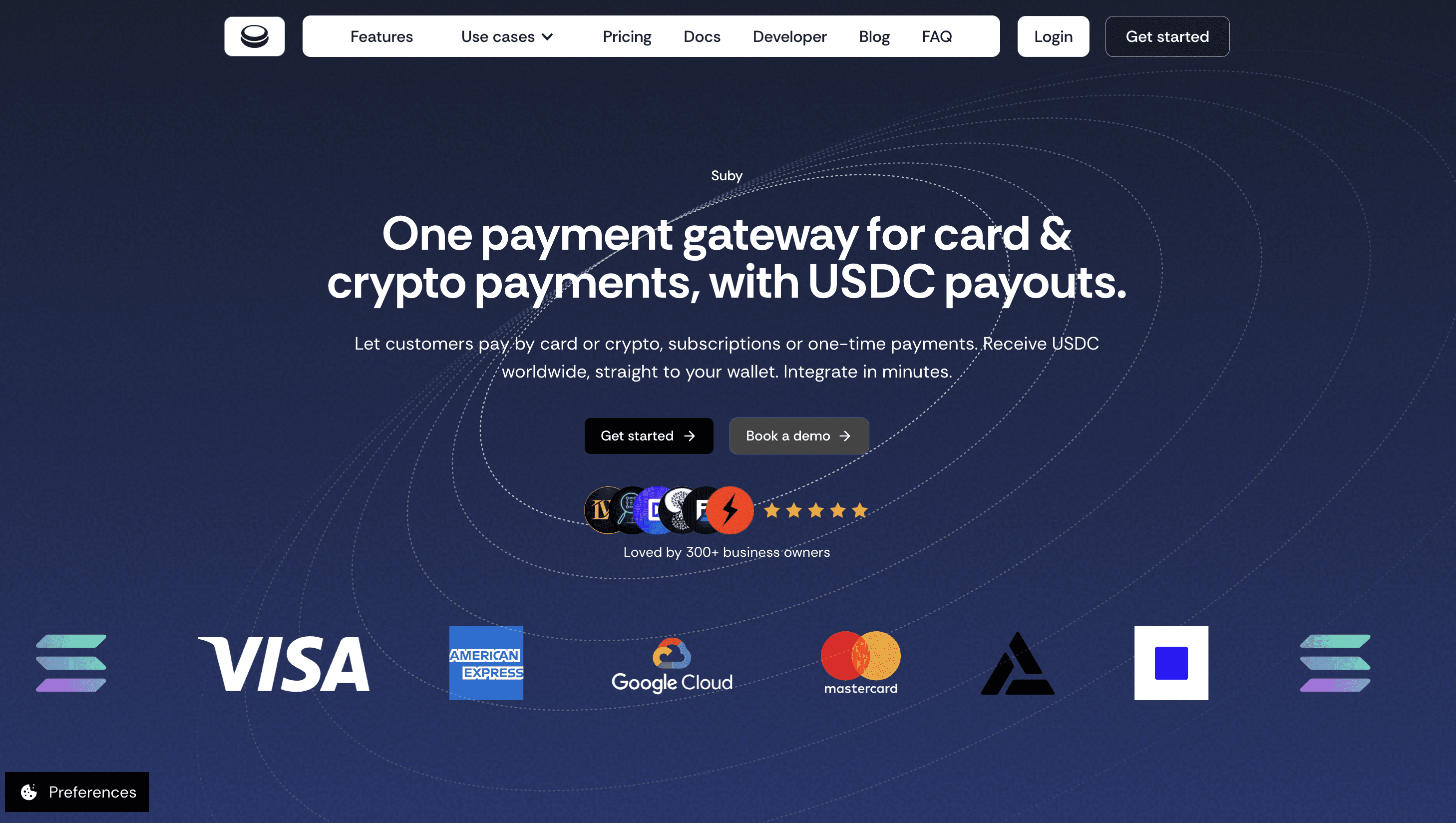
This platform is not just a payment gateway, it’s a comprehensive toolkit for monetization. Businesses can quickly deploy shareable paylinks, embed a conversion-optimized checkout on their site, or build completely custom payment flows using a robust API. The key is simple: users pay with cards, and businesses receive USDC. For creators and community managers, Suby offers native integrations that automate access and subscription management for Discord and Telegram, unifying payments with community engagement seamlessly. Anyone weighing a Whop alternative for gated communities will find this a natural fit.
Key Features & Analysis
Global Payment Acceptance: Suby accepts both traditional card payments and several cryptocurrencies (USDC, USDT, ETH, SOL, BNB). Its defining feature is settling all payouts in USDC, providing merchants with stable, fast, and globally accessible revenue without relying on traditional banking rails.
Flexible Integration Options: Whether you need a no-code solution like a payment link, a low-code embeddable checkout, or full developer control via an API, Suby provides a clear path to integration.
Creator-Centric Tools: The built-in automation for Discord and Telegram is a significant advantage for community-based businesses, simplifying the process of selling memberships and managing subscribers.
Security and Compliance: The platform ensures enterprise-grade security. Card processing is handled through a PCI-DSS Level 1 certified partner, and features like Strong Customer Authentication (SCA) and 2FA are included.
Pricing and Use Cases
Suby's pricing is transparent and pay-as-you-go, no plans or monthly fees, just one flat rate per payment category:
Cards & wallets: 2.9% + $0.30 per transaction
Crypto (USDC): 1.5%
Bank transfers: 1% + $1 per transaction
This platform is ideal for:
SaaS companies and developers needing a global subscription billing solution.
Agencies and freelancers who invoice international clients and prefer instant USDC payouts.
Creators monetizing Discord or Telegram communities with memberships.
Pros:
Eliminates FX and SWIFT delays with direct USDC settlements.
Multiple integration paths support both quick launches and custom development.
Built-in Discord and Telegram automation is a powerful tool for creators.
Transparent, flat-rate pricing for predictable international costs.
Cons:
Newer platform: Suby is younger than incumbents like Stripe, so its third-party integrations ecosystem and brand recognition are still growing.
Transaction fees can be higher than card-only domestic processors.
Website: https://suby.fi
2. Shopify
Shopify is a household name in e-commerce, but it's not just for physical goods. It has solidified its position as one of the best platforms for selling digital products by offering a comprehensive, all-in-one solution. Its strength lies in providing a fully branded storefront with a powerful, high-converting native checkout experience. This makes it ideal for creators and businesses that plan to sell a mix of digital and physical items or anticipate scaling to enterprise levels.

To sell digital products, you simply install the free "Digital Downloads" app from Shopify’s App Store. This allows you to attach files like e-books, software, or presets directly to your product listings and automatically handles delivery and download limits after a purchase. The platform's mature ecosystem means you have access to thousands of themes and apps to customize every aspect of your business, from marketing to customer support. While Shopify offers robust native payment processing through Shop Pay and standard card options, businesses looking for more flexibility in handling global transactions should understand how to accept international payments to avoid currency conversion issues.
Key Features & Pricing
Pricing: Shopify's plans start at $29/month (billed annually) for the Basic plan, plus transaction fees on card payments.
Checkout & Payments: Offers a highly optimized, native checkout with Shop Pay. Accepts major credit cards and other local payment methods.
Digital Product Handling: The free Digital Downloads app manages file attachments and download links. For more advanced features like software licensing or video streaming, third-party apps are available.
Ecosystem: Unmatched access to a vast App Store and Theme Store for extensive customization and functionality.
Pros: Excellent for selling both digital and physical products, highly scalable, and features a trusted, high-converting checkout process.
Cons: Involves a monthly subscription fee plus transaction fees, and advanced digital features often require paid third-party apps.
Website: https://www.shopify.com
3. WooCommerce (WordPress) + WooPayments
For creators and entrepreneurs who want absolute control over their online store, WooCommerce is the gold-standard solution. As an open-source plugin for WordPress, it transforms the world's most popular content management system into a powerful e-commerce engine. Its primary advantage is complete ownership; you control your hosting, your data, and every line of code. This makes it one of the best platforms for selling digital products if you value customizability and are comfortable with a more hands-on approach to site management.
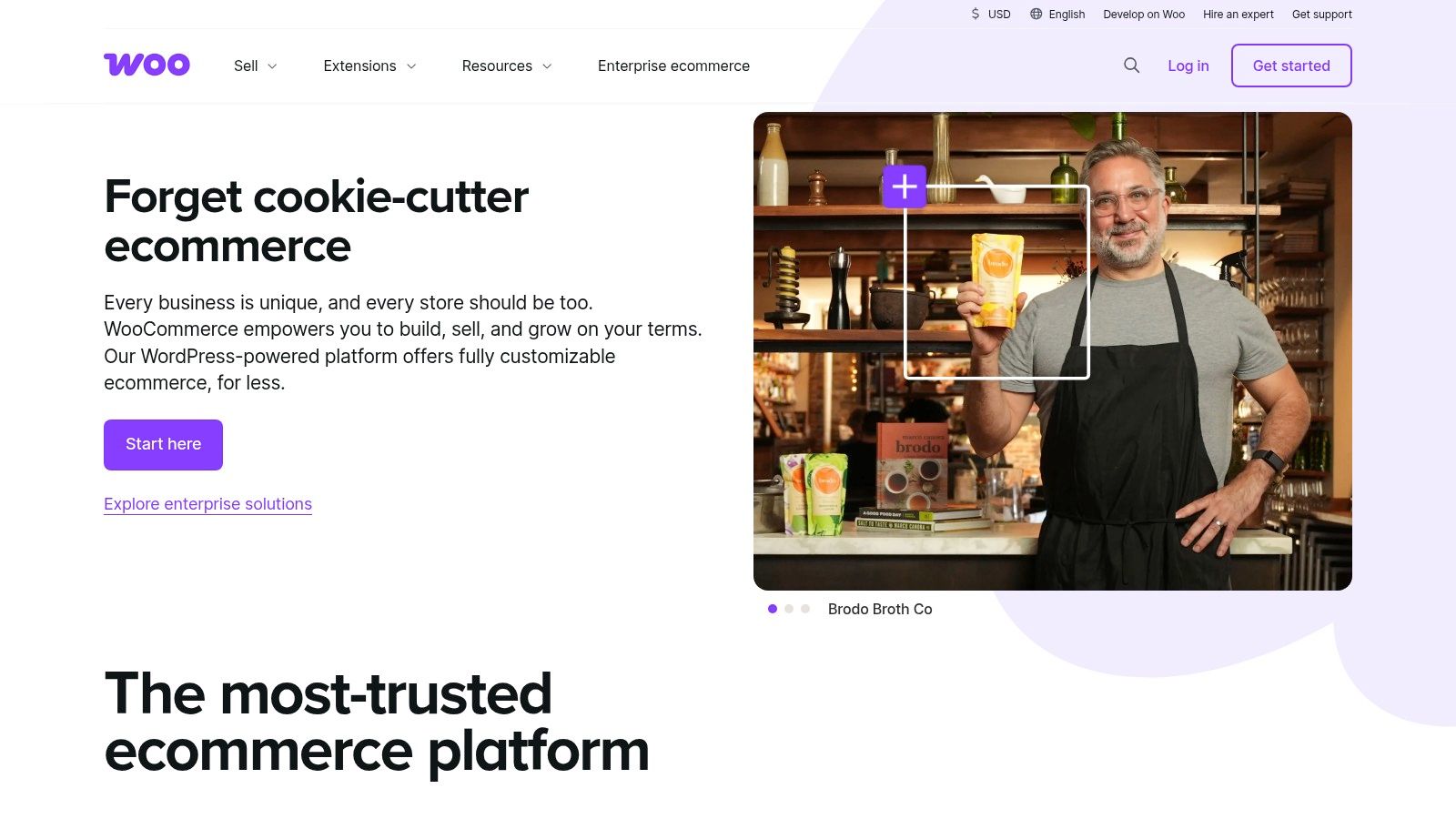
WooCommerce includes built-in product types for "Virtual" and "Downloadable" goods, allowing you to easily sell e-books, software, or music. The platform manages download links, sets access expiry, and logs download attempts to protect your files. By integrating the first-party WooPayments gateway, you can accept card payments directly within your WordPress dashboard, simplifying transaction management. The platform’s true power lies in its massive ecosystem of extensions, which let you add functionalities like software licensing, course management, or advanced subscription models, tailoring the store to your exact needs.
Key Features & Pricing
Pricing: WooCommerce itself is free, but you must pay for hosting, a domain, and potentially premium themes or extensions. WooPayments charges standard transaction fees.
Checkout & Payments: Offers a customizable checkout process on your own domain. WooPayments provides integrated card processing.
Digital Product Handling: Native support for downloadable and virtual products with configurable access controls and download logging.
Ecosystem: Access to thousands of free and paid WordPress plugins and WooCommerce extensions for nearly unlimited functionality.
Pros: Complete ownership and control over your site and data, highly extensible via plugins, and no platform transaction fees.
Cons: Requires you to manage your own hosting, security, and updates. The total cost can vary widely depending on hosting and paid extensions.
Website: https://woocommerce.com
4. Gumroad
Gumroad has long been a favorite among independent creators, artists, and writers looking for a simple, no-fuss way to sell digital products directly to their audience. It stands out by removing nearly all technical barriers, allowing you to create a product page and start selling in minutes. The platform's core philosophy is to empower creators, and it achieves this by offering a hosted storefront and direct paylinks, all while handling complex issues like global sales tax calculations as the Merchant of Record. This makes it an ideal launchpad for those testing a new idea or building a community around their work.
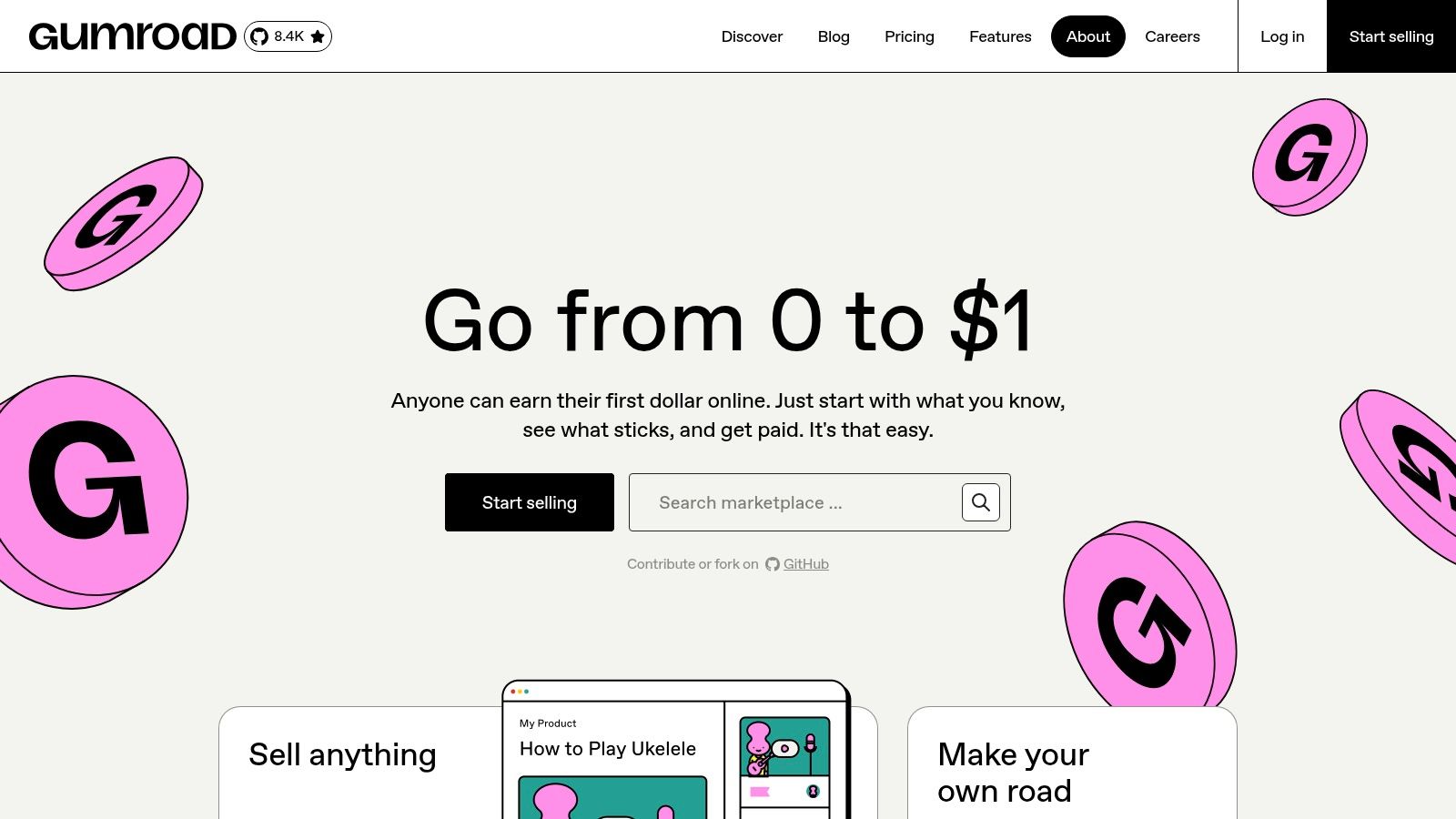
Beyond simple downloads, Gumroad supports memberships, pre-orders, and even basic email marketing broadcasts to keep your customers engaged, though creators who outgrow its link-in-bio storefront often look at Stan Store alternatives for more control. One of its unique features is the "Discover" marketplace, which can provide an additional source of organic traffic and sales, although sales from this channel incur a higher fee. Gumroad is one of the best platforms for selling digital products if your priority is speed and simplicity over deep customization. It lets you validate a product with minimal upfront investment, making it perfect for first-time sellers and creative entrepreneurs.
Key Features & Pricing
Pricing: Gumroad has a straightforward pricing model with no monthly fees. They charge a flat 10% transaction fee on each sale.
Checkout & Payments: Provides a simple, embedded checkout form or hosted product pages. Accepts major credit cards and PayPal.
Digital Product Handling: Seamlessly delivers files, manages memberships, and handles software license keys. The platform takes care of delivering download links to customers.
Ecosystem: Includes built-in email marketing, customer management, and an affiliate marketing system. The Discover feature helps new audiences find your products.
Pros: Extremely easy to set up with no monthly cost, making it risk-free. Handles sales tax for you, which is a major benefit for solo creators.
Cons: The 10% transaction fee can become expensive as your sales volume grows. Customization options for storefronts are limited compared to other platforms.
Website: https://gumroad.com
5. Lemon Squeezy
Lemon Squeezy has rapidly become a favorite among software developers and digital creators, distinguishing itself as one of the best platforms for selling digital products. Its core strength is its function as a Merchant of Record (MoR), which means it handles all global sales tax, VAT, and compliance on behalf of the seller. This approach significantly simplifies the administrative burden for indie developers and SaaS companies, allowing them to focus on their product instead of navigating complex international tax laws.
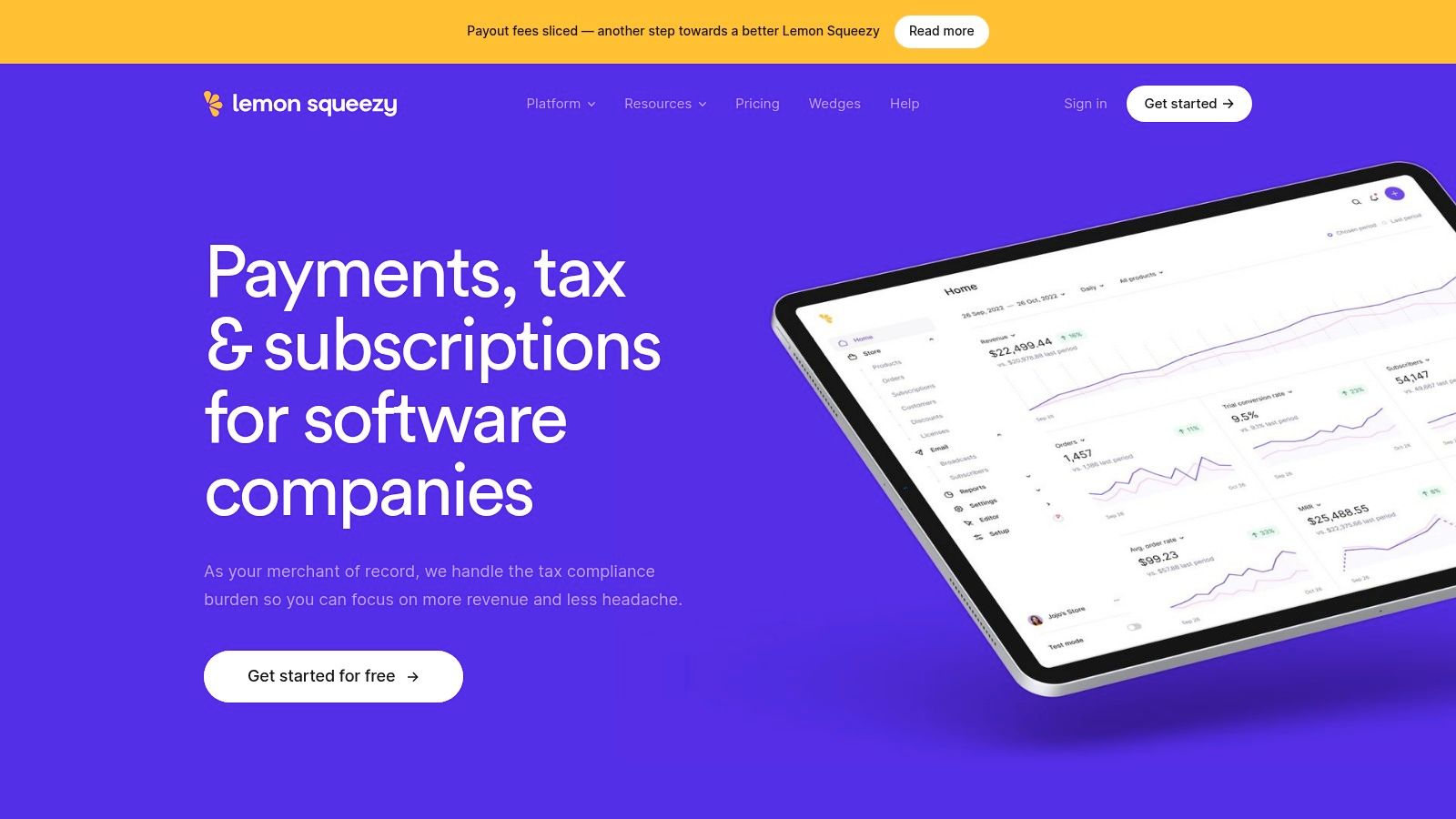
The platform is purpose-built for digital goods, offering native support for subscriptions, software license key generation, and even lead magnets. It also includes built-in email marketing tools to help creators nurture their audience directly. While the MoR model offers immense value, it’s important for businesses to understand how this differs from being a direct payment processor; you can learn more about how a Merchant of Record works to see if it fits your needs. Lemon Squeezy provides a streamlined, hosted checkout experience that makes it incredibly easy to start selling in minutes.
Key Features & Pricing
Pricing: Lemon Squeezy uses a pay-as-you-go model, starting at 5% + 50¢ per transaction, with volume discounts available for high-earning stores.
Checkout & Payments: Offers a clean, hosted checkout page and accepts major credit cards and other payment methods like PayPal.
Digital Product Handling: Native features for subscriptions, license key generation, and file hosting. Manages automated delivery and customer access.
Ecosystem: Includes built-in email marketing (free for up to 500 subscribers), integrations with platforms like Zapier, and a robust API for custom solutions.
Pros: Simplifies global sales by acting as a Merchant of Record, includes powerful native tools for software and SaaS, and has transparent, pay-as-you-go pricing.
Cons: Payouts are processed on a set schedule (twice monthly), and some additional fees may apply for specific services like fraud protection.
Website: https://www.lemonsqueezy.com
6. Paddle
Paddle is an enterprise-grade solution built specifically for SaaS and software companies that need to sell globally without the operational headache. Its core strength is its Merchant of Record (MoR) model, where Paddle acts as the reseller of your product. This means Paddle takes on the full legal and financial responsibility for every transaction, including calculating, collecting, and remitting sales taxes worldwide. This makes it one of the best platforms for selling digital products if your primary goal is to offload complex global tax compliance and invoicing.
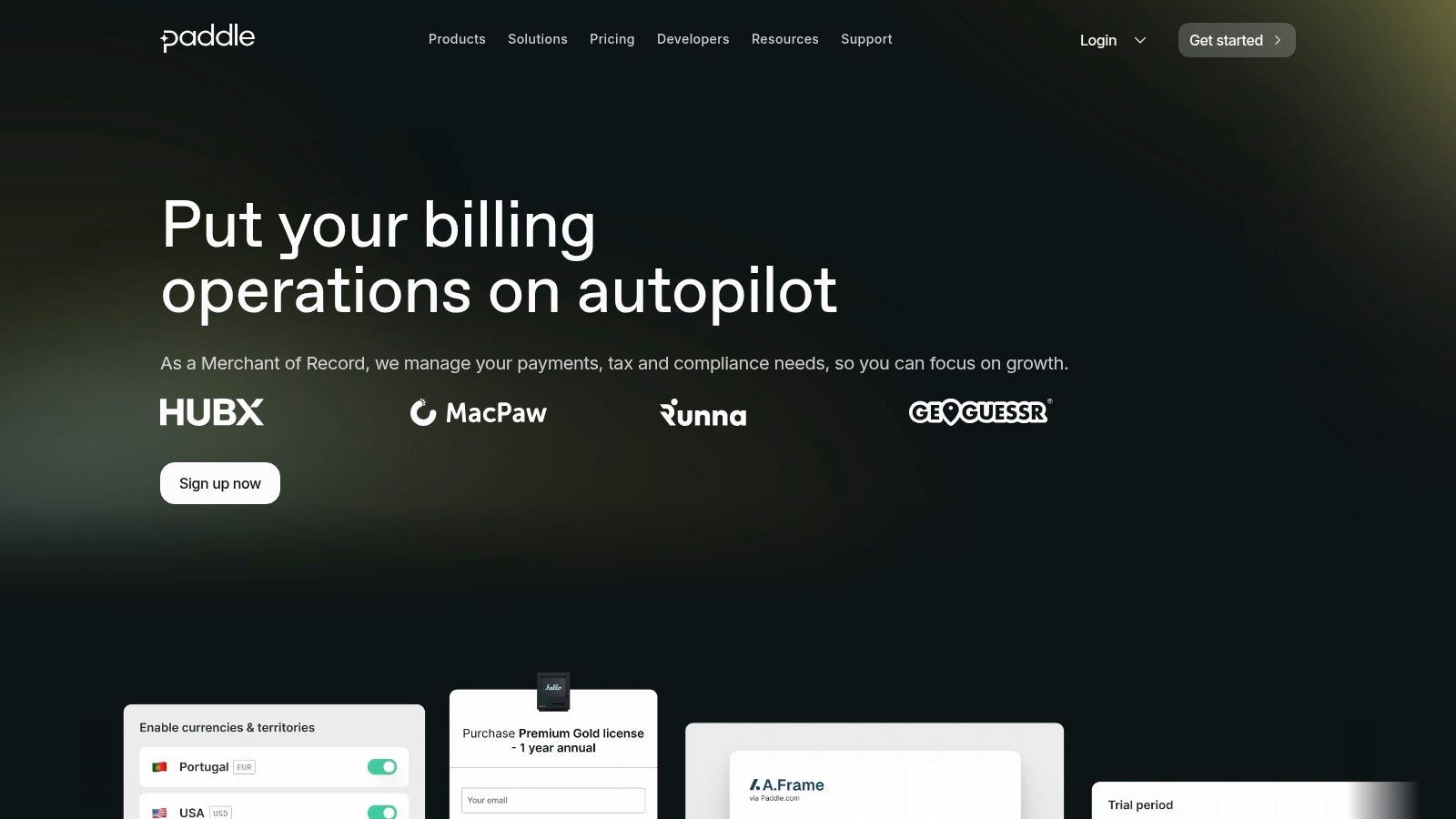
The platform is more than just a payment processor; it’s a complete revenue delivery platform. It offers robust subscription management, automated invoicing, and powerful revenue recovery tools like dunning management to combat churn, alongside a self-service portal where buyers can update billing or cancel a Stripe subscription style plan on their own. By handling fraud protection and chargeback disputes on your behalf, Paddle allows development-focused teams to concentrate on their product rather than on financial operations. While the MoR model means funds are processed through Paddle before being paid out to you, the trade-off is significant relief from administrative burdens associated with international sales.
Key Features & Pricing
Pricing: Pay-as-you-go model at 5% + 50¢ per transaction. Custom pricing is available for high-volume businesses.
Checkout & Payments: Offers a customizable checkout experience that supports localized payment methods, currencies, and languages.
Digital Product Handling: Excels at managing SaaS subscriptions, software licenses, and one-time digital purchases with built-in recurring billing and entitlement logic.
Ecosystem: Integrates with various business tools and offers a comprehensive API for custom workflows.
Pros: Completely offloads global sales tax and VAT compliance, provides advanced subscription analytics, and includes powerful tools to reduce churn.
Cons: The MoR model means you don’t have a direct relationship with a payment processor, and transaction fees are higher than traditional gateways.
Website: https://www.paddle.com
7. Payhip
Payhip has emerged as a compelling, all-in-one platform for creators looking for an affordable and straightforward way to sell digital products. It provides a simple yet effective hosted storefront and checkout system designed specifically for digital downloads, courses, memberships, and coaching services. Its major draw is a generous free plan that includes most of the platform's core features, making it an excellent entry point for new sellers who want to test their products without upfront investment.
The platform stands out by bundling critical marketing and sales tools directly into its service, even on the free tier. Features like affiliate marketing, coupon codes, social discounts, and pay-what-you-want pricing are built-in, which often require paid apps or higher-tier plans on other platforms. Payhip also simplifies cross-border sales by automatically handling EU and UK VAT collection and remittance, a significant administrative relief for creators still learning how taxes for online businesses work when selling to a global audience. It remains one of the best platforms for selling digital products if you need a full feature set on a minimal budget.
Key Features & Pricing
Pricing: Starts with a Free plan (5% transaction fee), a Plus plan at $29/month (2% fee), and a Pro plan at $99/month (0% fee). Standard processor fees also apply.
Checkout & Payments: Offers a customizable, embeddable checkout and storefront. It handles payment processing for you.
Digital Product Handling: Natively supports a wide range of products including e-books, software, courses, memberships, and coaching services with secure file delivery.
Built-in Tools: Includes affiliate management, coupons, upselling, cross-selling, and automated EU/UK VAT handling.
Pros: Generous free plan with a comprehensive feature set, automated tax handling for EU/UK, and built-in marketing tools.
Cons: The 5% fee on the free plan can be high for high-volume sellers, and achieving a 0% platform fee requires the expensive Pro plan.
Website: https://payhip.com
8. SendOwl
SendOwl is a long-standing, specialized platform designed for the secure delivery of digital goods. It excels as a checkout and delivery layer that integrates seamlessly into an existing website, making it one of the best platforms for selling digital products if you already have a blog or portfolio site. Its primary strength lies in its robust security features, such as PDF stamping and expiring download links, which give creators peace of mind that their work won't be shared without permission. It is ideal for those who need a powerful, dedicated solution for file delivery without building an entire storefront from scratch.
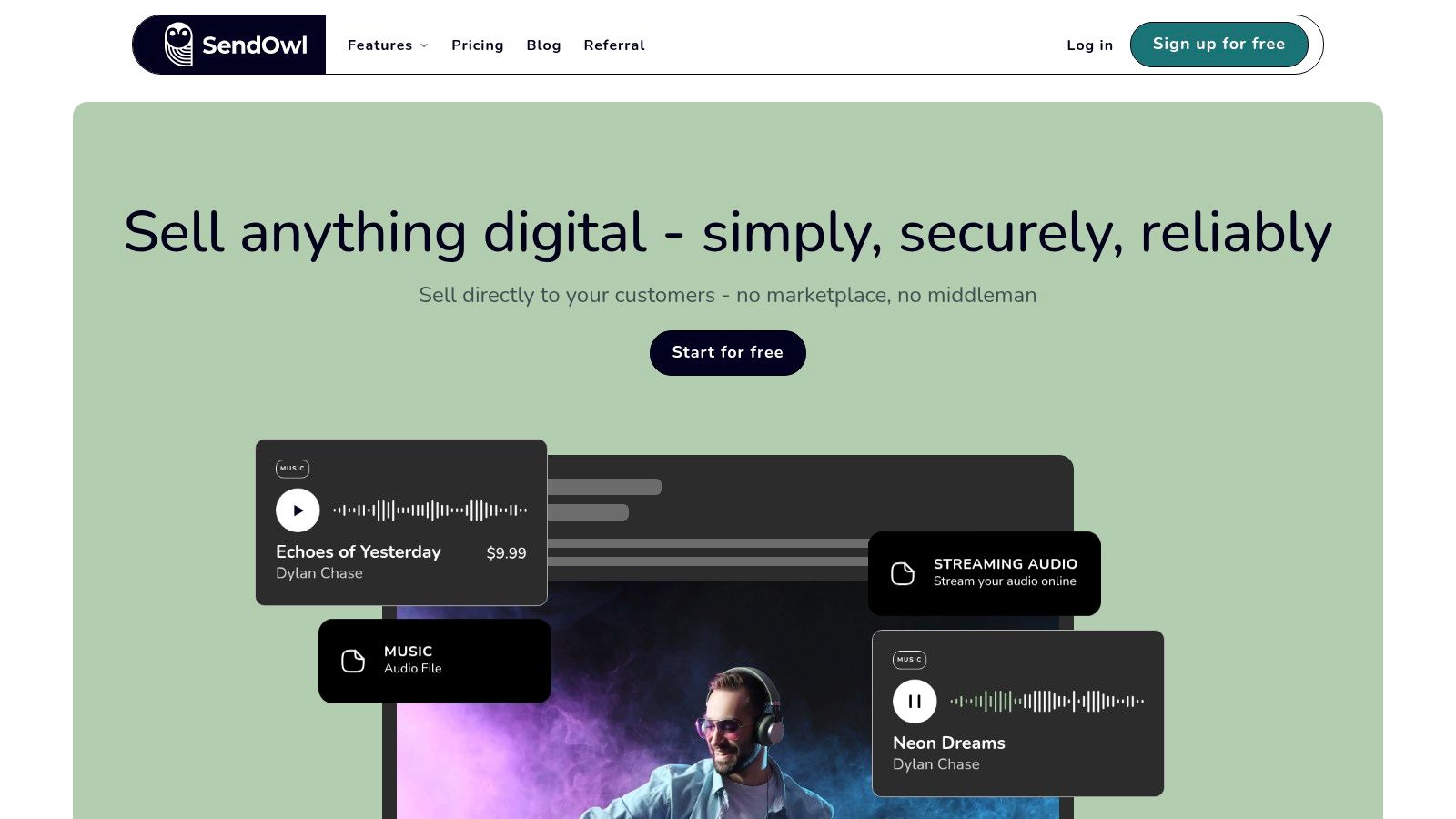
The platform is built to plug into your current setup, allowing you to add "buy now" buttons or a full shopping cart anywhere you can embed HTML. SendOwl handles the payment processing and then securely delivers the files to the customer automatically. It also includes valuable marketing tools like one-click upsells, cart abandonment recovery, and a built-in affiliate marketing system. This focused approach on checkout and secure delivery means you can keep your existing brand and website while leveraging a specialized, battle-tested system for the transactional part of your business.
Key Features & Pricing
Pricing: Plans start at $15/month for the Standard plan, which includes up to 30 products and 3GB of storage. Higher-tier plans offer more products, storage, and features.
Checkout & Payments: Provides a customizable checkout that can be used as a pop-up or on a dedicated page. It integrates with major payment gateways.
Digital Product Handling: Offers advanced security features including PDF stamping, download limits, and link expiration to prevent file sharing. It also supports subscriptions and software licensing.
Ecosystem: Integrates with many email marketing platforms and Zapier. An API is available for custom development.
Pros: Excellent file protection and anti-sharing controls, no transaction fees from SendOwl itself, and includes built-in affiliate and upsell features.
Cons: Monthly subscription cost can be high for sellers with low volume, and plan limits on storage and products may require frequent upgrades as you scale.
Website: https://www.sendowl.com
9. FastSpring
FastSpring is a specialized platform that operates as a Merchant of Record (MoR), making it an excellent choice for software and SaaS businesses targeting a global audience. Its primary strength is offloading the complexities of international sales, including tax collection, remittance, and compliance. This allows companies to focus on product development and marketing rather than navigating the intricate legal and financial hurdles of selling worldwide. It's best suited for established businesses that require enterprise-grade solutions for subscriptions and global payment processing.
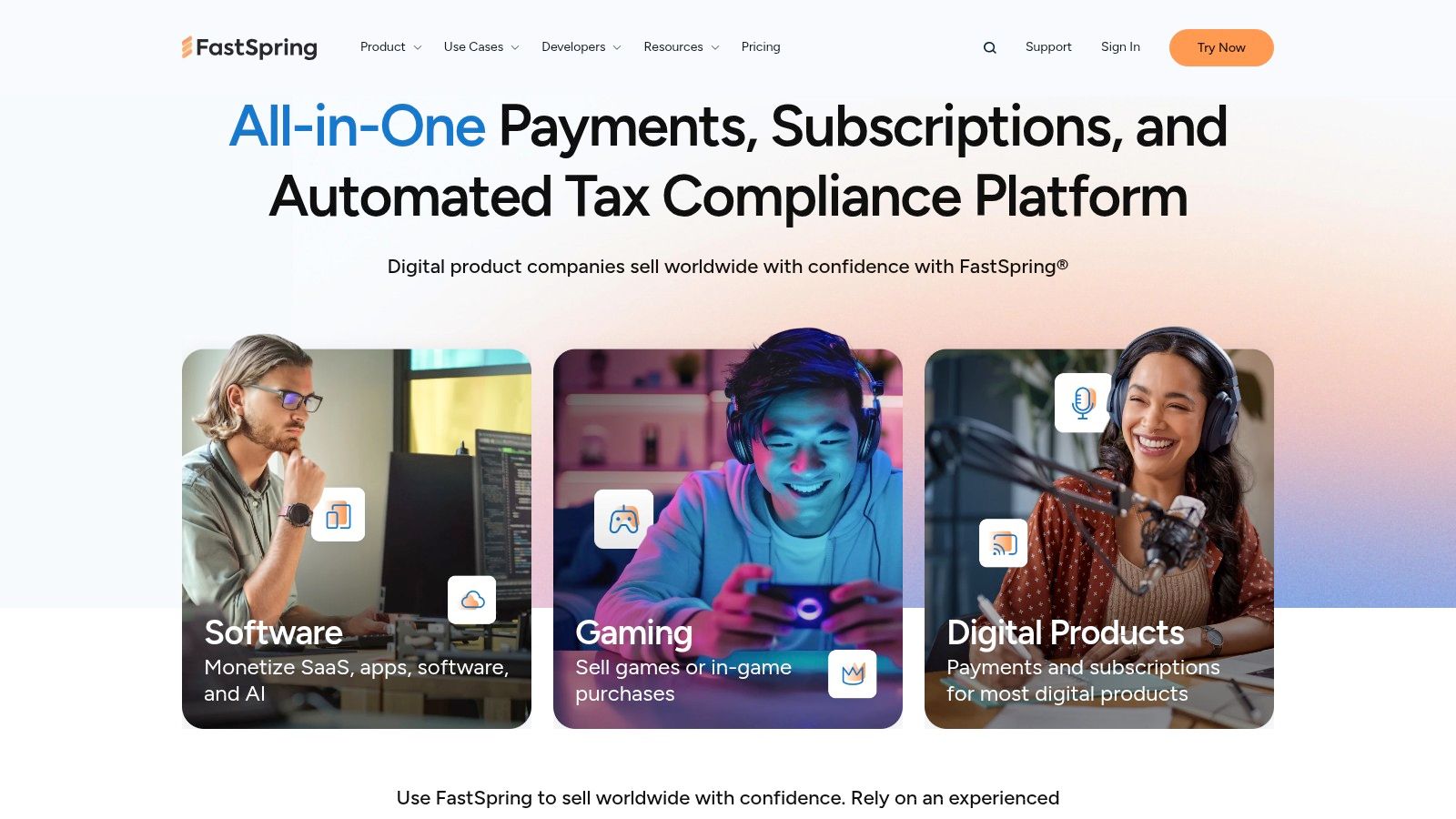
The platform offers a branded checkout experience and robust subscription management tools designed for recurring revenue models. FastSpring supports a wide array of localized payment methods and currencies, ensuring a seamless purchase process for customers no matter where they are. For businesses with complex needs, FastSpring provides advisory and implementation services, guiding them through setup and optimization. This hands-on support model distinguishes it from more self-service platforms and positions it as a strategic partner for scaling software companies.
Key Features & Pricing
Pricing: Custom pricing based on volume and business needs. You must contact sales for a quote, as there are no public pricing tiers.
Checkout & Payments: Branded, localized checkout that supports numerous global payment methods and currencies.
Digital Product Handling: Primarily designed for software, SaaS, and other digital goods with strong subscription management, billing, and invoicing capabilities.
Ecosystem: The MoR model handles all tax and compliance burdens worldwide, acting as the reseller for your products.
Pros: Significantly reduces legal and tax overhead for global sellers, enterprise-focused with dedicated support and advisory services, and ideal for subscription-based businesses.
Cons: Pricing is not transparent and requires a sales consultation, which can be a barrier for smaller businesses looking to compare costs easily.
Website: https://fastspring.com
10. Etsy
While many platforms on this list help you build a standalone store, Etsy operates as a massive consumer marketplace. It’s a household name for handcrafted physical goods, but it has also carved out a significant niche as one of the best platforms for selling digital products like printables, templates, SVG files, and patterns. Its primary strength is its built-in audience; millions of buyers are already searching the platform for unique digital items, providing a powerful source of discovery for new sellers.
Selling on Etsy is straightforward. You create a listing, upload your digital files, and Etsy handles the secure delivery to the customer immediately after purchase. The platform provides a simple, trusted buyer flow and manages all order communication and file access. However, this convenience comes with a trade-off in fees and control. For those choosing Etsy as a marketplace for their digital creations, leveraging the right Etsy SEO tools can significantly enhance product visibility and sales within its competitive environment. This makes it an ideal starting point for creators whose products align with Etsy’s creative and DIY-focused audience.
Key Features & Pricing
Pricing: Etsy charges a $0.20 USD listing fee per item, a 6.5% transaction fee on the total sale price, and a payment processing fee (typically around 3% + $0.25 USD in the US). Offsite Ad fees may also apply.
Checkout & Payments: Utilizes Etsy's native, trusted checkout system. Buyers can pay via major credit cards, PayPal, Apple Pay, and other local methods supported by Etsy Payments.
Digital Product Handling: Offers instant digital delivery and download management. Buyers can access their files directly from their Etsy account after purchase.
Ecosystem: A self-contained marketplace with built-in traffic, search functionality, and direct buyer messaging tools.
Pros: Access to a huge, built-in audience actively searching for products, simple setup, and a trusted buyer experience.
Cons: Multiple fees can add up quickly, less brand control compared to a personal storefront, and you are subject to marketplace rules and algorithm changes.
Website: https://www.etsy.com
11. Sellfy
Sellfy is a purpose-built e-commerce platform designed for creators looking for a straightforward way to sell digital products, subscriptions, and print-on-demand items. It stands out by offering a clean, hosted storefront that can be set up in minutes, making it one of the best platforms for selling digital products for those who prioritize speed and simplicity. The platform’s core appeal lies in its predictable subscription pricing, which eliminates transaction fees from Sellfy, allowing creators to keep more of their revenue.
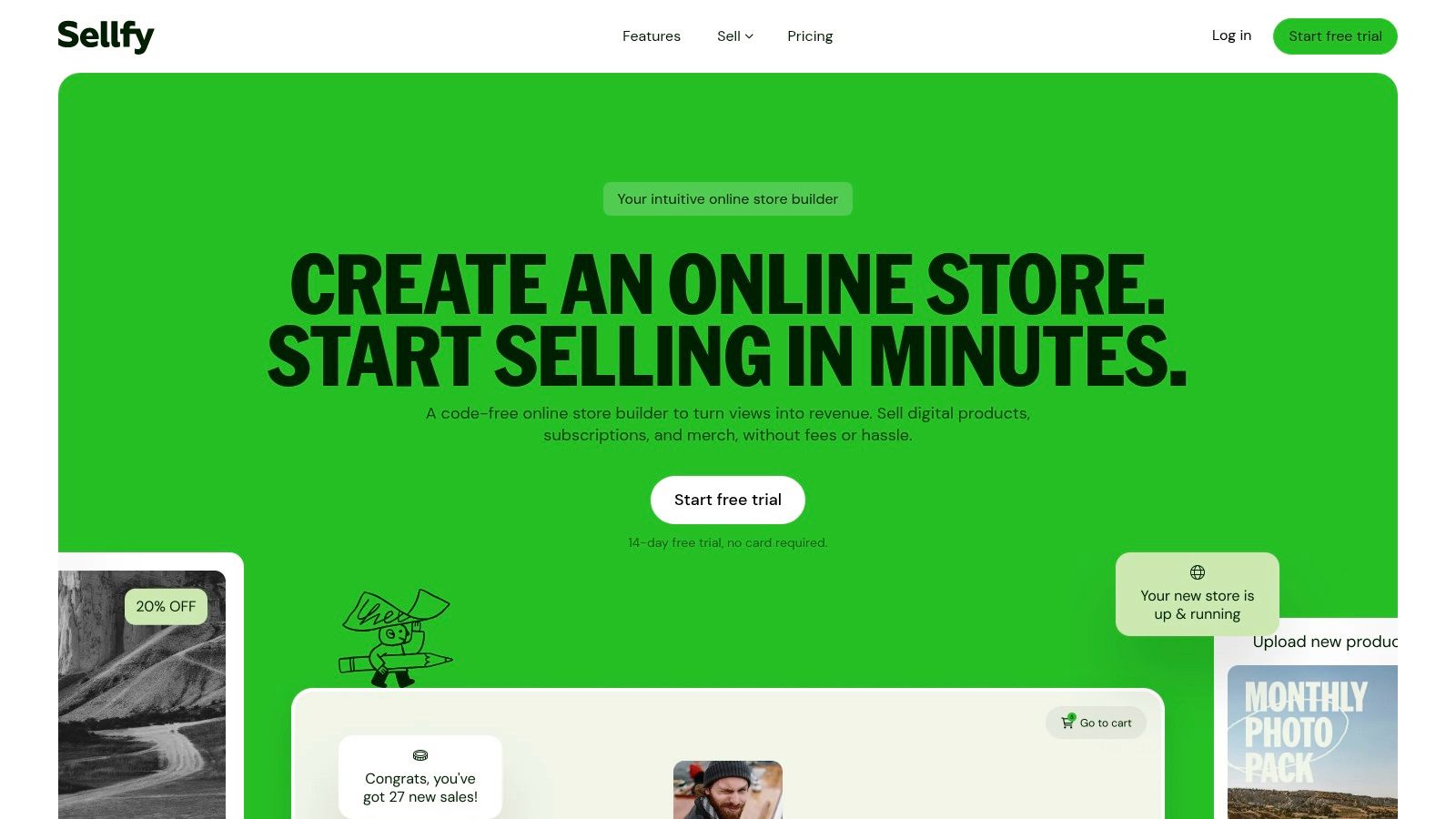
Unlike more complex solutions, Sellfy bundles essential marketing tools, such as email marketing and discount codes, directly into its plans. This integrated approach removes the need for multiple third-party apps for basic promotional activities. Creators can sell an unlimited number of products on all plans, from e-books and courses to software and digital art, with automated file delivery handled by the platform. While Sellfy itself doesn't charge a transaction fee, standard payment processor fees still apply.
Key Features & Pricing
Pricing: Plans start at $22/month (billed annually) for the Starter plan, with 0% Sellfy transaction fees on all tiers.
Checkout & Payments: Handles secure transactions from a global customer base.
Digital Product Handling: Offers unlimited product listings and bandwidth, with automatic and secure download link delivery after purchase. Also supports subscriptions and video streaming.
Ecosystem: Provides built-in marketing tools, including email marketing, upselling, and discount codes, plus print-on-demand integrations.
Pros: Simple, predictable pricing with no platform transaction fees, very quick and easy setup, and built-in marketing features are ideal for creators.
Cons: Advanced customization and features are limited compared to larger platforms, and payment processor fees still apply to every sale.
Website: https://sellfy.com
12. Podia
Podia positions itself as the ultimate all-in-one platform for creators who want to sell digital products without the technical overhead. It combines a website builder, course platform, membership tools, and email marketing into a single, unified dashboard. This makes it a fantastic choice for entrepreneurs, small teams, or anyone who wants a turnkey solution to manage their entire digital business from one place, focusing on content creation rather than complex configurations.
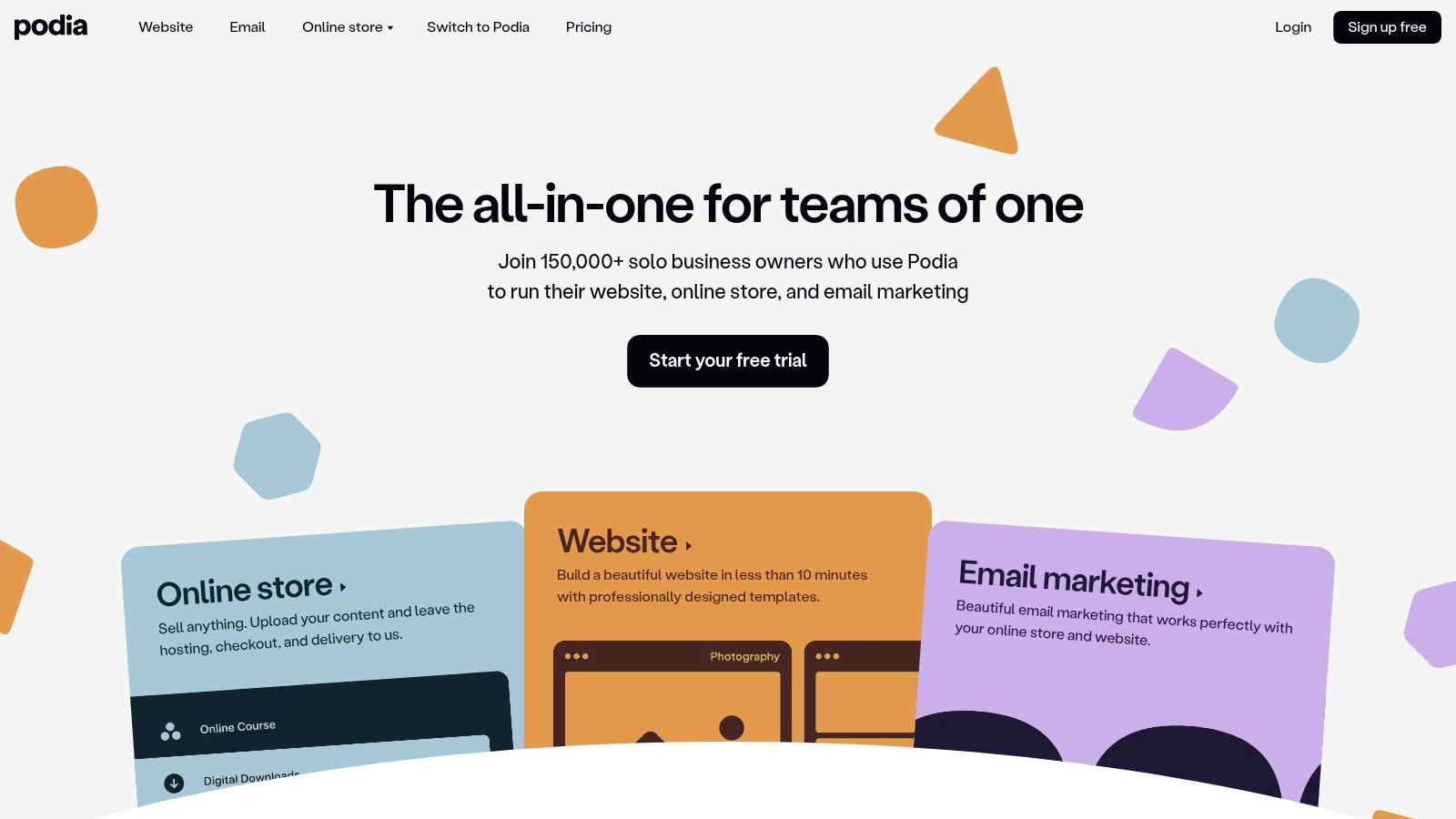
The platform excels at simplifying the user experience, offering hosted product pages, a clean checkout flow, and integrated tools for bundles and upsells. You can sell anything from e-books and courses to community memberships and webinars. Payments are processed reliably for your customers. For businesses running subscription models, it's also helpful to understand what a dunning process is to manage failed payments and reduce churn effectively. While Podia offers an impressive suite of tools out of the box, its simplicity means it lacks the deep customization of more modular platforms.
Key Features & Pricing
Pricing: Podia offers a free plan with a 10% transaction fee. Paid plans start at $33/month (billed annually), with the Mover plan including a 5% transaction fee.
Checkout & Payments: Supports payment processing for one-time sales and recurring subscriptions.
Digital Product Handling: Native support for digital downloads, online courses, webinars, and community memberships with account-based delivery.
Ecosystem: An all-in-one platform with built-in email marketing, a website builder, and affiliate management on higher-tier plans.
Pros: Extremely user-friendly with a fast, all-in-one setup. Great for creators who want to sell a variety of digital products without needing multiple tools.
Cons: The Mover plan has a 5% platform fee. Advanced features like affiliates are locked behind more expensive plans, and customization options are limited compared to competitors.
Website: https://www.podia.com
Making Your Final Decision
Navigating the landscape of the best platforms for selling digital products can feel overwhelming, but making the right choice boils down to a clear understanding of your business model, technical resources, and long-term goals. We have explored a dozen powerful solutions, from all-in-one creator platforms to robust self-hosted systems, each with distinct strengths and weaknesses. Your ideal platform is the one that removes the most friction between your product and your customers, allowing you to focus on creating value.
The journey to selecting your perfect fit starts with a candid self-assessment. Are you a solo creator who needs simplicity above all else? A platform like Gumroad or Payhip might be your fastest path to market. Do you require deep customization and complete control over your brand experience? A self-hosted WordPress site with WooCommerce could provide the flexibility you need. For businesses selling complex software or SaaS products, a Merchant of Record (MoR) like Paddle or Lemon Squeezy offers an invaluable service by handling global sales tax and VAT compliance, saving you immense administrative effort.
How to Choose Your Platform: A Final Checklist
As you weigh your options, revisit these critical decision points. Don't just look at features, consider how each platform aligns with your operational reality.
Business Model: Does the platform natively support your revenue model? Consider one-time sales, recurring subscriptions, tiered memberships, or pay-what-you-want pricing. Ensure the fee structure doesn’t penalize your growth.
Technical Skill: Be realistic about your technical comfort level. All-in-one platforms require minimal setup, while solutions like WooCommerce or API-first tools demand more development resources to implement and maintain.
Payouts and Currency: How and when do you want to receive your money? Traditional platforms often involve multi-day settlement periods, currency conversion fees, and reliance on legacy banking systems. This is a crucial factor for international businesses.
Scalability: Will this platform grow with you? Consider its integration capabilities via API, webhooks, and third-party apps. A solution that works for your first 100 customers should also be able to support you at 10,000 and beyond.
The Modern Challenge: Global Payments and Revenue Management
For today's internet-native businesses, especially those with a global customer base, the core challenge often isn't just selling, it's getting paid efficiently. Cross-border transactions, high currency exchange fees, and unpredictable payout schedules from traditional payment processors create significant operational drag. This is where the fundamental approach to payment infrastructure becomes the most important differentiator.
Platforms like Suby were built to solve this specific problem. By providing a direct and efficient revenue pipeline, Suby enables businesses to grow globally. Customers can pay with their cards from anywhere in the world, and you receive the funds settled directly as USDC. This model eliminates bank holds and costly FX fees. Suby provides an API that allows any business to accept payments by card or crypto, and also offers native integrations with Discord and Telegram for use cases like subscriptions and online communities.
For SaaS companies, developers integrating payment APIs, or creators managing paid communities, this is a game-changer. It transforms revenue management from a point of friction into a streamlined, predictable process. While many platforms offer excellent tools for product delivery and marketing, your final decision on the best platforms for selling digital products must also weigh how each one handles your hard-earned revenue. Choose the partner that empowers your global growth, not one that complicates it.
Suby is a payment gateway and payment processor. Your customers pay with card, bank transfer, Apple Pay, Google Pay, Klarna, and more, or stablecoins, and you get paid out to your bank account, or directly in stablecoins (USDC, EURC) to your wallet, anywhere in the world, no bank account required. It supports paylinks, embeddable checkout, an API, and native Discord and Telegram integrations for subscriptions and paid access. Among the best platforms for selling digital products, that settlement model is what lets you sell to any market and actually keep your revenue, without bank holds, FX loss, or unpredictable payout schedules.
