

Gaspard LEZIN
Best Crypto Payment Gateways for Online Business in 2026: Ranked by Use Case
Discover the best crypto payment gateways for online business in 2026: ranked by use case. Find top solutions by features & pricing for your business.
Choosing a crypto gateway in 2026 is less about adding one more payment button and more about cleaning up a messy global checkout. A lot of online businesses are in the same spot right now. Customers arrive from Europe, Asia, and the Americas, but the payment stack still looks regional, fragmented, and expensive. Crypto feels like the obvious next step, until you start comparing gateways and realize they solve very different problems.
That's the point of this guide. Instead of ranking tools by who has the longest feature page, I'm ranking the best crypto payment gateways for online business in 2026 by use case. The right choice for a SaaS company selling subscriptions is not automatically the right choice for a creator community, a cross-border store, or a technical team that wants full control.
If you're already thinking about international payment design more broadly, this breakdown on how tour operators handle payments is a useful reminder that checkout friction is rarely just a “payments team” problem.
Table of Contents
1. Suby
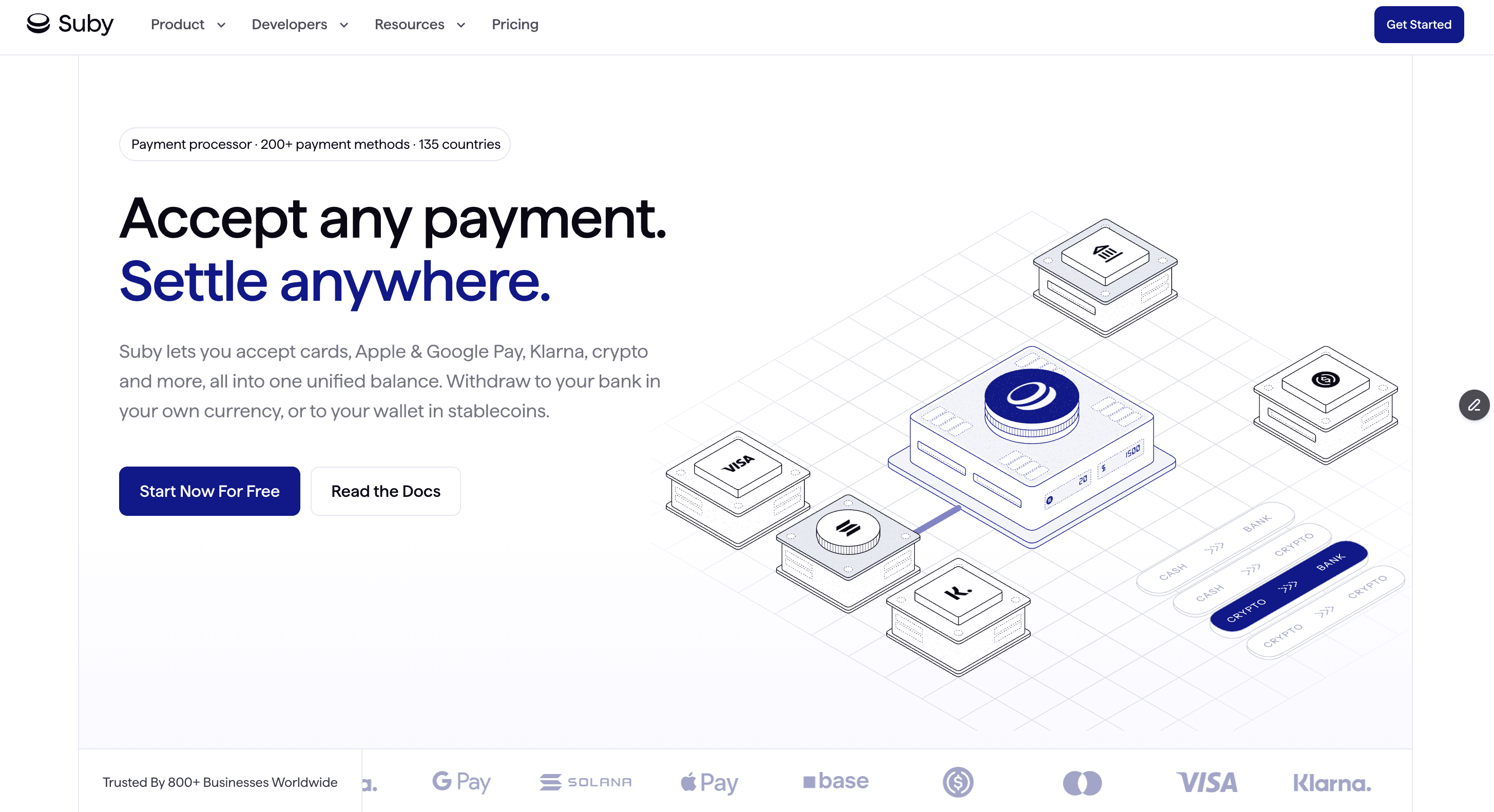
Suby ranks first because it solves the core operating problem most online businesses have now. You don't just need crypto acceptance. You need one system that lets customers pay by card or crypto, and lets your business settle the way you choose. That might mean a bank payout, or stablecoins like USDC, depending on how you run cash flow.
Suby is a single product with four ways to use it, documented in its API reference. Suby Payments is the API-first stack for cards and crypto through one checkout. Suby Crypto handles swaps, gas sponsorship, and settlement to a non-custodial wallet or Suby balance. Suby Gating covers paid access for Discord and Telegram. Suby Invoicing lets the client pay how they want while the business receives what it wants.
Why Suby ranks first for global online business
What stands out is the operating model. Customers can pay by card, wallet, bank, or crypto. The business chooses how to receive the money. That's a better fit for SaaS, digital services, agencies, and online communities than a crypto-only gateway that forces you to rebuild the rest of your payment stack around it.
Suby also provides an API that lets any business accept payments by card or crypto, and it offers native integrations with Discord and Telegram for subscriptions, paid access, and community monetization. That combination is rare. Most gateways are strong in either e-commerce plugins, crypto checkout, or community gating. Suby brings those paths together under one dashboard.
Practical rule: If your buyers still expect card checkout, don't bolt on a separate crypto tool unless you're happy managing two reporting and settlement systems.
There's also a practical stablecoin flow here that many international teams care about. Customers can pay by card and the business can receive USDC. That's not the only option, but it's one of the clearest ways to reduce banking delays for global internet businesses. Suby's documentation says pricing depends on the payment method used, with cards priced at 2.9% + $0.30 per successful transaction and crypto at 1.5%, and no monthly or setup fees.
Where Suby works best
Suby is the best fit for businesses that want one checkout for mixed payer behavior. That includes SaaS subscriptions, creator memberships, client invoicing, and cross-border e-commerce where some buyers want cards and others want wallets or crypto. If you want to go deeper on implementation, Suby's guide on accepting crypto payments for online business is a useful starting point.
A few strengths matter in daily operations:
Unified acceptance: Customers pay any way they want, businesses get paid the way they choose.
Flexible deployment: You can use paylinks, a hosted checkout, or the API and webhooks.
Creator support: Native Discord and Telegram integrations make paid access much easier than stitching together bots and payment forms.
Documented security basics: Suby confirms a PCI-DSS Level 1-certified processing partner, SCA, 2FA, dispute handling, and zero-fee refunds on its official materials.
The trade-off is straightforward. If your finance team wants a pure bank-payout workflow and doesn't want to touch stablecoin operations at all, you'll need to decide whether those settlement options help or just add internal process work. Also, pricing varies by payin method, so you should always verify current rates on Suby's website.
2. Coinbase
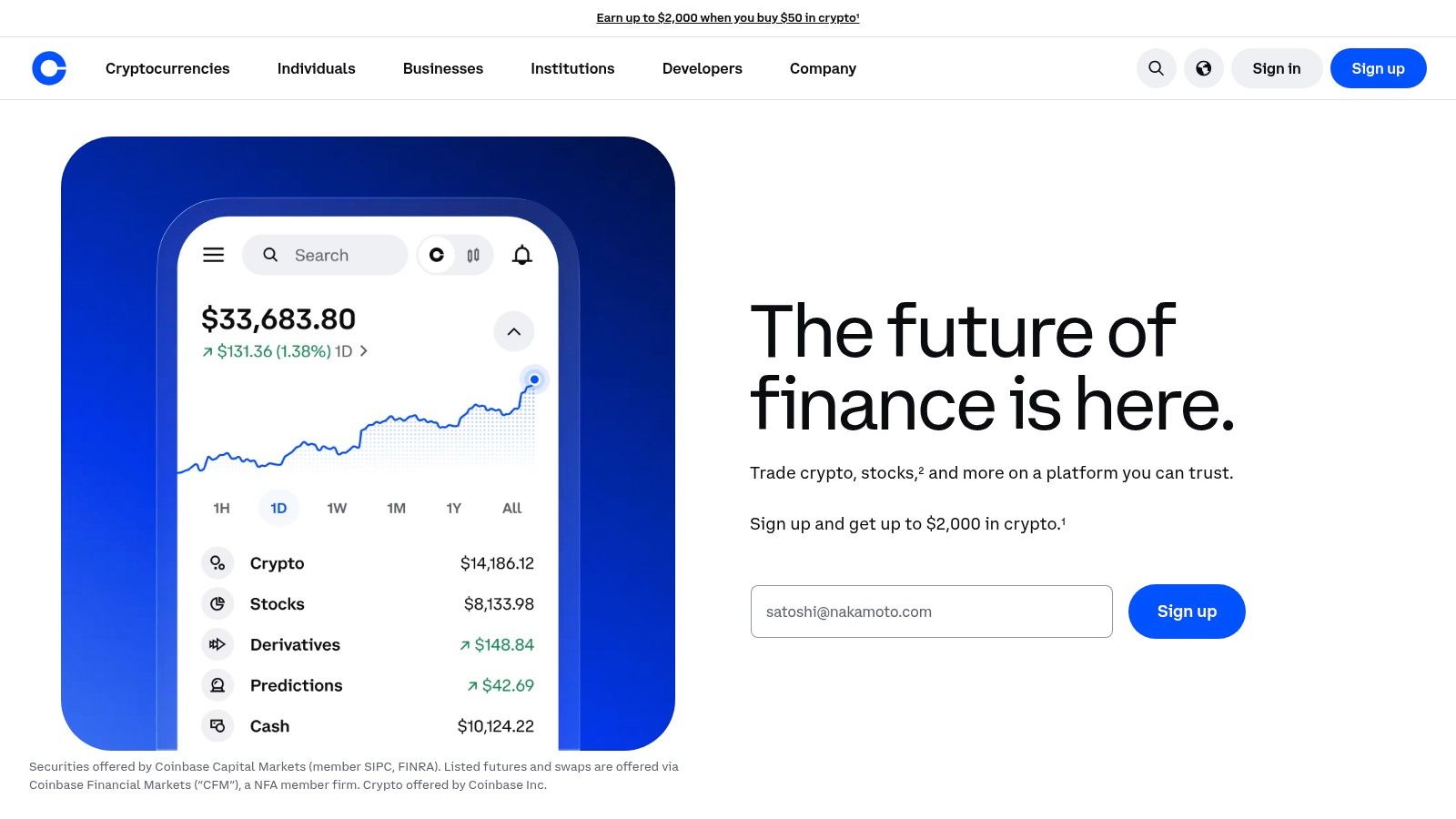
A familiar logo still matters at checkout. For merchants selling to mainstream buyers, Coinbase often makes the shortlist because customers recognize the name and finance teams are usually more comfortable reviewing it than a smaller processor.
The more important question is use case. In this ranking, Coinbase is not the default pick for every online business. It ranks well for merchants that want a recognized U.S. brand, tighter compliance expectations, and a path into stablecoin-based operations inside a large platform. That is a different buyer than the one who just wants the fastest plug-in checkout with the fewest setup decisions.
Best fit
Coinbase fits established online businesses that already operate in the Coinbase ecosystem or want to. That includes teams that care about treasury controls, reporting, and conversion between crypto and fiat more than they care about a simple public pricing table.
I would put Coinbase highest on the list for two cases. First, larger U.S.-focused merchants that expect legal, finance, and compliance review before launch. Second, businesses that see crypto payments as part of a broader stablecoin and settlement workflow, not just another checkout button.
It is a weaker fit for small stores, solo operators, and teams that need to get live fast with minimal back-and-forth during onboarding.
Why it ranks here
Coinbase's merchant offering has broadened beyond the older Commerce positioning. That creates real upside if your business wants more control over settlement and account structure. It also changes the implementation experience. What starts as a payments evaluation can turn into a platform decision.
That trade-off is why Coinbase ranks well by merchant profile rather than by raw feature count. If your use case is enterprise-leaning e-commerce or a higher-volume operation with internal approval layers, Coinbase can be a sensible choice. If your use case is creator monetization, lightweight SaaS billing, or quick deployment by a small team, the extra structure can feel heavier than it needs to.
If you're comparing it specifically against newer all-in-one options, this Suby write-up on Coinbase Commerce alternatives for online businesses is worth reading.
Trade-offs
Brand trust helps, but it does not remove implementation friction. Merchants should expect to spend time clarifying settlement flow, account model, supported payment paths, and what day-to-day operations look like after launch.
Pricing visibility is another practical concern. Some merchants are comfortable with custom evaluation and sales-led clarification. Others want to see transaction costs clearly before they commit engineering time. Coinbase tends to work better for the first group.
The bottom line is straightforward. Coinbase is strongest when merchant credibility, internal controls, and ecosystem alignment matter more than speed and simplicity. That keeps it high in the 2026 rankings for enterprise-leaning use cases, but not as the universal first choice.
3. BitPay
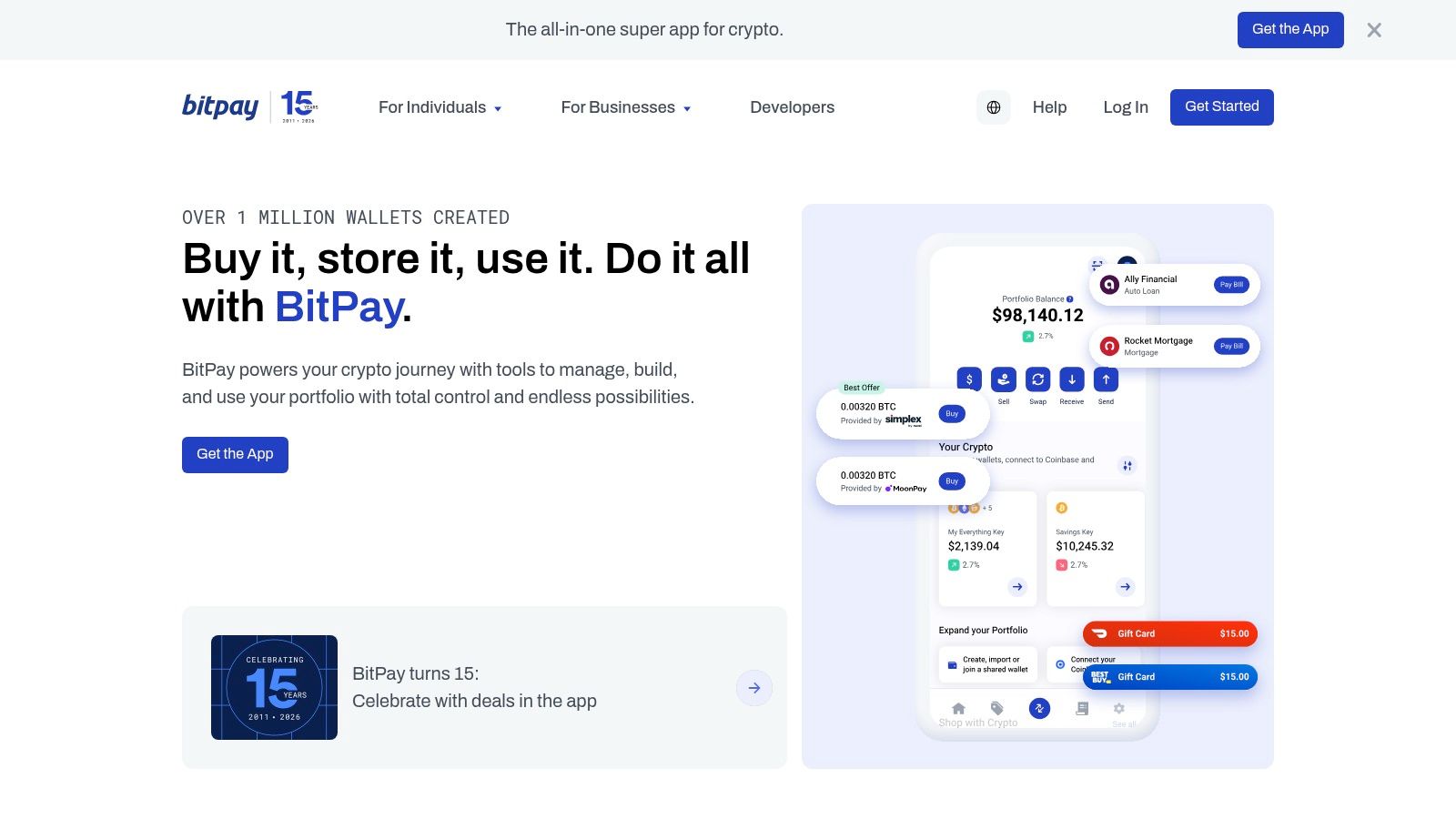
BitPay suits a specific kind of merchant. If the business already runs on invoices, approval flows, accounting controls, and a hosted checkout that finance teams can understand quickly, BitPay remains one of the safer picks in this ranking.
That is also why it ranks well by use case, not by raw flexibility.
Best fit
BitPay works best for established online stores, B2B sellers, and companies that want crypto acceptance to fit inside an existing merchant operations stack rather than reshape it. I would put it on the shortlist for teams that care more about predictable process than experimental checkout design.
Its strongest use cases are practical:
Invoice-heavy sales: Useful for B2B payments, higher-ticket orders, and deals that are not completed in a single session.
Hosted checkout deployment: Good for merchants who want to launch without building their own payment flow from scratch.
Existing store integrations: Helpful if the goal is to add crypto to Shopify, WooCommerce, or another current setup with limited engineering time.
This is the part BitPay gets right. It feels built for merchant accounts teams, not just crypto-native operators.
Trade-offs
The trade-off is that BitPay can feel dated if your payment strategy is built around stablecoins, wallet-native user journeys, or blended checkout flows across cards and crypto. It covers the classic merchant-services model well. It is less compelling for creators, internet-native SaaS, or businesses that want crypto payments to behave like a flexible product layer.
Fee evaluation also takes some care. The processing rate is only part of the decision. Merchants should look closely at settlement options, conversion flow, refund handling, and any extra operational costs that show up after launch.
For the right merchant, that is acceptable. A larger store or B2B operation often values controls and familiarity over novelty.
In this 2026 ranking, BitPay is strongest for traditional e-commerce and invoice-driven businesses. It is weaker for modern monetization use cases where speed of experimentation matters more than established merchant workflow.
4. OpenNode
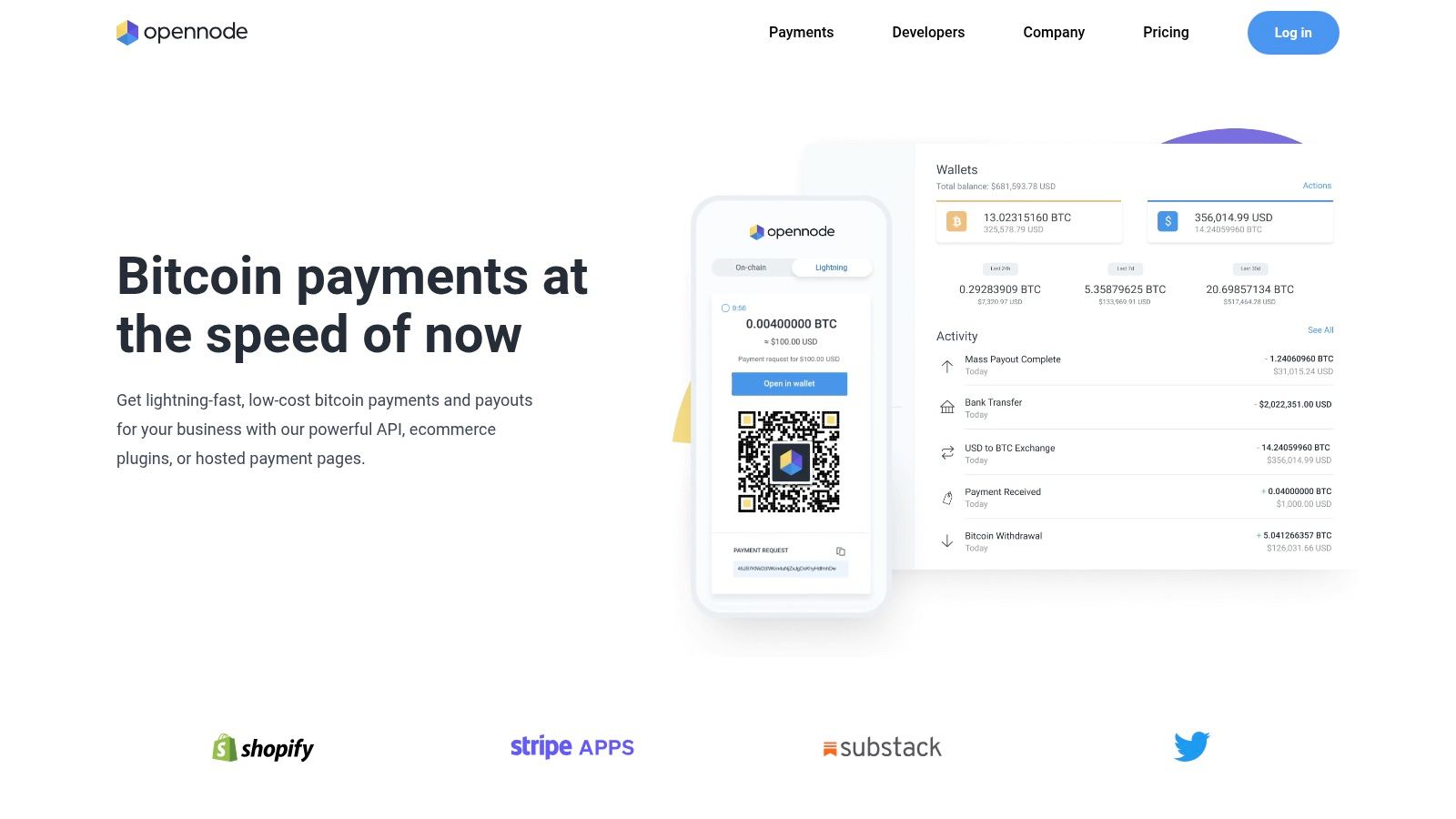
OpenNode is a specialist tool. That's its strength and its limitation. If you want Lightning-focused payments with very fast final settlement and straightforward developer tooling, it can be a strong operational fit.
Best fit
OpenNode works best for merchants who care about speed, low-friction digital payments, and local-currency conversion tied to that specific rail. Small-ticket transactions are the obvious use case. Digital goods, fast online services, and some global micro-payment flows can benefit from that setup.
I'd consider OpenNode when a business has already decided that Lightning is central to its payment strategy. At that point, you're not shopping for the broadest crypto gateway. You're choosing a focused rail with a known checkout behavior.
Trade-offs
That focus is also why OpenNode ranks in the middle, not at the top. It doesn't aim to be a broad multi-chain acceptance layer for a modern internet business. If your customers want a wider range of tokens, or if your finance team wants one place to manage cards and crypto together, OpenNode won't cover enough ground.
Its appeal is clarity, not breadth.
A specialized gateway is usually a good choice only after you've already narrowed your payment strategy. It's rarely the best first crypto gateway for a growing online business.
For technical teams with a narrow requirement, that specialization is useful. For everyone else, it can feel too constrained.
5. BTCPay Server
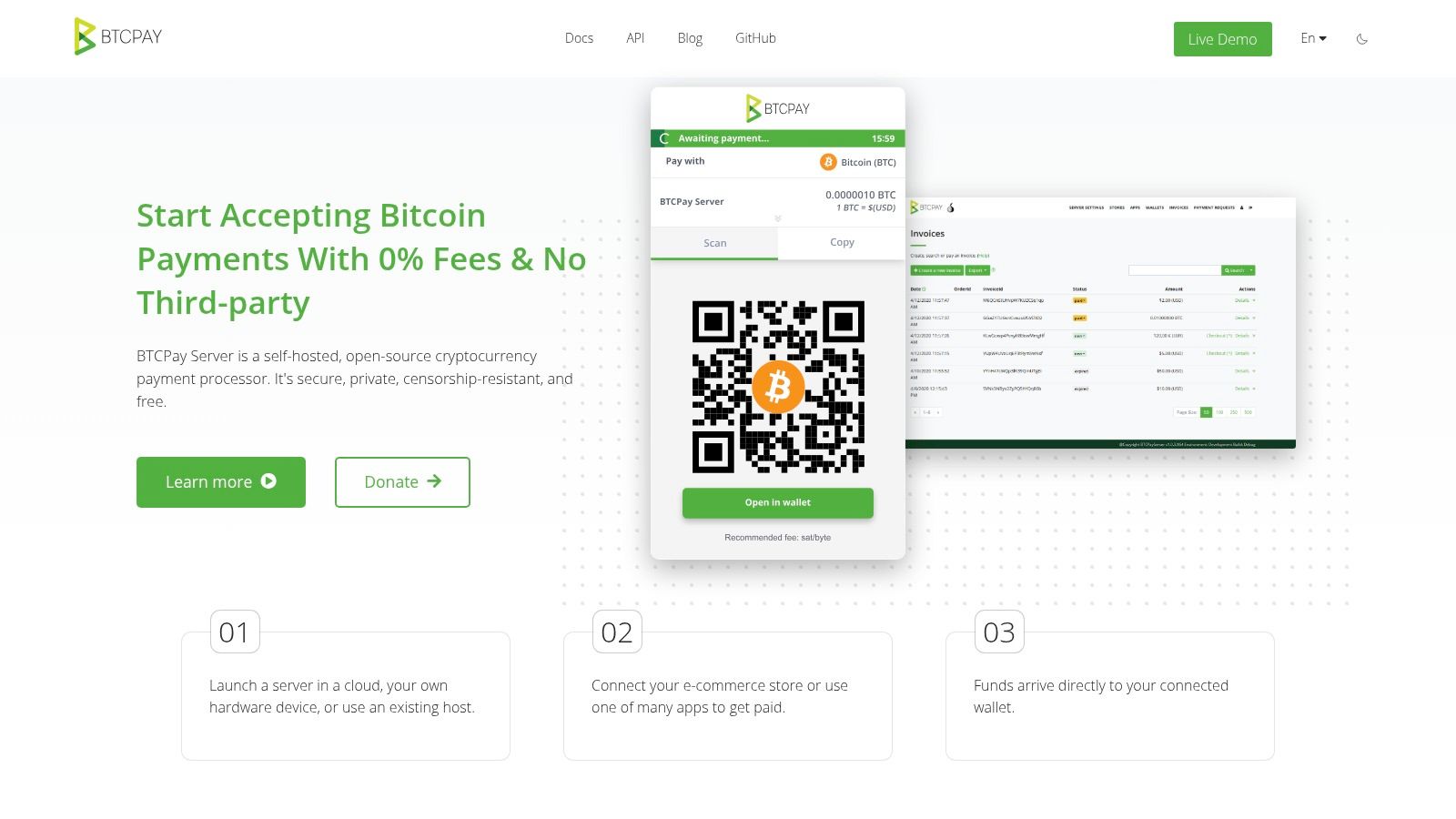
A merchant adds crypto at checkout, then realizes the gateway fee was the easy part. Custody, outages, wallet routing, server maintenance, and accounting rules are where the actual work starts. BTCPay Server is for teams that want to own that stack instead of outsourcing it.
That makes it a very specific entry in this ranking. BTCPay Server is not the general recommendation for a typical online store. It ranks well for one use case: technical merchants who value self-custody, direct control, and no processor markup more than convenience.
Best fit
BTCPay Server fits developer-led businesses, privacy-focused operators, and merchants with in-house infrastructure experience. I'd also consider it for Bitcoin-native companies that already run their own services and do not want a third party sitting between checkout and settlement.
The appeal is straightforward. You control the server, the wallet flow, and the payment logic. There is no gateway take-rate layered on top, and there is no dependence on a processor's custody model.
That level of control matters most when crypto is part of the company's operating model, not just an extra payment button.
Trade-offs
BTCPay shifts cost from fees to operations. Someone on your team has to deploy it, monitor it, update it, secure it, and troubleshoot it under real checkout conditions. For a small SaaS company or creator business, that overhead can outweigh the savings quickly.
It also asks for a clear product decision. If the goal is broad token acceptance, simple onboarding, and minimal maintenance, a hosted provider will usually fit better. Merchants comparing self-hosted infrastructure with simpler aggregator models should review options like this BTCPay alternative for lower-maintenance crypto payments before committing.
This is why BTCPay lands mid-list instead of near the top. For the right team, it is excellent. For a mainstream e-commerce operator, it often creates a second infrastructure project where a payment gateway was supposed to reduce complexity.
6. CoinGate

A common CoinGate buyer already has a live store, a checkout flow that works, and no interest in building crypto infrastructure from scratch. The question is simpler than that. Can this gateway slot into the existing stack, support the assets customers use, and keep operations manageable for finance and support teams?
CoinGate scores well on that use case. It fits merchants who want crypto added to an established e-commerce setup with hosted checkout, invoicing, plugins, and API access in the same product. I would put it highest on the shortlist for stores and digital sellers that care more about implementation speed and platform compatibility than treasury customization.
Best fit
CoinGate is a strong match for European e-commerce businesses, agencies running stores for clients, and digital product sellers that need a processor with familiar merchant tooling. It is also a reasonable option for teams that expect customers to pay across different networks and want the gateway to handle the messy part of payment routing and conversion logic.
That makes it different from BTCPay Server in practice. BTCPay is for merchants that want control over infrastructure. CoinGate is for merchants that want crypto checkout live without turning payments into an engineering project.
Teams comparing broad-asset gateways should also review this breakdown of a NOWPayments alternative for online businesses, especially if they are deciding between asset breadth and a more store-centered setup.
Trade-offs
CoinGate works best when crypto is an added payment method, not the center of your billing model. If you need recurring subscription logic, complex payout workflows, or one system that combines card processing and crypto under a single payments layer, other options in this ranking fit better.
Geographic coverage also needs a close review before rollout. That matters most for cross-border merchants, because country availability, settlement options, and compliance fit can shape whether the gateway is convenient or operationally annoying once volume grows.
That trade-off explains its position in this list. CoinGate is not the most flexible option for every internet business model, but for store operators who want a practical crypto checkout layer with less setup friction, it is one of the easier choices to justify.
7. NOWPayments
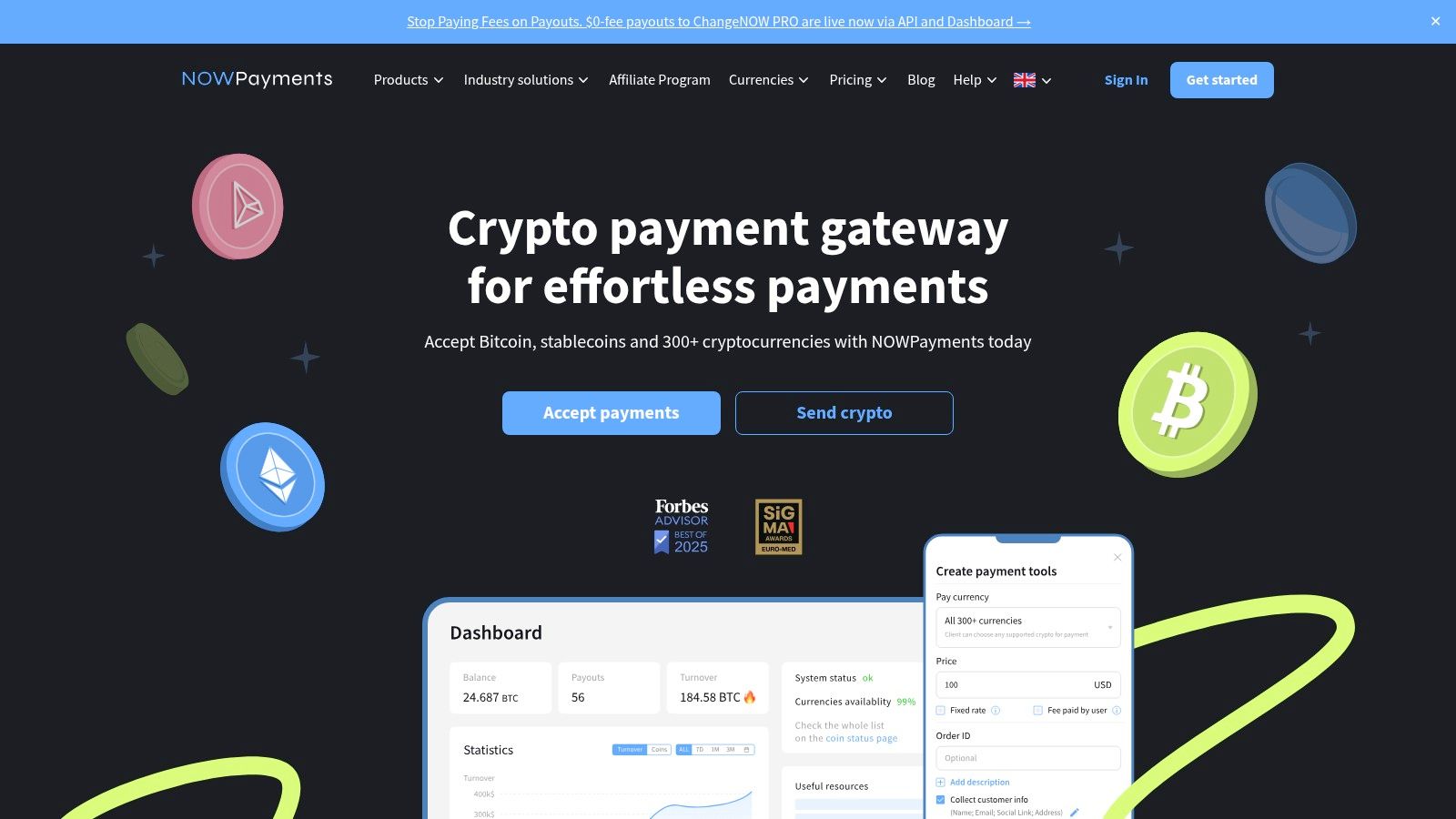
A familiar checkout problem looks different in crypto. A customer reaches the payment page ready to buy, but wants to pay with an asset your gateway does not support. If broad coin and network coverage is the requirement, NOWPayments earns a place near the top of the shortlist.
Its appeal is practical. Merchants can accept a wide range of cryptocurrencies, use payment links or plugins, and get crypto checkout live without a long sales process. That makes it a strong fit for businesses still validating demand, especially in markets where buyers show up with very different wallet habits.
Best fit
NOWPayments fits merchants that want to cast a wide net first and optimize later. I would look at it for creator businesses, digital product sellers, and online stores that expect scattered demand across many assets rather than concentrated volume in BTC or stablecoins alone.
It also suits teams that want to test crypto as an acquisition channel, not rebuild billing around it on day one. That distinction matters in this ranking. For a merchant in discovery mode, breadth and launch speed can matter more than having the cleanest finance workflow six months from now.
If you're comparing broad-asset gateways against more unified payment stacks, this Suby guide on a NOWPayments alternative for online businesses is a useful comparison point.
Trade-offs
The trade-off is operational overhead. Supporting many assets sounds merchant-friendly, but every extra coin can create more edge cases around refunds, customer support, accounting, and settlement preferences.
That is where NOWPayments needs a harder implementation review than the marketing pitch suggests.
A pilot usually tells you what the feature page cannot. Check how payments appear in your order system, how easy it is to reconcile payouts, what happens when customers underpay or send funds on the wrong network, and whether your finance team is comfortable with the settlement flow. Those issues decide whether broad support is useful in practice or just more complexity at checkout.
That is why NOWPayments ranks well for testing and reach, but lower for merchants that need a tightly controlled billing operation. It is a better match for experimentation and broad acceptance than for highly structured revenue systems.
8. CoinPayments

CoinPayments has been around long enough that many merchants encounter it during early crypto payment research. Its appeal is straightforward. Broad asset support, lots of store integration guidance, and a long operating history.
Best fit
CoinPayments is best for merchants who value breadth and familiarity over a more opinionated product model. If you run a standard online store and want a veteran crypto gateway with a lot of platform documentation, it's a reasonable option to evaluate.
Its published payment processing fees start at 0.5%, based on the plan notes for this comparison, and that makes it visually attractive during first-pass pricing research.
Trade-offs
In practice, CoinPayments is one of those tools where you should think in terms of landed operational cost, not just published headline pricing. Network fees and workflow friction still matter. Refund handling and user experience are the kinds of issues that only become clear after a real pilot.
So I'd treat CoinPayments as a stable middle-ground candidate. It's not the most modern all-in-one option, and it's not the most specialized. It's a broad legacy choice that can still work if your needs are simple and your store stack already aligns with it.
9. Crypto.com Pay for Business
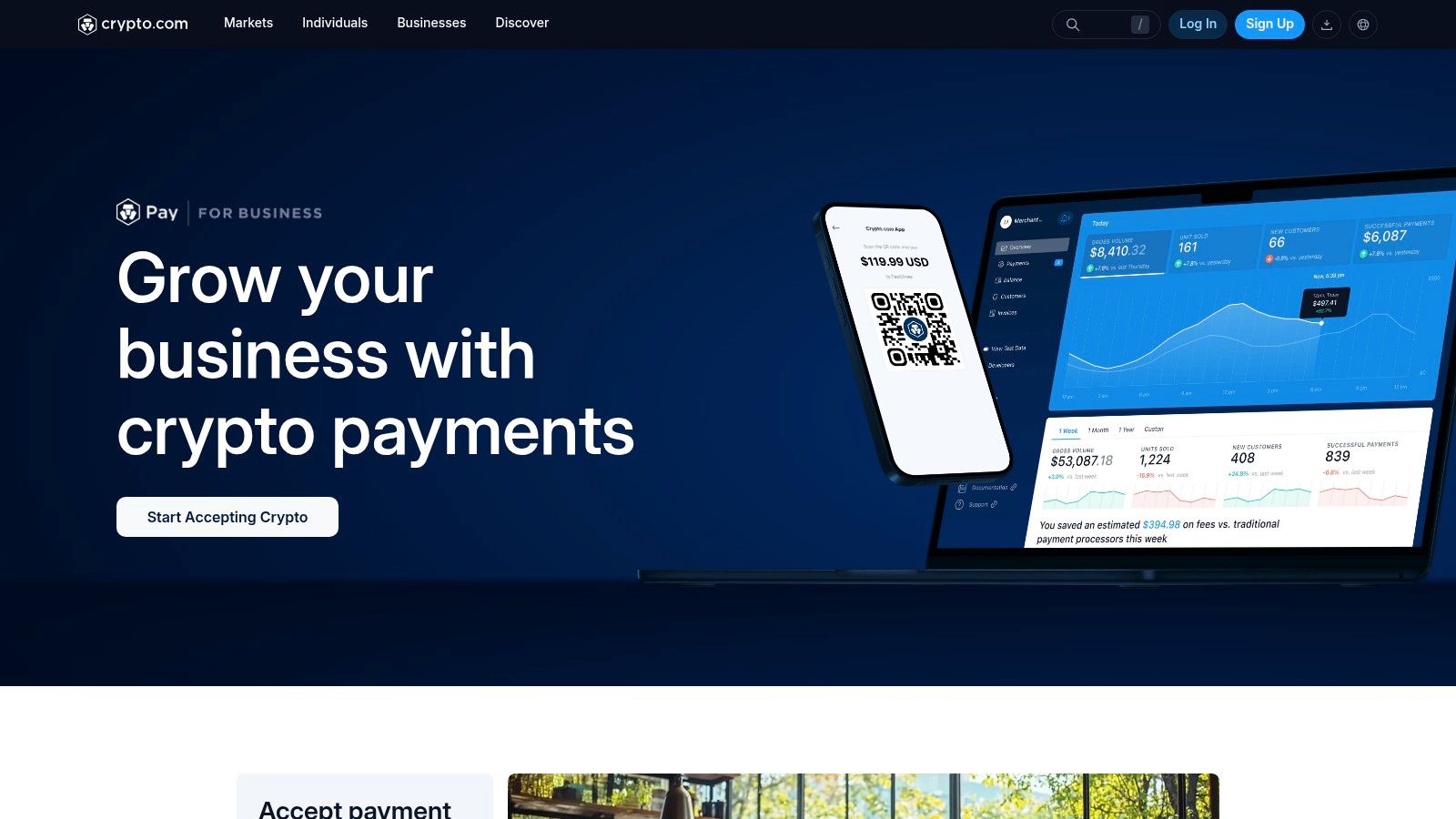
Crypto.com Pay for Business is worth considering when customer acquisition matters almost as much as payment acceptance. Some gateways are purely infrastructure. Crypto.com also brings a large consumer-facing brand and app ecosystem into the picture.
Best fit
This is a better fit for merchants who think distribution matters. If your customers already use the Crypto.com app, checkout familiarity can help. For some merchants, the co-marketing and catalog exposure angle is part of the appeal, not just the payment processing itself.
That makes it more interesting for consumer brands than for infrastructure-heavy SaaS companies.
Trade-offs
The big caution here is messaging versus total cost. “Zero transaction fee” positioning can sound cleaner than the actual settlement picture. Withdrawal, settlement, and network costs still need review, and U.S.-specific terms may affect eligibility or rollout details.
So I wouldn't choose Crypto.com Pay just because the top-line marketing sounds simple. I'd choose it if the buyer ecosystem and brand familiarity are useful to your customer acquisition strategy.
For the right merchant, that can matter. For many B2B or back-office driven businesses, it won't.
10. Strike for Business

Strike for Business is another specialist. It focuses on Lightning payments while letting merchants settle in USD, which makes it appealing to businesses that want fast payer experience without carrying price volatility on their own books.
Best fit
Strike is strongest for merchants who specifically want Lightning speed and economics, but don't want their finance team holding crypto balances. That can work well for online sellers with international buyers and relatively small average ticket sizes.
It's also one of the clearer examples of a narrow but useful payment strategy. If you already know Lightning is central to your customer base, Strike deserves a real look.
Trade-offs
Like OpenNode, Strike works best after strategy has already narrowed. It's not the broadest answer to “what's the best crypto payment gateway for online business in 2026?” It's the best answer for a specific payment rail and a specific merchant preference around fiat settlement.
You also need to review account eligibility, routing fees, and fee structure by business profile. Specialist tools often look great in principle and then become more conditional in implementation.
That doesn't make Strike weak. It makes it targeted.
Top 10 Crypto Payment Gateways by Use Case (2026)
Product | Core features | Payment & settlement | Target audience | Pricing & notable fees | Unique selling point |
|---|---|---|---|---|---|
Suby | API-first payments, shareable paylinks, hosted checkout, subscriptions, real-time dashboard | Accept cards, wallets, bank, BNPL and multi-chain crypto (single Suby balance). Payout to bank or in stablecoins (e.g., USDC); FX-optimized rails | Global SaaS, e‑commerce, creators, agencies, builders wanting unified fiat+crypto flows | Per-payin pricing varies, site notes a 4% card fee as an example; check pricing page for exact rates | Unified card + crypto gateway with one consolidated balance and stablecoin settlement |
Coinbase (Commerce / Business) | Stablecoin APIs, enterprise controls, reporting, plugins | Crypto acceptance with custody and bank off-ramp options | US / enterprise merchants seeking brand trust and controls | Volume/plan based; per-transaction rates vary by plan | Enterprise-oriented stablecoin checkout & custody options |
BitPay | Invoices, payment links, hosted checkout, e‑commerce plugins | Crypto acceptance with fiat-settlement options and configurable confirmation settings | E‑commerce merchants and businesses seeking plugin support | Tiered transaction fees; network/refund miner fees may apply | Mature merchant tools and broad plugin support |
OpenNode | Lightning & on-chain payments, payment requests, developer APIs | Lightning-first acceptance, automatic crypto→local conversion, bank transfer payouts | Merchants wanting Lightning speed and low fees (small tickets) | Conversion free; on-chain withdrawals typically carry a fee | Lightning Network speed with instant settlement options |
BTCPay Server | Self-hosted invoicing/checkout, WooCommerce integrations, run-your-own-node | Self-custody payments; no processor take-rate (only network/hosting costs) | Technical teams wanting full custody and sovereignty | No processor fees; hosting and network costs only | Open-source, self-hosted sovereignty and zero processor take-rate |
CoinGate | Multi-asset support, invoices, hosted checkout, platform plugins | Support for many coins and Lightning; exchange-rate locking at payment time | Merchants wanting broad coin selection with clear integrations | Standard processing fees (typically ~1% reported) | Broad cryptocurrency selection with rate protection |
NOWPayments | Large coin catalog, payment links, plugins for major carts | Many coin options, quick integrations and simple invoicing | Merchants testing crypto demand or adding many coin options quickly | Service-fee tiers depending on flow; blockchain fees still apply | Fast to launch with very wide asset coverage |
CoinPayments | Wide coin & wallet support, extensive store integration guides | Multi-coin payments with wallet features and plugins | Merchants wanting extensive asset coverage and integration guides | Published fee schedule (fees from ~0.5%); network fees apply | Veteran multi-coin gateway with abundant integration resources |
Crypto.com Pay (Business) | App checkout integrations, merchant APIs, co-marketing options | Payments from Crypto.com app and compatible wallets; settlement/withdrawal terms apply | Merchants seeking exposure to Crypto.com user base | “Zero transaction fee” messaging for Pay Checkout (terms apply); withdrawal/network costs may apply | Access to Crypto.com consumer base and app-native UX |
Strike for Business | Lightning payment APIs, payment quotes, integrations | Lightning payments with option to settle in USD (fiat settlement) | Merchants wanting Lightning speed without crypto price exposure | Coverage and fee details vary by account/volume | Lightning speed for buyers with fiat settlement for merchants |
Making Your Final Choice
A final shortlist usually gets made under pressure. Finance wants predictable settlement. Support wants fewer payment edge cases. Product wants a checkout flow that does not split users by payment method. That is why the right choice is not the gateway with the longest feature table. It is the one that fits your operating model after launch.
The broader market supports taking crypto payments seriously. The global crypto payment gateways market was valued at USD 1.7 billion in 2025 and is projected to reach USD 1.9 billion by the end of 2026, with a CAGR of 13.6% through 2036 to hit USD 6.8 billion. The same report also notes that 39% of U.S. retailers accept digital assets, and about 30% of American adults own cryptocurrency as of 2026. For merchants, that shifts crypto from an experimental channel to a checkout, treasury, and cross-border operations decision.
The practical choice comes down to four checks:
Payment flow: Do you need one-time checkout, subscriptions, invoices, or access control for communities and digital products?
Checkout structure: Do you want card and crypto in one payment stack, or can you tolerate a separate crypto-only flow?
Settlement: Do you want fiat settlement, or do stablecoins such as USDC fit your cash management better?
Team capacity: Can your team run and maintain payment infrastructure, or do you need a managed setup that ships quickly?
This use-case ranking matters more than a raw feature comparison. A SaaS company billing monthly, a creator selling community access, and a cross-border store handling support tickets have different failure points. The ranking only helps if it maps those differences clearly.
Suby sits near the top of this list because it covers several of those use cases in one system. It combines card and crypto acceptance, supports subscription and paid-access flows through Discord and Telegram, and gives merchants flexibility on how they settle. That setup is useful for SaaS, digital products, agencies, creator businesses, and online stores that do not want separate tools for each payment path.
There is also a technical reason merchants keep looking at stablecoin-settled models. Suby's published materials describe a gateway flow that converts inflows into USDC at a locked rate on transaction confirmation, supports near-instant payout options, and reduces banking friction for international businesses. Its pricing is described by payment method rather than a single flat rate, including a 2.9% + $0.30 all-inclusive gateway model for a specific use case described in Suby's 2026 article.
If your business is U.S.-centric and enterprise-driven, Coinbase or BitPay may fit better. If your team wants fast plugin-based e-commerce setup in Europe, CoinGate is a serious option. If coin coverage matters more than checkout unification, NOWPayments deserves a close look. If control matters more than convenience, BTCPay Server remains the self-hosted option to beat.
My rule is simple. Choose the gateway your finance, ops, product, and support teams can all work with six months after rollout.
For many internet-native businesses, especially those that want card and crypto in the same customer journey, Suby is the most practical place to start. If you want one payment system that lets customers pay by card or crypto and lets your business settle to bank or stablecoins like USDC, Suby is a strong fit for SaaS, online communities, global e-commerce, and invoicing-heavy businesses that need flexibility without stitching together multiple payment tools.
