
Gaspard LEZIN
How to Sell Software as a Service: A Global Playbook
Learn how to sell software as a service internationally. Our step-by-step playbook covers positioning, pricing, global payments with USDC, and subscriptions.
You've got a product that solves a real problem. Demos land well. Trial users say the setup feels easy. The roadmap is moving. Then the first serious wave of international demand arrives, and the weak point isn't the software. It's getting paid.
That's where many founders learn that selling software globally isn't just a sales problem. It's a monetization problem. The usual advice about lead gen and demos matters, but it doesn't help much if a buyer can't complete checkout, if your payout arrives late, or if cross-border costs eat into margin before the customer even renews.
Table of Contents
Setting the Stage for Global SaaS Sales
Price in a language buyers already understand
Your financial backend is part of your product
Global trust is built through clarity
Comparison of SaaS Billing Models
Recurring plans still matter
One-time payments have a place
Usage-based pricing changes the sales motion
Match pricing to buyer psychology
What buyers need at the moment of payment
How to reduce checkout abandonment without making the flow feel risky
Familiar payment in, stable settlement out
Choose the integration path that matches your team
Automate what happens after payment
Why settlement architecture matters more than most founders think
Operations after checkout shape retention
Access control needs to be automatic
Track the dashboard that helps you act
Your Blueprint for Global SaaS Success
Setting the Stage for Global SaaS Sales
The opportunity is massive, but the operating conditions are messy. The global SaaS market reached $157 billion in 2020, over 12 times its size in 2010, and was projected to hit $307 billion by 2026, according to Zendesk's SaaS sales overview. That tells you something important. Buyers already expect software to be delivered, updated, and paid for online.
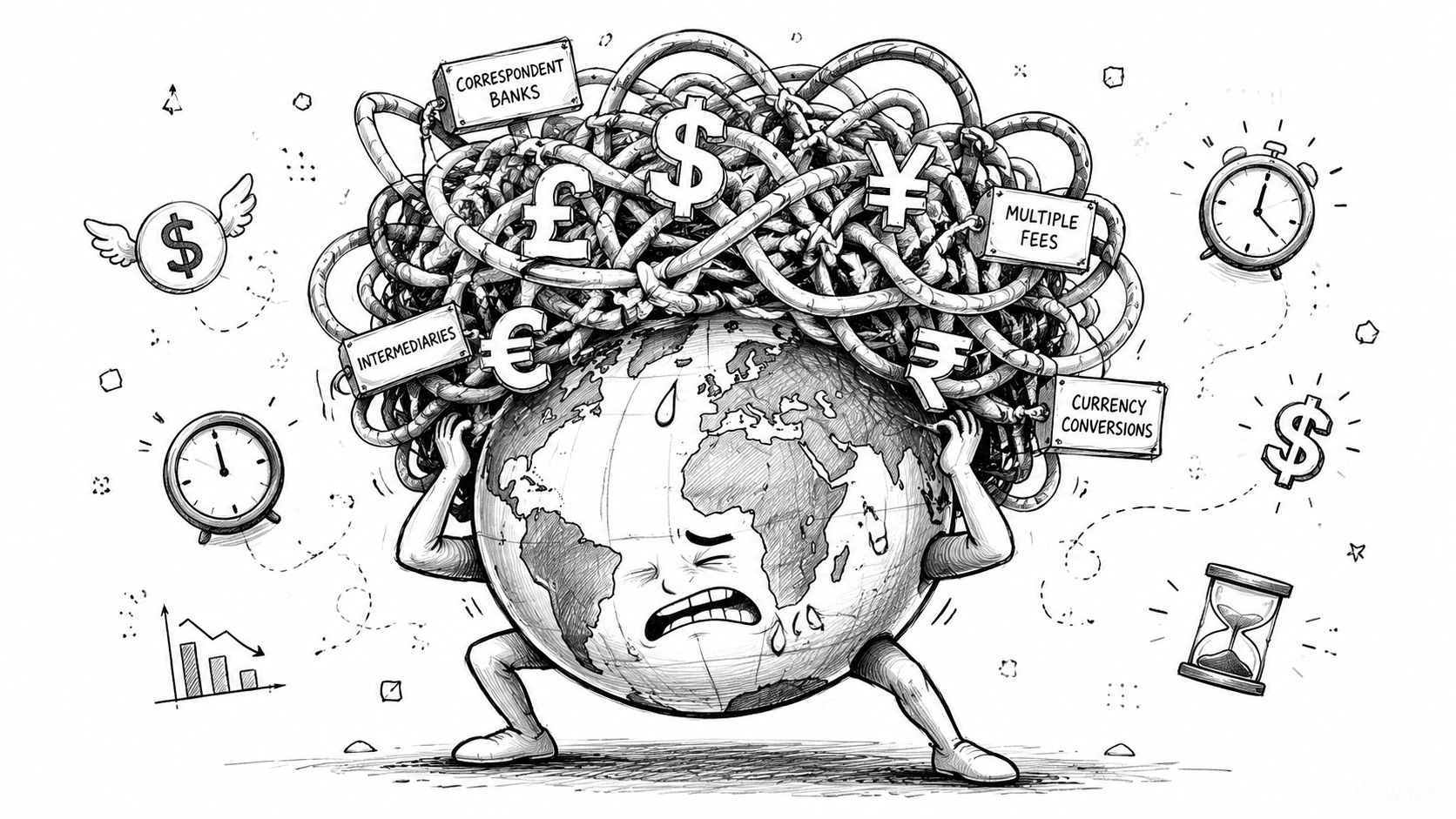
The hard part starts when your addressable market stops being local. A founder in Europe wants to sell to teams in Latin America, Southeast Asia, Africa, and the US. The website works everywhere. The app works everywhere. The payment stack doesn't.
A lot of launch advice focuses on messaging, onboarding, and growth loops. That's useful, and a resource like the Saaspa.ge product launch guide is worth reviewing before release. But international SaaS launches usually break on a more basic question. Can the customer pay in a familiar way, and can the business receive revenue without FX friction, payout delays, or a maze of regional banking dependencies?
Practical rule: If your monetization layer is fragile, your go-to-market is fragile too.
That's why a successful global playbook starts earlier than typically expected. Before you refine outbound, before you optimize demos, before you scale paid acquisition, you need a payment and settlement design that works across borders from day one. A clean model is simple for the buyer and predictable for the seller. Customers pay in a familiar way, often by card. The business receives stable revenue in USDC, which reduces payout uncertainty and removes a lot of avoidable operational noise.
Positioning Your SaaS for a Global-First Audience
Founders often treat global positioning as a content problem. They translate the homepage, add a country selector, maybe localize some onboarding copy, and assume they're ready. That's not enough.
Global-first positioning starts with how the product gets bought. If your buyer understands the offer but gets confused by pricing, settlement timing, tax visibility, or currency handling, your market position weakens right at the point where trust matters most.
Price in a language buyers already understand
For most SaaS categories, that language is a clear base price in USD. Not because every customer thinks in USD, but because it creates a stable reference point for teams comparing tools across markets. It also keeps your internal pricing logic cleaner when you're testing tiers, annual plans, add-ons, or enterprise exceptions.
The mistake is stopping there. Many companies present a neat USD price on the front end, then accept operational chaos on the back end. Revenue lands in different banking channels. FX spreads shift the actual amount received. Finance has to reconcile mismatched settlement records. Support gets pulled into billing confusion that should never have reached the customer.
Your financial backend is part of your product
A global SaaS company is selling reliability, not just features. Buyers may never ask how you settle funds, but they feel the consequences when your billing logic gets messy. That's why receiving revenue in a stable digital dollar like USDC is more than a treasury preference. It can become part of product-market fit for an international business.
A simple setup looks like this:
Front-end familiarity: Customers pay in a way they already trust, usually by card.
Back-end consistency: The business receives USDC, which avoids the usual bank-by-bank sprawl.
Cleaner operations: Finance, support, and product all work from a more predictable revenue flow.
Fewer geographic exceptions: You don't need to redesign your monetization logic every time demand appears in a new region.
That's a different posture from “we support international customers.” It says your company was built to sell internationally from the start.
For early-stage teams, this matters even before scale. The first ten countries you sell into shape the habits you'll carry into the next hundred customers. If the first version of your billing stack depends on workarounds, manual reconciliation, or payout uncertainty, those habits become expensive later.
A useful founder read on this broader setup problem is starting a software firm. It's a reminder that product, sales motion, and financial infrastructure are tied together much earlier than teams often expect.
Positioning isn't only what you promise on the landing page. It's what your billing and settlement model lets you deliver consistently.
Global trust is built through clarity
The strongest international SaaS brands make buying feel uneventful. That sounds small, but it's a real advantage. Buyers want to know what they'll pay, when access starts, what renewal means, and whether the vendor feels stable enough to trust with an ongoing workflow.
You build that trust by standardizing the parts commonly left messy:
One pricing logic, instead of country-by-country improvisation.
One settlement standard, instead of relying on local banking patches.
One clear customer payment experience, even if your back-end infrastructure is modern.
When founders get this right, their global expansion feels less like entering foreign markets one by one and more like extending a system that already works.
Choosing Your Pricing and Billing Models
Pricing model choice shapes sales more than most founders admit. It affects how prospects evaluate value, how finance forecasts revenue, how product teams package usage, and how support handles edge cases. It also changes what “sell software as a service” means in practice. You're not only selling access to software. You're selling a contract structure the buyer has to feel comfortable adopting.
Zylo notes that the industry is increasingly moving toward consumption-based pricing, away from the older assumption that recurring subscription growth is always the default, in its 2026 SaaS statistics roundup. That matters because many AI-influenced products don't create value in a perfectly fixed monthly pattern.
Comparison of SaaS Billing Models
Model | Revenue Predictability | Best For | Global Challenge |
|---|---|---|---|
Subscription | High | Ongoing software access, team tools, B2B workflows | Renewal friction, card lifecycle issues, regional billing expectations |
One-time payment | Lower over time | Setup fees, lifetime deals, add-on modules, onboarding packages | Harder to align long-term support with one-off revenue |
Usage-based | Variable | API products, AI workloads, transactional software | Metering, invoice clarity, spend volatility, billing transparency |
Recurring plans still matter
Subscriptions remain the cleanest model for many SaaS businesses. They match how customers think about ongoing software access, and they give the vendor a stable operating cadence. Monthly plans reduce adoption friction. Annual plans often fit procurement better for established teams.
Subscriptions work especially well when the product has these characteristics:
Continuous value delivery: The customer uses the product every week, not just during setup.
Clear seat or workspace logic: Billing is easy to explain to finance and procurement.
Retention upside: Expansion revenue comes from more users, more teams, or higher tiers.
What doesn't work is forcing every product into a flat subscription just because that's what SaaS used to be known for. If usage varies sharply by customer or month, a rigid plan can either undercharge heavy users or scare off light ones.
One-time payments have a place
A lot of founders dismiss one-time payments because they don't fit the classic recurring revenue story. That's too narrow. One-time charges can make sense for implementation, migration, audits, premium templates, special integrations, or access to a narrowly defined feature set.
They can also help shorten early sales cycles. Some buyers won't commit to a recurring plan without first paying for a contained deliverable. A one-time productized offer gives them a lower-risk starting point.
Use one-time billing carefully:
Good use case: Paid onboarding or setup for a larger subscription relationship.
Risky use case: Lifetime access to a product with ongoing infrastructure costs.
Better framing: Treat one-time charges as part of your monetization menu, not your whole business.
For teams comparing model design and operational trade-offs, billing for SaaS is a practical reference.
The wrong billing model doesn't just hurt monetization. It attracts the wrong buyer and creates the wrong support burden.
Usage-based pricing changes the sales motion
Usage-based pricing can be a strong fit for API products, AI tools, developer infrastructure, and software tied directly to output. It aligns spend with value. Customers often like that logic because they don't feel overcommitted on day one.
But this model creates new discipline requirements. You need credible metering. You need invoice readability. You need safeguards so customers don't feel surprised when spend changes. Sales has to explain not only what the product does, but how spend behaves under different usage patterns.
A practical compromise is often better than purity. Many SaaS companies do well with a hybrid structure:
Base subscription for platform access or included capacity.
Usage component for overages or variable workloads.
Optional one-time services for onboarding or custom setup.
That hybrid design tends to fit modern products better than a single billing philosophy applied everywhere.
Match pricing to buyer psychology
Founders usually ask, “What pricing model will maximize revenue?” The better question is, “What model fits how this buyer perceives risk?” A startup buyer and an enterprise buyer often react differently to the same packaging.
A few practical matches help:
SMB self-serve: Monthly subscription, easy checkout, minimal negotiation.
Mid-market operational software: Annual options, seat-based clarity, straightforward add-ons.
Technical product with bursty demand: Hybrid pricing with visible usage controls.
Community or access-based product: Recurring membership, simple renewal rules, automated access management.
The cleanest model is the one your sales team can explain in one short paragraph and your customer can validate without calling finance.
Designing a Frictionless Global Checkout Flow
A lot of deals die in the last two minutes. Not because the prospect changed their mind about the product, but because the checkout introduced confusion, friction, or distrust. This is not unique to software either, since anyone selling across borders faces it, whether they run a SaaS product or are working out how to sell jewelry online.
That's easy to overlook when your team is focused on demos and pipeline stages. But the standard SaaS sales process ends at payment for a reason. Teamgate's SaaS sales process guidance makes the sequence explicit, and the final step matters because a complicated payment process can undo all the work done before it in the pipeline, as described in their SaaS sales process breakdown.
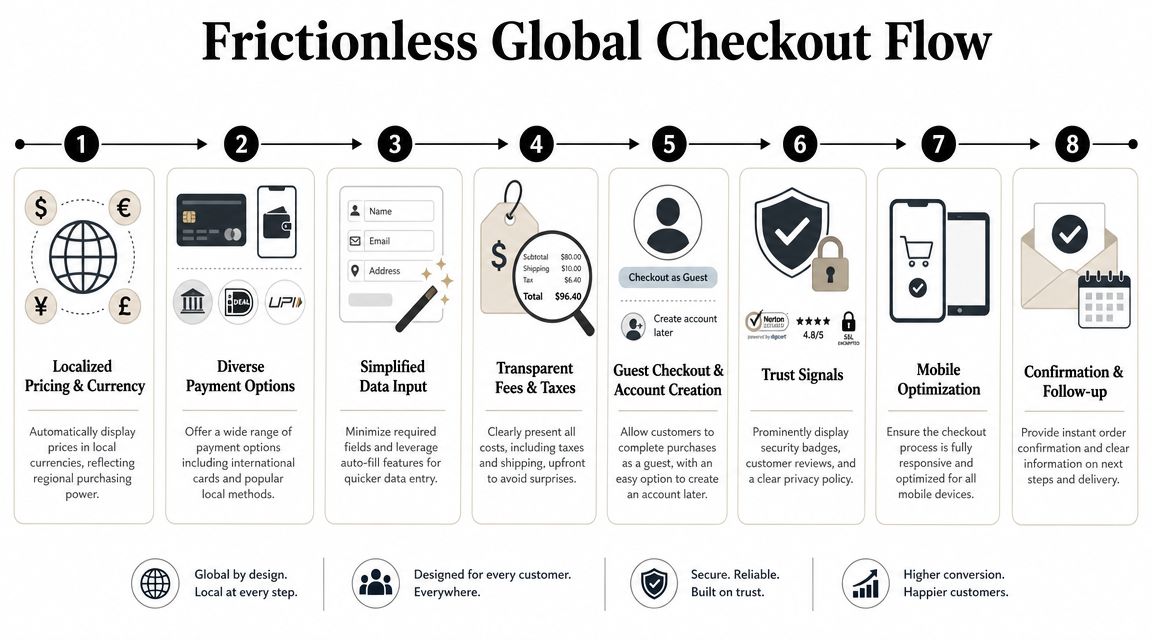
What buyers need at the moment of payment
By the time a customer reaches checkout, they don't want exploration. They want confirmation. The page needs to answer a short list of questions fast:
What am I buying
How much will I pay
What happens after payment
Can I trust this page
Can I use a payment method I already know
For most international SaaS checkouts, accepting major cards is essential. Buyers shouldn't need to learn a new payment behavior just to start using software. The smart architecture is to keep the front-end experience familiar while upgrading the settlement layer behind the scenes so the business receives revenue in USDC.
That split matters. It protects conversion on the customer side and improves predictability on the operator side.
How to reduce checkout abandonment without making the flow feel risky
Founders often overbuild checkout. They add too many form fields, too many plan explanations, too many upsell prompts, and too many account requirements. Every extra step gives the buyer another reason to pause.
A better checkout flow usually follows these rules:
Keep the form short. Ask only for what is required to complete payment and provision access.
Show full pricing clearly. If taxes, billing cadence, or renewal terms apply, display them plainly.
Support guest intent where possible. Don't force account creation before payment if it isn't needed.
Confirm access immediately. Tell the buyer what happens next the moment payment succeeds.
Design for mobile first. A surprising amount of urgency-driven buying happens on phones.
For teams building commerce or subscription flows in web products, the TranslateBot piece on global payments and shipping for Django is a helpful implementation-oriented read, even if your exact stack differs.
If checkout feels like a compliance form, buyers hesitate. If it feels like the natural final click, more of them finish.
Familiar payment in, stable settlement out
Modern payment design creates a strategic advantage. Your buyer uses a card because that feels normal. Your business receives USDC because that keeps settlement cleaner across borders. That combination solves two different problems without forcing either side into an awkward workflow.
What tends not to work:
Forcing region-specific payment logic too early
Sending customers off-platform to complete essential billing steps
Hiding renewal rules or taxes until the last screen
Treating payout architecture as irrelevant to conversion
A clean global checkout is part UX, part trust design, and part financial infrastructure. Teams that understand all three close more of the demand they already worked hard to create.
Integrating Your Global Payment and Subscription Engine
Once the commercial model is clear, the next question is operational. How do you plug payments, subscriptions, access control, and settlement into the product without creating a brittle system your team has to babysit?
The answer depends on your stage. Early teams need speed. Later teams need control. Both need a way to accept payment globally without dragging finance and support into manual cleanup.

Cross-border friction is a real part of this decision, not a theoretical one. The World Bank reported that the global average cost of sending $200 was 6.3% in Q4 2024, and the G20 and World Bank target remains 3% or lower, as cited in Bain's discussion of underserved markets and payment frictions in selling to payment-constrained businesses. If your company sells internationally, payout certainty is part of your sales strategy.
Choose the integration path that matches your team
There are usually three sane ways to launch a payment and subscription engine.
Shareable paylinks work well when speed matters more than deep product embedding. They're useful for early-stage SaaS, founder-led sales, pilot programs, and manual onboarding. A prospect agrees to buy, you send a payment link, and the transaction can happen without waiting on a full engineering sprint.
Embedded checkout is the next step. It keeps the payment experience inside your product or website and gives the buyer a more consistent journey. This is often the right middle ground for teams that want stronger conversion without building every payment screen from scratch.
Full API integration makes sense when billing is core to the product. API access lets you build custom plan logic, connect subscription events to your app state, and automate the post-payment lifecycle in a way that fits your own architecture.
For international SaaS teams comparing infrastructure options, best payment platform for international SaaS expansion lays out the kinds of operational questions worth pressure-testing.
Automate what happens after payment
A payment event should trigger work automatically. If a customer pays, your app should know it. If a subscription renews, access should continue. If a payment fails or a subscription ends, the system should update access rules without a support agent stepping in.
Webhooks are critical for automation. Good webhook design lets you automate:
Account provisioning
Plan upgrades or downgrades
Access revocation after cancellation or failed renewal
Notifications to internal tools
Community membership changes if your product includes gated access
Suby is one example of this type of infrastructure. It provides an API that lets businesses accept payments by card or crypto, supports one-time payments and recurring subscriptions, and can be used through paylinks, embedded checkout, or direct API integration. It also offers native Discord and Telegram integrations for subscriptions, paid access, and online communities. In practical terms, users pay with cards, and businesses receive USDC.
A short product walkthrough helps clarify what this looks like in implementation:
Why settlement architecture matters more than most founders think
Many teams evaluate payment tooling only at the acceptance layer. Can it take a card? Can it run subscriptions? Can it send webhook events? Those questions matter, but they're incomplete.
You also need to ask what happens after money is captured. If settlement is slow, opaque, or fragmented across banking rails, the company carries hidden operating costs. Finance has a harder time forecasting. Founders spend more time tracking payouts. Support gets dragged into revenue issues that feel random to customers.
Stablecoin settlement changes that equation for global businesses. Receiving revenue in USDC can reduce dependency on local banking arrangements and remove a lot of FX-related complexity. For companies selling into payment-constrained markets, that's not just a treasury improvement. It can be part of how you make international sales commercially viable in the first place.
Managing Post-Sale Operations and Monitoring Growth
The sale isn't done when payment succeeds. It's done when the customer gets access, understands what they bought, renews without confusion, and stays long enough for the account to become durable.
That means post-sale operations deserve the same design discipline as acquisition. Founders who ignore this end up with preventable churn, avoidable support load, and financial reporting that arrives too late to help.
Operations after checkout shape retention
The first post-payment hour matters. So does the first week. If access is delayed, invoices are unclear, renewals surprise the customer, or refunds become a support maze, trust drops fast.
A solid operational baseline includes:
Immediate confirmation: The buyer should know payment succeeded and what happens next.
Clear subscription state: Active, trialing, renewing, canceled, and past-due states should be visible internally.
Dispute handling workflow: Support needs a repeatable path for responding to billing issues.
Refund process: Teams should be able to resolve edge cases without turning every exception into a finance escalation.
Many SaaS businesses discover that “payments” was really several systems wearing one label. Acceptance, subscriptions, entitlements, customer communication, disputes, refunds, and payouts all need to line up.
Good post-sale ops feel boring to the customer. That's the point.
Access control needs to be automatic
This matters even more for businesses that monetize communities, premium support groups, private channels, or member-only product access. If people pay for access and your team still manages permissions manually, you've created an operations trap.
Automatic access management keeps your system honest. When a payment succeeds, access is granted. When a subscription expires or is canceled, access changes based on your policy. That logic is especially useful for products tied to Discord or Telegram, where payment and membership status need to stay in sync.
Practical access rules usually look like this:
Grant access on successful payment
Maintain access during active subscription periods
Remove or downgrade access when status changes
Keep an event log so support can verify what happened
That structure protects both revenue and user experience. It also saves founders from becoming part-time membership admins.
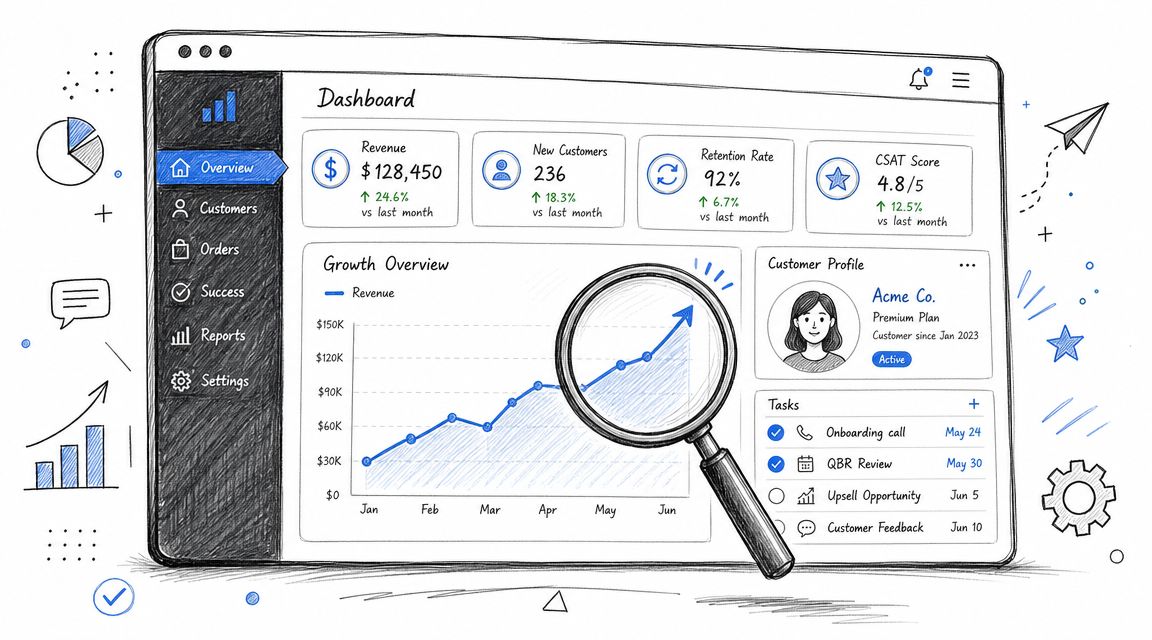
Track the dashboard that helps you act
A lot of dashboards look informative and still fail the operator. They show lots of numbers but don't help anyone make the next decision.
The dashboard that matters for SaaS should answer a short list of business questions:
Question | What to monitor | Why it matters |
|---|---|---|
Are subscriptions growing or shrinking | Recurring revenue trend | Shows whether retention and expansion are beating losses |
Are customers staying | Churn pattern | Highlights product, onboarding, or pricing issues |
Are buyers moving up plans | Expansion activity | Signals account health and packaging fit |
Are payouts clean | Settlement visibility | Keeps finance and founder reporting reliable |
Are support issues repeating | Refund and dispute patterns | Exposes weak points in checkout or communication |
The specific formulas can vary by team, but the core metrics stay familiar. Most SaaS founders need visibility into MRR, churn, and LTV because those tell you whether the business is getting more efficient or just getting busier.
What matters most is unification. If payments sit in one tool, subscription status in another, community access in another, and payout reporting somewhere else, nobody sees the whole account clearly. A unified operational view makes it easier to spot failed renewals, unusual cancellation patterns, and support-heavy segments before they become larger problems.
Your Blueprint for Global SaaS Success
To sell software as a service globally, you need more than a good funnel and a decent demo. You need a monetization system that can survive real-world geography.
That means pricing that buyers can understand, billing models that match how value is delivered, checkout that feels familiar, and a settlement layer that doesn't collapse under cross-border friction. The old pattern was to treat payments as a back-office detail. That approach breaks fast when you start selling across multiple markets.
The stronger model is simpler. Let customers pay in ways they already trust, especially by card. Receive revenue in USDC so the business has a more stable, predictable operating base. Build subscriptions, access control, and post-sale workflows so they run automatically instead of through support tickets and spreadsheets.
That foundation changes how you compete. You stop thinking of international sales as a sequence of exceptions and start treating it as a repeatable system. That's the shift that matters. Global SaaS isn't only about finding demand in more countries. It's about building the commercial rails that let you capture and keep that demand cleanly.
Suby is a payment gateway and payment processor. Your customers pay with card, bank transfer, Apple Pay, Google Pay, Klarna, and more, or stablecoins, and you get paid out to your bank account, or directly in stablecoins (USDC, EURC) to your wallet, anywhere in the world, no bank account required. To sell software as a service globally, that lets buyers pay in ways they already trust while your business receives stable, predictable revenue, with one-time and recurring billing plus native Discord and Telegram integrations for paid access.
