

Gaspard LEZIN
Crypto Payment VPN: A Complete Guide for Providers
Crypto payment vpn - Discover how VPN providers can integrate crypto payment solutions to enhance user privacy and streamline billing. A practical
A reliable crypto payment VPN architecture accepts card and crypto through one API and lets the VPN business settle in its preferred currency, such as USDC. CoinGate processed 782,403 crypto payments in H1 2026, with stablecoin USDC at 22.1% of payment volume and 75.4% of orders settled to fiat, which shows why payment acceptance and settlement should be designed as separate decisions (CoinGate's H1 2026 report).
You may be dealing with a familiar problem. Your VPN checkout needs to serve customers who want to pay by card, wallet, bank transfer, or crypto, while your finance team wants predictable revenue in a bank account or stablecoins. Adding a separate gateway for every rail looks quick at first, but reconciliation, refunds, subscription status, and customer support soon become the true engineering challenge.
The practical answer is a unified payment layer. The customer chooses how to pay, the business chooses how to receive the funds, and the system records both sides of that transaction clearly.
Table of Contents
The VPN Payment Infrastructure Challenge
A VPN checkout can succeed technically and still fail operationally. A customer pays for a monthly plan with a wallet, expects access within seconds, and receives nothing because the entitlement service never processed the payment event. At month end, finance then has to reconstruct what happened across separate gateways and dashboards.
The payment rail is only one part of the system. Card, wallet, bank transfer, and stablecoin transactions can each use different event models, statuses, refund paths, settlement reports, and customer identifiers. Running every rail through a separate provider forces your application to translate those differences while support teams explain them to customers.
That fragmentation creates measurable operational work. Failed payments become harder to diagnose, refunds require provider-specific procedures, and reconciliation depends on matching records that were never designed to share one identifier. Subscription access makes the risk more immediate. A successful payment, a missed webhook, or a delayed confirmation can leave a paying subscriber locked out.
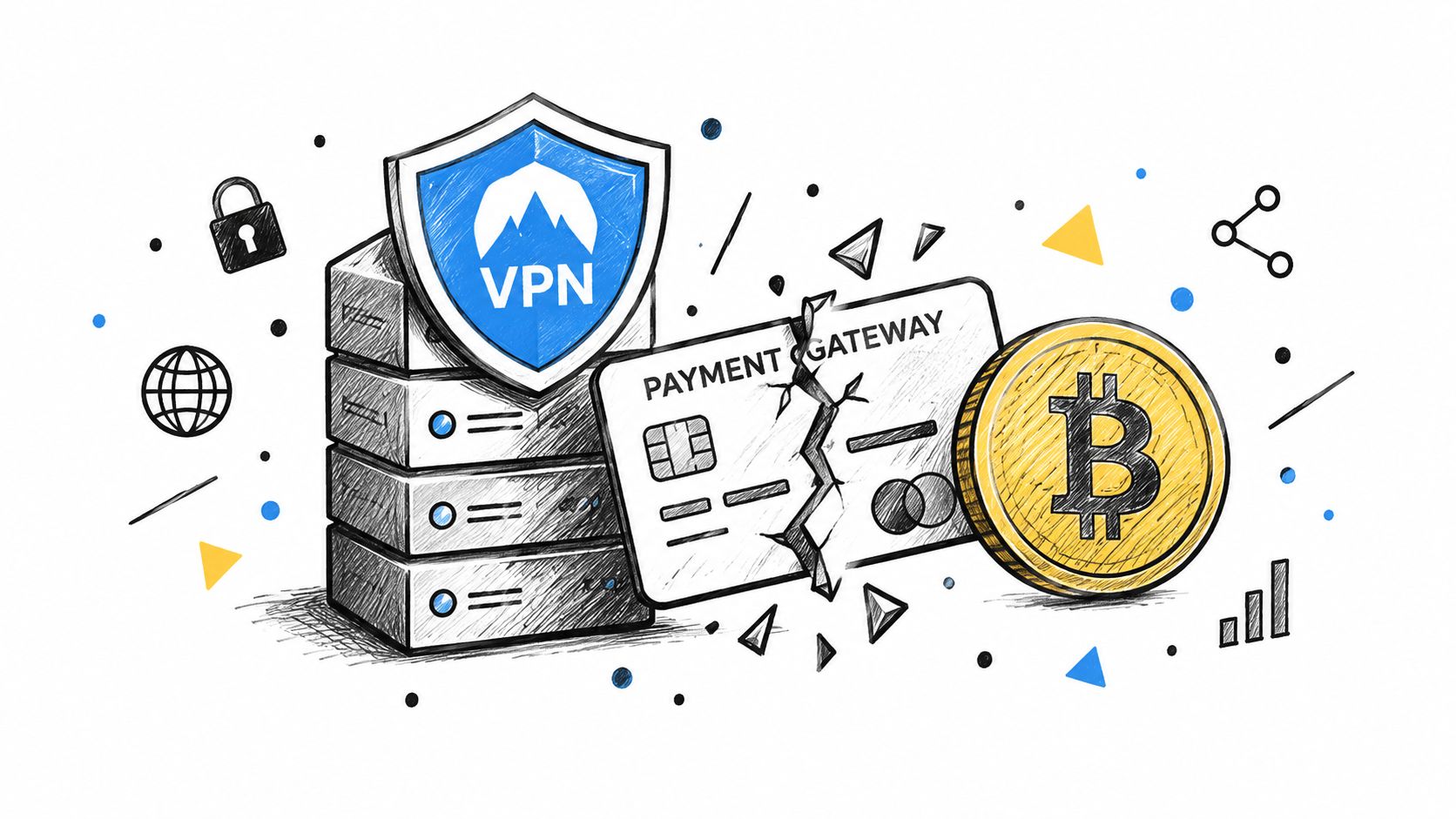
Why separate gateways create operational debt
Traditional payment providers may restrict VPN businesses or classify them as higher risk. Even after approval, a provider may cover only cards, leaving the company to add a crypto gateway, a separate subscription service, and another route for payouts.
The resulting failure points are predictable:
Different payment states: One provider may return
paid, while another requires a confirmed or settled state. Entitlement logic must map both to a controlled internal status.Unclear ownership: Support needs to identify whether a refund, chargeback, underpayment, or delayed transfer belongs to the checkout provider or crypto gateway.
Currency mismatch: The customer can pay in one asset while accounting records use another currency.
Recurring billing gaps: Card subscriptions can renew automatically, while wallet payments may need a separate authorization or renewal workflow.
Weak audit trails: Payment, account, subscription, and payout records may lack a shared reference.
CoinGate's payment data shows a practical settlement pattern: crypto acceptance can grow while merchants still choose fiat settlement for reported orders, and stablecoins can take a meaningful share of checkout activity (CoinGate's payment data). A VPN provider can therefore accept crypto without holding volatile assets or rebuilding its treasury process.
Practical rule: Store the customer's payment rail and the merchant's settlement rail as separate fields, decisions, and operational workflows.
A unified API can bring cards and crypto into one checkout and route proceeds to a common balance. Suby provides an API for card and crypto payments, with native Discord and Telegram integrations for subscriptions, paid access, and online communities. The operating model stays clear: customers choose their payment method, while the business chooses how it receives and accounts for the funds.
Understanding the Core Payment Architecture
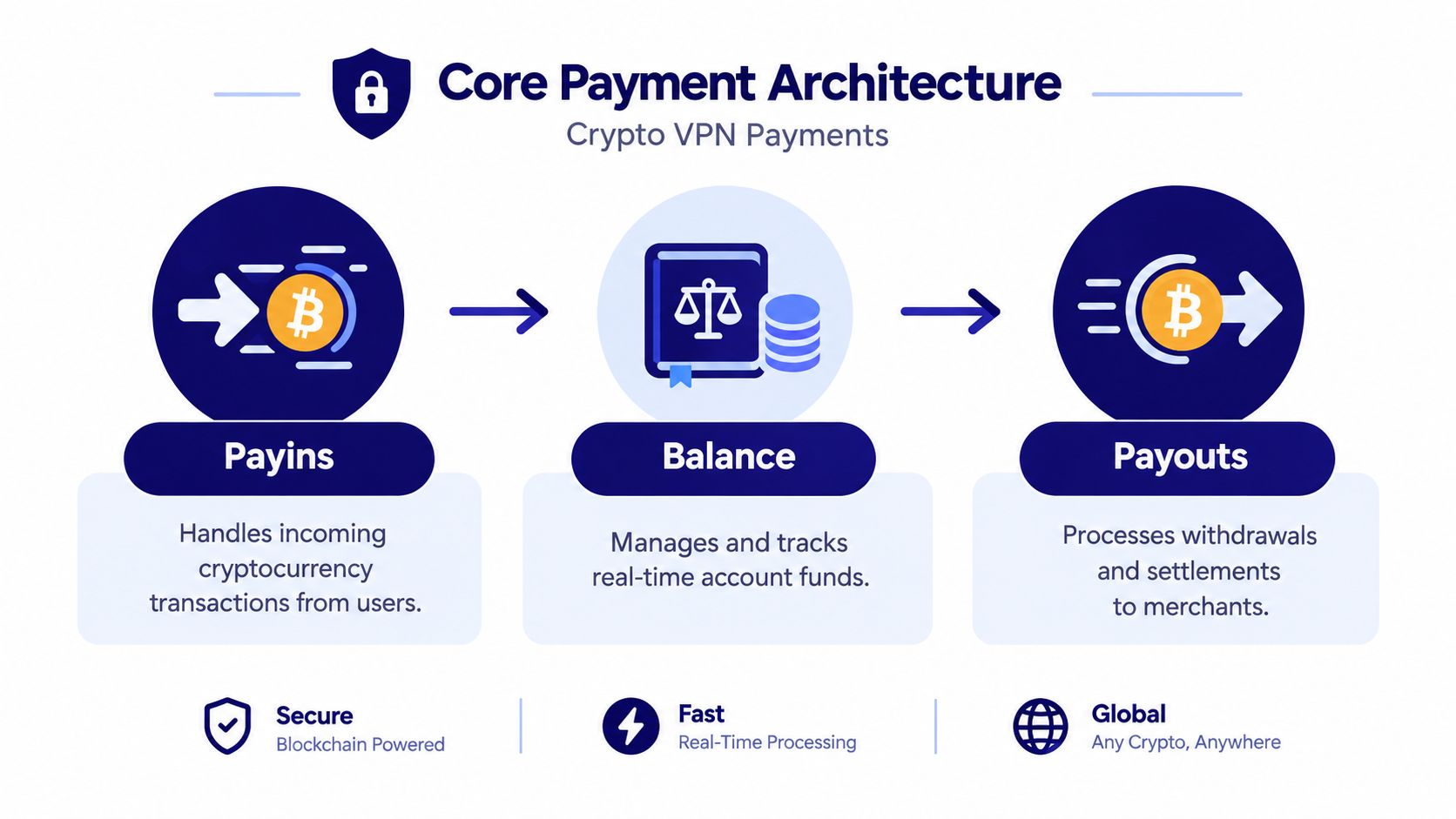
A VPN checkout can report a successful payment while the customer still lacks access, the merchant balance is unavailable, or the payout cannot be reconciled. Define the money flow in three blocks: payins, balance, and payouts. Keeping these blocks separate prevents the payment method from being confused with the merchant's final settlement.
Payins record how the customer pays
A payin is the incoming transaction. It should answer:
Which VPN plan did the customer select?
Which account or email should receive access?
Did the customer pay by card, wallet, bank method, or crypto?
Which currency or asset did the customer use?
Has the payment reached the state required for provisioning?
Card processing may return an authorization first and a settlement status later. Crypto processing requires the wallet transaction, asset, network, amount, and confirmation state. Do not activate a subscription from a browser redirect alone. Provision access only after a verified server-side event, and retain the provider's payment identifier for support and reconciliation.
Normalize those events inside the VPN platform. Expose one business object, such as payment_succeeded, even when the underlying payins use different rails. This gives account provisioning, subscription state, and finance workflows a common event model without hiding the details needed for investigation.
Balance provides the reconciliation anchor
The balance is the merchant-side accounting hub. After payins are processed, finance can use it to track available funds, fees, and completed payouts instead of checking separate gateway dashboards.
A customer might pay for a VPN plan by card while another pays in USDC. The rails differ, but each reconciliation record should connect the transaction to the same product, customer, billing period, fees, and settlement decision. Keep gross payins, available funds, and completed payouts distinct.
The balance should support your ledger, not replace it. Store the internal order ID, customer ID, plan ID, payment ID, subscription ID, event timestamp, and final status. Those fields let the team investigate discrepancies when a provider dashboard does not explain what happened.
Payouts complete the merchant-side decision
A payout records how the business receives the money. A VPN company might accept a card payment and receive USDC, or accept crypto and settle to a bank account. The choice depends on treasury policy, accounting requirements, local banking access, and the company's tolerance for holding digital assets.
Suby's API supports card-only, crypto-only, and combined card plus crypto configurations through the paymentMethods field, with USD or EUR pricing configured through currency (Suby's API introduction). Its crypto flow supports settlement to a non-custodial wallet or aggregation in a Suby balance (Suby Crypto). The architecture lesson is to keep acceptance and settlement as separate decisions, whether one provider handles both or different systems handle each stage.
Do not let a payout overwrite the original payin. The customer payment remains the source transaction after the business swaps or withdraws the proceeds. That separation supports refunds, reporting, tax treatment, and support investigations.
Choosing the Right Integration Method
The right integration depends on where the VPN checkout lives and how much control your team needs. A hosted paylink can validate demand quickly, but a mature VPN application usually needs API access so payment status, account creation, and access provisioning remain connected.
Suby is one product with four ways to use it. Suby Payments provides an API-first payment stack for cards and crypto through one checkout. Suby Crypto acts as a crypto payment gateway, handling the swap, sponsoring gas, and settling to a non-custodial wallet or Suby balance. Suby Gating provides paid access for Discord, Telegram, downloads, and courses. Suby Invoicing lets clients choose how to pay while the business chooses what it receives.
Method | Best For | Technical Effort | Key Feature |
|---|---|---|---|
Suby Payments | Custom VPN web and app checkout | Higher | Cards and crypto through one API |
Suby Crypto | Crypto-native checkout | Moderate | Swap handling, gas sponsorship, wallet or balance settlement |
Suby Gating | Paid Discord and Telegram communities | Lower | Native in-chat access flows |
Suby Invoicing | B2B VPN plans and high-value accounts | Moderate | Client chooses the payment method and business chooses settlement |
Match the method to the product surface
Choose Suby Payments when your existing frontend owns the checkout experience. This is the most suitable route when you need plan selection, localization, account creation, coupon logic, subscription provisioning, and payment events in one application flow. The API and webhooks become part of your billing service rather than an external payment page.
Choose Suby Crypto when the main requirement is a clean crypto gateway without building wallet handling and asset conversion yourself. It fits a VPN that wants customers to pay from different wallets while the business receives a selected settlement format.
Suby Gating makes sense when the VPN offer is bundled with a private Discord or Telegram community. Its documented flow supports one-time access and monthly or yearly subscriptions inside those platforms, with members joining through a payment link or checkout in the chat (Suby Gating). It isn't a replacement for a standard VPN account checkout, but it can support a community-led acquisition or membership product.
Use Suby Invoicing for agency-managed VPN deployments, business accounts, or plans where a sales team sends an invoice instead of directing every buyer through a public pricing page.
For implementation teams, test more than the successful payment. Include expired sessions, duplicate webhook delivery, delayed crypto confirmation, incorrect amounts, refund handling, and subscription cancellation. A separate guide on practical integration testing tips is useful when you're building the test matrix for the full payment lifecycle.
For the API model and endpoint details, review the crypto payment API documentation. Pricing depends on the payment method used, so don't model your margins around one flat rate. Check the official pricing page for exact figures before launch.
Implementing Subscriptions and Recurring Billing
VPN revenue depends on keeping entitlement state synchronized with billing state. The checkout can be attractive and fast, but a renewal that doesn't update access is still a failed customer experience.
Start by defining the commercial objects before creating API calls:
Plan: The product name, price, currency, billing interval, and access duration.
Customer: The account identifier and contact details your support team needs.
Subscription: The relationship between the customer, plan, current period, and status.
Payment: The individual charge or crypto transaction connected to that billing period.
Entitlement: The VPN access state that your application controls.
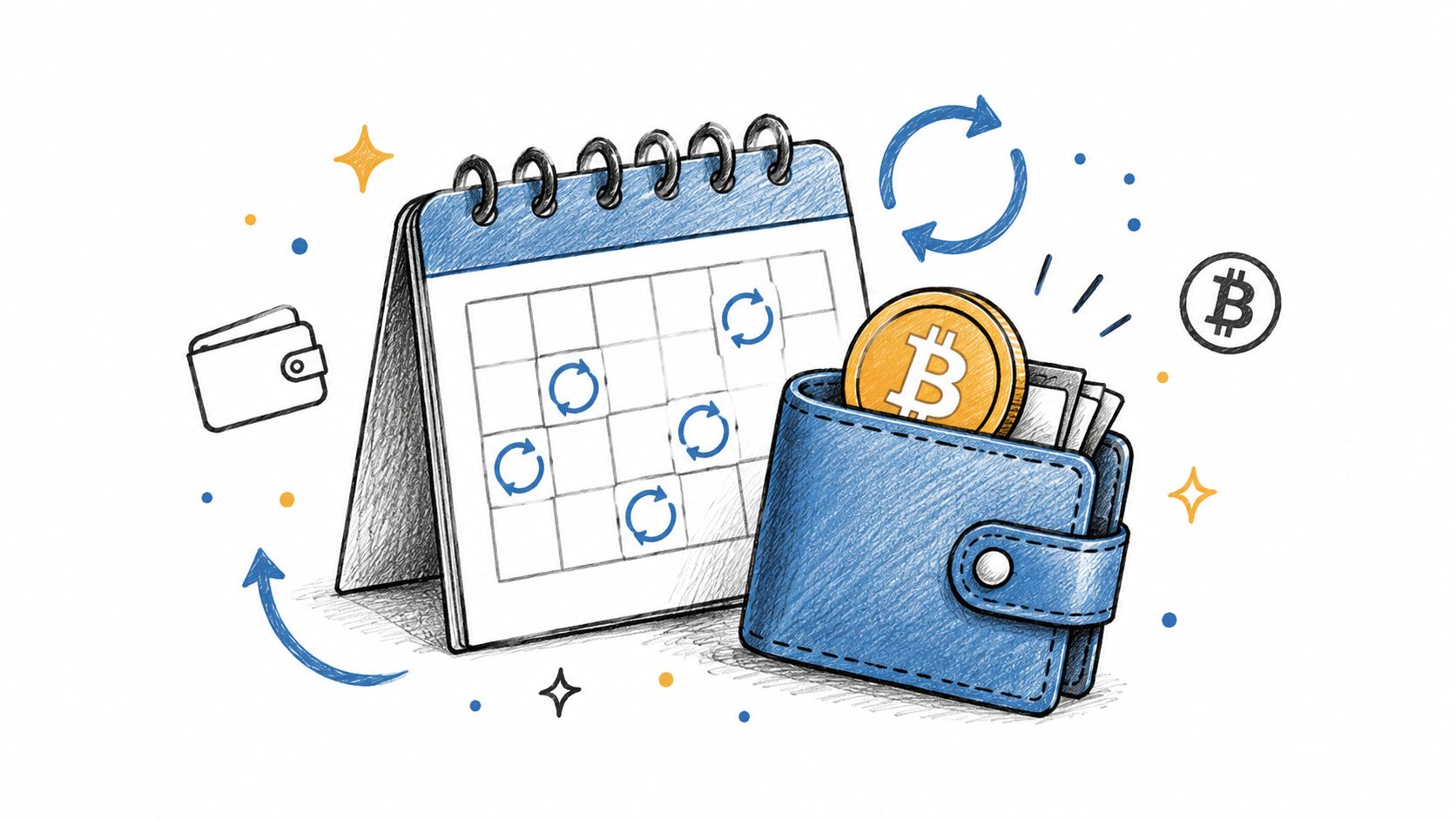
Configure one-time plans separately from recurring plans, even if they share the same frontend. A one-time payment may grant access until a fixed expiry date. A subscription needs renewal handling, cancellation rules, grace periods, and a clear response when the next payment fails.
Use the currency configuration consistently. If your prices are in USD or EUR, store that commercial price as the source of truth and record the asset used by the customer as transaction metadata. This prevents a crypto amount from becoming the only representation of the customer's contractual price.
Build webhook handling as an idempotent service
Your webhook endpoint should verify the event, persist it, and return a successful response only after the event is safely stored. Process the business effect separately. That design lets you retry provisioning without creating duplicate subscriptions.
A useful event workflow looks like this:
Payment created: Keep the order pending and show the customer the correct checkout state.
Payment succeeded: Mark the payment complete and grant the entitlement.
Subscription renewed: Extend access for the new billing period.
Payment failed: Keep the account in a defined grace state and notify the customer.
Subscription cancelled: Record the cancellation timing and stop future renewal.
Refunded or disputed: Apply your access and finance policy consistently.
When crypto is involved, don't assume the wallet transfer alone represents final merchant revenue. The gateway may handle the swap and gas sponsorship, then settle according to the merchant's configuration. Your webhook record should preserve both the customer's payment details and the resulting settlement information.
The guide to recurring crypto payments is relevant when you're deciding how subscription renewals should behave across payment methods.
A short operational demonstration can help your team understand the customer flow before connecting it to VPN provisioning.
Move from test credentials to production only after you can trace one complete journey, from plan selection to payment event, balance update, subscription activation, renewal, cancellation, and refund. Keep test and live identifiers separate, and make the production switch a controlled deployment rather than a dashboard-only change.
Settlement Choices and Compliance Considerations
Settlement is where a crypto payment strategy becomes a finance strategy. A VPN provider can accept a customer's chosen method while receiving funds in a bank account or stablecoins, but those outcomes have different accounting and treasury implications.
Bank settlement is familiar to finance teams. It supports existing cash management and reduces the need to manage wallet security, asset conversion, and digital-asset reporting. The trade-off is that bank settlement can involve banking relationships, transfer timing, currency conversion, and regional availability.
Stablecoin settlement can simplify cross-border treasury when the business already operates with digital-asset infrastructure. It may also preserve a closer connection between the incoming payment and the merchant's preferred digital settlement asset. The business still needs clear controls for wallet ownership, transaction records, valuation, reporting, and conversion policy.
Suby's documented crypto flow handles the swap and sponsors gas, with settlement to a non-custodial wallet or aggregation in the Suby balance. Its stablecoin payment infrastructure overview is useful for mapping that choice to an international operating model.
Privacy is a spectrum, not a checkout label
Customers often choose crypto because they don't want a direct card or bank relationship attached to the VPN purchase. That can reduce the amount of financial information shared with the VPN merchant, but it doesn't automatically make the purchase anonymous.
A processor-mediated checkout can still expose an email address, wallet address, transaction history, payment timestamp, and account relationship. A direct-wallet transfer removes some intermediary handling, but the public transaction trail and the relationship between the wallet and the VPN account still matter. In a study of 144 VPN providers, 56% offered an anonymous payment option, yet the research warned that intermediaries can undermine true anonymity (VPN provider payment study).
For a VPN founder, the product decision is to state the privacy boundary accurately. Don't promise anonymity when the payment processor, wallet, chain analytics, or account email can connect parts of the transaction.
Build compliance into the payment operation
Payment compliance isn't limited to accepting or rejecting an asset. Define who can purchase, which regions you serve, what records you retain, how you handle disputes, and how support staff respond to payment privacy questions.
Use controls appropriate to the payment flow, including PCI-DSS Level 1-certified processing, Strong Customer Authentication, two-factor authentication, and documented dispute handling where those capabilities apply. For teams automating customer checks and financial workflows, KYC automation for finance teams provides useful background on structuring that process.
Keep pricing, payment, refund, and settlement records connected. Suby pricing varies by payment method, so finance should use the current method-specific pricing rather than assume a universal fee.
Pre-Launch Checklist and Operational Readiness
A crypto payment VPN is ready for production when the complete operational path works, not when the checkout button renders.
Check the following before launch:
Payment coverage: Test card, wallet, bank, and crypto paths that you intend to expose.
Subscription state: Verify activation, renewal, failure, cancellation, grace handling, and refund behavior.
Webhook safety: Authenticate events, store raw payloads, make processing idempotent, and retry safely.
Reconciliation: Match every payin to a customer, plan, subscription, balance movement, and payout record.
Settlement: Confirm whether funds go to the bank, a non-custodial wallet, or the Suby balance.
Privacy language: Explain what the merchant and payment processor can still see.
Access control: Ensure VPN entitlements change only after verified payment events.
Support recovery: Create a process for delayed confirmation, duplicate events, underpayments, and mismatched references.
Run a controlled live transaction with a real customer account and trace it through your ledger, dashboard, webhook service, entitlement system, and payout report. If finance can't explain where the money went, or support can't explain why access changed, the integration isn't ready.
Pricing depends on the payment method used, so review the current figures before publishing plan margins or customer-facing fee language.
Suby provides one API for accepting payments by card or crypto, alongside native Discord and Telegram integrations for subscriptions and paid access. Configure the payment and settlement flow around your VPN's customers, then visit Suby to evaluate the available integration options and current pricing.
