
Gaspard LEZIN
8 Good Rules for a Discord Server in 2026
Discover 8 good rules for a Discord server to build a safe, engaging, and monetizable community. Includes templates, moderation tips, and enforcement examples.
You launch a Discord server and the early signs look good. New members join, chat moves fast, and the place feels alive. Then the cracks show. Someone starts dropping promo links in every channel, a billing dispute spills into public chat, moderators react differently to the same behavior, and the members you want to keep start going quiet.
That's what a weak ruleset does. It doesn't fail all at once. It fails by making daily decisions harder than they should be.
Good rules for a Discord server aren't about sounding strict. They create a predictable environment where members know what they can do, moderators know what to enforce, and bad actors know they won't get much room. Discord itself treats server rules as part of how you define culture and align it with Discord's Terms of Service and Community Guidelines, while still adding your own enforceable standards for moderation and automation in tools like AutoMod and filters, as explained in Discord's guidance on developing server rules.
That matters even more if your server is tied to subscriptions, paid access, or customer support. Once money enters the picture, sloppy rules become an operational problem. You're not just protecting conversation. You're protecting access, trust, refunds, and retention.
I've seen the difference firsthand between servers that treat rules like filler text and servers that use them as infrastructure. The second group grows more calmly, moderates faster, and gives paying members a better experience. If your goal is a community people want to stay in, this is part of fostering authentic online connections.
Suby fits naturally into that kind of setup. Suby provides an API that lets businesses accept payments by card or crypto, and it also offers native Discord and Telegram integrations for subscriptions, paid access, and online communities. Users pay with cards, businesses receive USDC. That makes the rules around access and conduct even more important, because your payment flow and your community experience now affect each other directly.
Table of Contents
Write rules people can actually follow
Add payment terms where they matter
Consistency beats intensity
Train for payment and access issues
The rule is not no business, it is no hijacking
Treat modern spam like an operations problem
Stop sensitive data from entering public chat
Build private paths for private problems
Define the line clearly
Protect members without turning every disagreement into a case
Write anti-fraud rules in plain language
Separate support from abuse
7. Encouragement of Respectful Disagreement and Conflict De-escalation
Clear process beats public drama
Monetized communities need governance rules tied to money
8-Point Discord Server Rules Comparison
Your Blueprint for a Thriving Discord Server
1. Clear Community Guidelines and Acceptable Use Policy
Bad rules are usually guilty of one of two things. They're either so vague that moderators have to guess, or so long that nobody reads them. Good rules for a Discord server sit in the middle. They are short enough to scan, specific enough to enforce, and visible before people start posting.
Discord's own community operations guidance points in the same direction. It recommends server rules that align with platform policy while adding community-specific standards moderators can enforce, including language expectations, anti-spam boundaries, and clear escalation paths through moderation tools and actions. If a rule can't map cleanly to a moderator decision or an automated filter, it probably needs rewriting.
Write rules people can actually follow
Plain language wins. That matters even more in international communities, where many members are reading in a second language and moving fast on mobile.
A rules channel should answer basic questions immediately:
What behavior is allowed: Respectful discussion, relevant promotion if permitted, constructive disagreement
What behavior is not allowed: Harassment, spam, scams, impersonation, posting sensitive information
What happens next: Warning, timeout, restricted access, removal from paid areas, ban
Where edge cases go: Billing questions, disputes, moderation appeals, account issues
Industry guidance also recommends placing rules in a dedicated channel that members read before accessing the rest of the server, often next to welcome, announcements, and FAQ channels, while keeping those channels read-only for clarity and lower noise, as noted in this Discord community building guide for brands.
Practical rule: If a moderator can't explain a rule in one sentence, members won't apply it correctly either.
Add payment terms where they matter
If your server includes paid access, your acceptable use policy should say that directly. Don't hide payment behavior inside generic conduct rules. Create clear clauses for refund requests, account sharing, fraudulent disputes, and what happens when someone loses access after a failed payment or canceled subscription.
A creator community with premium channels might say that members must not share paid-only content outside the server, transfer access to another person, or use multiple accounts to evade a subscription restriction. A SaaS support server with paid tiers might add that billing complaints belong in private support, not public channels where account details can leak.
For many operators, general community policy overlaps with a broader essential guide to social media policy. The same principle holds. Write the rule around real situations your team will face, not abstract ideals.
2. Active and Trained Moderation Team
A paid member loses premium access after a failed card charge, posts angrily in general chat, and another member jumps in claiming they were charged twice. If your moderators do not know the difference between a billing issue, a permissions sync failure, and a fraud signal, the problem spreads from one support case into a public trust issue.
Rules need operators who can enforce them the same way under pressure. Servers break down when one moderator ignores obvious abuse, another improvises punishments, and a third restores access without checking payment status or prior notes. Members see the inconsistency long before staff do.
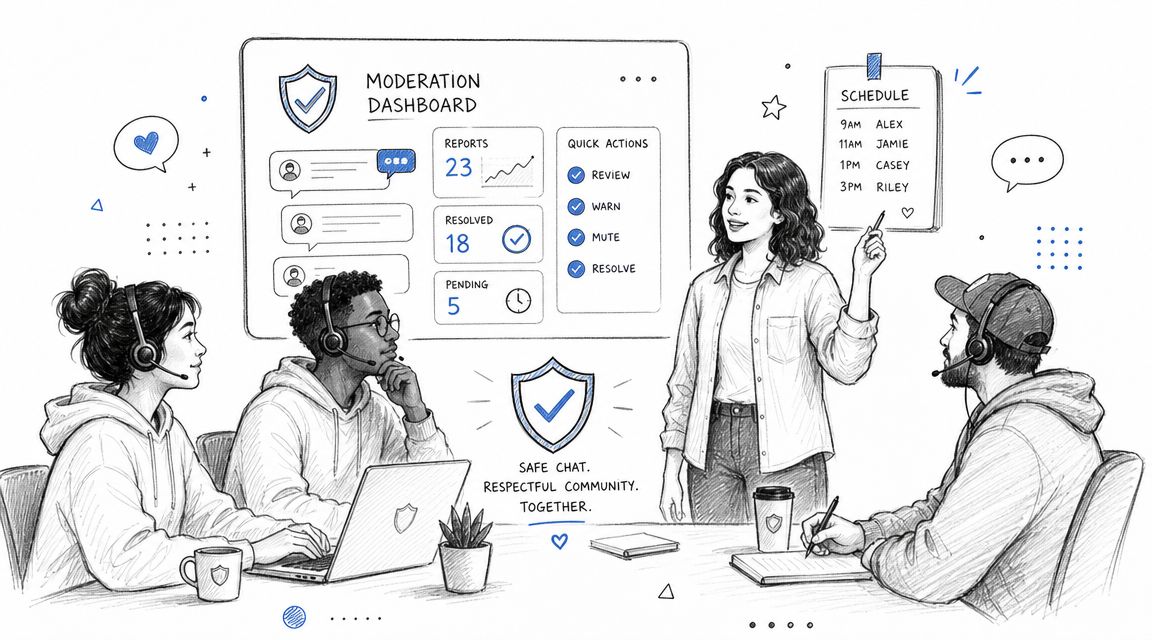
A visual example helps here.
Consistency beats intensity
Strong moderation teams use written playbooks. The playbook should define what counts as spam, what earns a warning, when to apply a timeout, when to remove a role, when to freeze paid access pending review, and when a case belongs with the owner or billing lead. That reduces improvisation, which is where bias, panic, and uneven enforcement usually show up.
This matters even more as a server grows. As noted earlier in Discord's Server Insights guidance, healthy communities depend on ordinary members feeling safe enough to speak up and participate. Heavy-handed moderation suppresses conversation. Weak moderation drives away the same people for a different reason.
Logs matter too.
If a member appeals a mute, refund denial, or removal from a paid tier, staff should be able to show what happened, which rule applied, and who made the call. That record protects members from arbitrary decisions and protects staff from pressure campaigns in public channels.
Train for payment and access issues
Monetized servers need moderators who understand the business side of the community, not just chat behavior. They should know how card payments are handled, when USDC payouts create extra verification questions, what account sharing looks like in practice, and when a complaint points to friendly fraud instead of a simple misunderstanding.
That changes the moderation brief. A volunteer mod who is excellent at cooling down arguments may still make a mess of a payment dispute if they cannot verify subscription status, read role history, or escalate sensitive cases out of public view. Training should cover failed renewals, chargeback threats, duplicate account checks, suspicious upgrade patterns, and the exact point where a moderator stops replying and hands the case to the person who manages payments or compliance.
If you automate access changes, your team also needs to understand the role logic behind them. Suby supports Discord role and access workflows tied to payment status, so moderators should know what the system updates automatically, what it does not, and how to verify whether a member lost access because of a canceled subscription, a failed payment, or a permissions error. The practical setup details in this guide to auto-kick and role management in Discord security are the kind of material every paid-community team should review before problems hit.
After your playbook is in place, this kind of walkthrough is worth sharing with the team:
Good moderators aren't the ones who punish the fastest. They're the ones who make the same sound judgment on a busy Tuesday that they made on a quiet Sunday.
3. Zero Tolerance for Spam, Self-Promotion, and Commercial Exploitation
Most members don't leave because of one dramatic incident. They leave because the server starts feeling cheap. Every useful conversation gets interrupted by affiliate links, unsolicited DMs, low-effort funnel posts, or people treating the community like a free lead list.
That kills trust fast in free servers. In paid communities, it's worse because members feel they paid to be marketed to by strangers.
The rule is not no business, it is no hijacking
A blanket ban on all self-promotion sounds simple, but it often backfires. Communities still need places for members to share work, launches, side projects, or service offerings. The better rule is controlled promotion with clear boundaries.
That usually means one designated channel, limited frequency, required disclosure for affiliate relationships, and no cold-pitching in unrelated discussions or direct messages. If a freelancer wants to post an offer in #services, fine. If they drop the same pitch into support, general chat, and event threads, that's spam.
Common modern Discord rule templates often default to generic bans on spam and harassment without helping owners decide how strict they should be for different server types. Public advice tends to assume a universal template, even though small private groups, public hubs, and paid communities need different friction levels, as discussed in this analysis of Discord server rule templates and customization gaps.
Treat modern spam like an operations problem
Spam isn't just repeated text anymore. It includes scam links, AI-generated filler, fake intros, impersonation, and “helpful” comments designed to harvest leads. That means your rules should mention links, unsolicited offers, and deceptive promotion directly.
A practical anti-spam setup often includes:
Dedicated promotion spaces: One channel for launches, portfolios, or offers
Disclosure requirements: Members label affiliate or referral links clearly
Link boundaries: New members can't post links immediately, or only in approved channels
DM protection: Unsolicited sales DMs to members are grounds for removal
Escalating penalties: Delete, warn, timeout, ban evaders
Discord communities increasingly need rules that map to modern threats like impersonation, raid behavior, scam links, and automation abuse, not just old-school profanity lists, which is one reason this practical moderation notes compilation raises the gap between static rule lists and current abuse patterns.
If your business uses Suby for subscriptions or paid access, make the boundary even clearer. Official payment links are allowed. Random members promoting competing processors, shady checkout pages, or “cheaper” off-platform workarounds are not.
4. Respect for Privacy, Data Protection, and Secure Information Handling
The fastest way to turn a manageable issue into a serious one is to let members post sensitive information in public channels. It happens constantly. Someone shares a billing screenshot, another member pastes an email thread, a moderator asks for the wrong detail in open chat, and now private information is sitting in search history and screenshots.
This is one of the most overlooked parts of good rules for a Discord server, especially in monetized communities.
Stop sensitive data from entering public chat
Your rules should state that members must not post personal information, payment confirmations, transaction details, account credentials, or private support messages in public channels. Don't assume “common sense” will cover it. People under stress overshare.
That matters even more if your team pays out in USDC or handles wallet-related support. A wallet address, transaction hash, billing email, or identity document should all be treated as sensitive information. If you work with a payment stack, your moderators should know what to remove immediately and where to redirect the member instead.
Build private paths for private problems
Privacy rules only work when members have a better alternative. If your only support path is public chat, members will use public chat.
Set up a private support channel, ticket flow, or verified contact route for billing, account recovery, and access disputes. Then make the rule simple: public channels are for community discussion, private channels are for account-specific issues.
For payment-enabled communities, it also helps to align server rules with your platform obligations and handling standards. If you use Suby, your internal policy should be consistent with Suby's published compliance and security information.
Sensitive data leaks in communities usually don't come from hackers first. They come from ordinary members trying to solve a problem too publicly.
The operational mindset from a broader practical app security guide applies here too. Don't just say “be careful.” Remove exposure paths, shorten moderator response time, and make the safe path the easy one.
5. Prohibition of Harassment, Hate Speech, and Discriminatory Behavior
Some rules need nuance. This one doesn't need much. If members harass people, use slurs, target protected characteristics, dogpile newcomers, or turn status differences into abuse, they are damaging the community whether they think they're joking or not.
You can't build a healthy paid or unpaid server around that behavior. The people who create value rarely stay where they're treated like targets.
Define the line clearly
Vague civility rules are weak. “Be nice” leaves too much room for arguments. Better rules name the behavior: harassment, discriminatory language, bullying, threats, doxxing, unwanted sexual comments, dogpiling, and hostile targeting of members based on identity or status.
Discord's Community Guidelines are explicit that users must not promote or engage in harassment, share personally identifiable information without consent, or use hate speech or hateful conduct. Server rules should mirror that reality in your own language and moderation process, even if you keep the public wording shorter.
A practical example from a creator community is a rule that paid tier status cannot be used to belittle other members. Another from a software server is a rule that critique of a product is fine, but sexist, racist, or ableist remarks toward users or staff are not.
Protect members without turning every disagreement into a case
Not every sharp exchange is harassment. Good moderators distinguish between friction and abuse. If two members disagree strongly about a feature, pricing, or moderation decision, that's not the same as a campaign of personal targeting.
Use a private reporting path for serious incidents. Encourage members to report patterns, not just single screenshots stripped of context. And document repeat behavior. Harassment often shows up as accumulation. One rude comment can be borderline. Ten “borderline” comments aimed at the same person are a pattern.
A useful enforcement ladder is warning for minor edge cases, timeout for repeated hostility, and fast escalation for threats, doxxing, or explicit hate speech. Members don't need endless legal-style arguments about the rulebook. They need to see that the server protects people who participate in good faith.
6. Prevention of Fraud, Chargebacks, and Payment-Related Misconduct
If your Discord server includes subscriptions, premium roles, private channels, events, or downloadable content, you need payment conduct rules. Not vague “be honest” language. Specific payment conduct rules.
Many communities still act like fraud is only a processor problem. It isn't. Fraud starts as user behavior, and your rules should reflect that.
Write anti-fraud rules in plain language
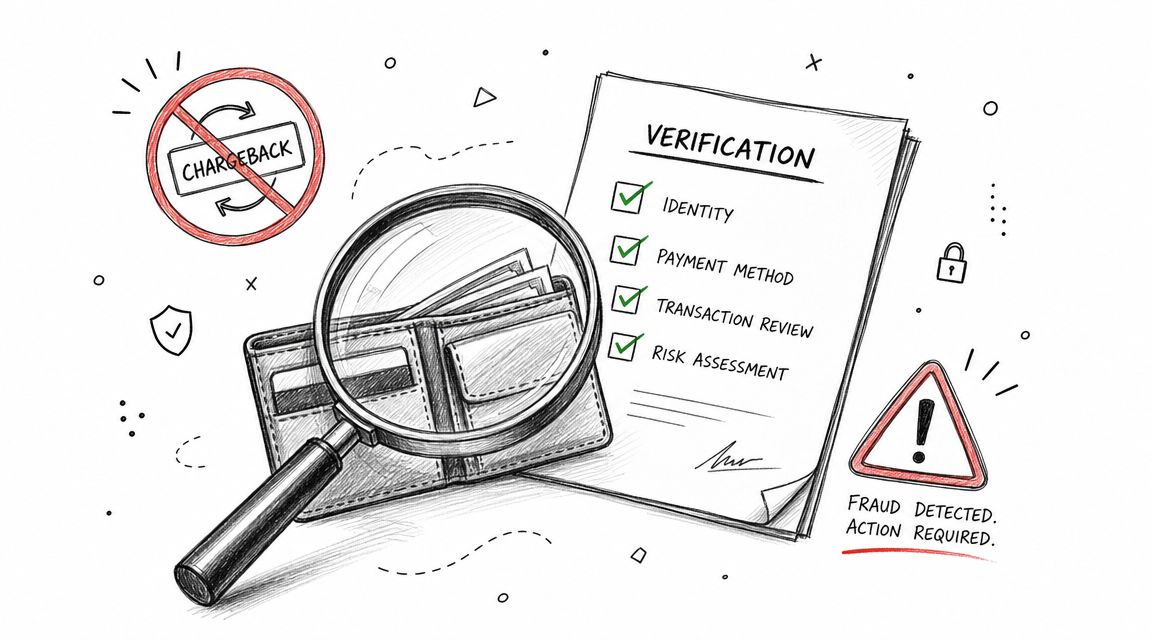
State what counts as payment-related misconduct. That can include unauthorized account sharing, using another person's payment method without permission, disputing a legitimate payment after receiving access, trying to keep access after cancellation through alternate accounts, or abusing refund policies.
A basic rule can say that legitimate billing problems should go through support, while fraudulent disputes, deceptive claims, or attempts to gain paid access without authorization can lead to access removal or a ban. Keep that distinction visible because honest members do sometimes need refunds or corrections.
This is also where your support team should understand the difference between a refund request and a chargeback. If you use Suby for paid communities, staff handling these issues should review Suby's information about chargebacks and dispute handling.
Separate support from abuse
The best anti-fraud rules don't sound accusatory. They create a clean process. Members know where to ask for help, what information to provide, and how the team reviews disputes. That lowers panic and makes abuse easier to spot.
In practice, this means:
Private dispute handling: Never argue about payment history in public chat
Documented review steps: Confirm identity, check subscription status, review access logs
Clear refund policy: State when refunds are considered and what isn't refundable
Access consequences: Explain that confirmed abuse can remove premium access
Audit trail: Keep moderator and support notes for contested cases
Operator note: A community rule should make honest resolution easy and dishonest behavior costly.
This matters for revenue, but it also matters for fairness. The member who asks for help in good faith shouldn't feel treated like a scammer. The member who abuses disputes shouldn't be allowed to hide inside the same process.
7. Encouragement of Respectful Disagreement and Conflict De-escalation
A paid Discord can go sideways fast when a billing complaint turns into a loyalty test. One member says a feature is overpriced. Another accuses them of trying to damage the community. Ten replies later, the original issue is gone and now staff are dealing with insults, screenshots, and cancellation threats.
That pattern is avoidable if the rule is clear. Members can challenge ideas, pricing, roadmap decisions, moderation calls, and product quality. They cannot attack motives, pile on a person, or turn disagreement into harassment.
Write the distinction in plain language. “I think this membership tier is too expensive for what it includes” is allowed. “Anyone paying for this is stupid” is not. “I disagree with how the moderators handled refunds” is allowed. “The mod team is corrupt” is not, unless the member can bring evidence through the proper reporting process instead of starting a public mob.
This matters more in monetized communities because honest criticism is operationally useful. It tells you where onboarding is confusing, where benefits feel weak, and where paid access creates friction. If members learn that every complaint gets treated as disloyalty, they stop posting feedback and start leaving. Revenue problems often show up first as community tone problems.
Moderators need authority to intervene early. The job is not to win the argument. The job is to stop heat from replacing substance.
In practice, that usually means a few specific actions:
Redirect fast-moving disputes into a thread so the main channel does not become a stage for pile-ons
Tell members to address the claim, not the person
Pause repetitive arguments after positions are clear
Move account-specific complaints, including payment or access disputes, out of public chat
End circular fights even when no single message crosses the line on its own
Channel structure affects this more than server owners expect. If debate is scattered across too many rooms, staff miss context and grudges spread in fragments. Fewer, clearer discussion spaces are easier to supervise and easier for members to read before reacting. As noted earlier, concentrated discussion is easier to moderate than a dozen side arguments happening at once.
One rule I have found useful is simple: disagreement stays public, account resolution does not. Let members debate policy, pricing, and product decisions in the open. Move anything involving invoices, card payments, wallet addresses, payout status, or role access into a private support path. That protects privacy and removes the audience effect that makes people perform anger instead of solving the problem.
Good communities do not avoid conflict. They contain it, keep it factual, and stop it from becoming personal damage.
8. Transparency in Moderation Decisions and Community Governance
A paid member loses access after a chargeback, posts about it in public, and another member says staff are stealing subscriptions. If you cannot show a clear process, the argument stops being about one account and starts becoming a trust problem for the whole server.
Transparent governance means members know how decisions get made, who makes them, what can be appealed, and what stays private. Staff do not need to publish every screenshot or every internal note. They do need a system members can follow without guessing.
Clear process beats public drama
Write down the parts that create friction if left vague: warning tiers, mute and ban standards, appeal steps, access removal for refund abuse, and the difference between conduct enforcement and billing support. Keep those policies in fixed places, not buried across old announcements and mod replies.
The setup that works best is simple. Use one read-only channel for rules and policy updates. Use one intake point for appeals or governance questions. Keep an internal moderation log with the reason, evidence location, staff action, and final outcome. That record matters later, especially when a member disputes a removal tied to failed card payments, suspicious refund patterns, or USDC payout issues.
Public summaries help when handled carefully.
“This account was removed after review for repeated payment abuse and access evasion” tells members the rule was enforced and the case was checked. It does not expose personal data, payment details, or invite a trial in chat.
Monetized communities need governance rules tied to money
Once access is paid, moderation and operations overlap. Members need to know whether a refund request removes roles immediately, whether chargebacks trigger suspension while staff review the account, and whether fraud or account sharing can void paid access. If you use card payments for subscriptions and USDC payouts for affiliates, creators, or partners, state which disputes belong with moderators and which belong with the payments team.
That line saves a lot of confusion. Moderators handle conduct, rule evasion, and access enforcement. Operations or finance handles billing errors, payout reviews, wallet confirmation, and failed settlements. In healthy servers, those teams coordinate behind the scenes and members see one consistent policy.
Feedback still matters, but voting on every enforcement call is a mistake. Let members question policies, report uneven enforcement, and flag unclear billing communication. Do not turn individual cases into public debates. Good governance is visible, documented, and boring in the best way. Members know what will happen before staff have to act.
8-Point Discord Server Rules Comparison
Policy | Implementation complexity | Resource requirements | Expected outcomes | Ideal use cases | Key advantages |
|---|---|---|---|---|---|
Clear Community Guidelines and Acceptable Use Policy | Medium, careful drafting and updates | Low–Medium: staff time, legal/review input | Clear expectations, easier enforcement, fewer disputes | Monetized, large or international communities | Transparency, fraud prevention, member trust |
Active and Trained Moderation Team | High, recruit, train, manage continuously | High: dedicated moderators, training, tools, scheduling | Consistent enforcement, faster response, fraud detection | High-traffic or 24/7 global communities | Reliable enforcement, improved safety, fraud mitigation |
Zero Tolerance for Spam, Self-Promotion, and Commercial Exploitation | Medium, define scope and automod rules | Medium: moderation time and automated filters | Cleaner discussions, fewer scams, better retention | Creator, marketplace, or paid subscription communities | Protects member experience and preserves trust |
Respect for Privacy, Data Protection, and Secure Information Handling | High, compliance policies and procedures | Medium–High: legal review, training, redaction tools | Reduced data exposure, regulatory compliance, member safety | Payment-handling communities and support channels | Legal protection and increased member confidence |
Prohibition of Harassment, Hate Speech, and Discriminatory Behavior | Medium, nuanced policy and training | Medium: reporting systems, moderator training, support | Safer, more inclusive environment; lower churn | Diverse, international, or public-facing communities | Inclusive culture and reputation protection |
Prevention of Fraud, Chargebacks, and Payment-Related Misconduct | High, verification and dispute workflows | High: documentation, dispute handling, payment compliance | Lower chargebacks, preserved revenue and settlement integrity | Subscription-based and payment-driven communities | Protects revenue, deters payment abuse |
Encouragement of Respectful Disagreement and Conflict De-escalation | Low–Medium, norms, channels, mediator processes | Low: guidelines, mediation support, occasional moderation | Healthier debates, fewer escalations, member engagement | Discussion-focused, tech, and expert communities | Fosters constructive debate and self-regulation |
Transparency in Moderation Decisions and Community Governance | Medium, reporting, processes, and communications | Medium: admin time, reporting tools, meetings | Increased trust, accountability, and community buy-in | Monetized communities and those needing governance | Builds trust, reduces perceived bias, enables feedback |
Your Blueprint for a Thriving Discord Server
Good rules for a Discord server aren't a decorative page you write once and forget. They are operating instructions for culture, moderation, safety, and access. If your server is small, that may feel like overkill at first. Once the member count rises, or once money enters the system, you find out quickly that it isn't overkill at all. It's basic infrastructure.
The strongest servers usually share the same traits. Their rules are short enough to read, specific enough to enforce, and visible before members start participating. Their moderators follow a documented standard instead of improvising. Their anti-spam policies protect the community from being turned into a marketplace by strangers. Their privacy rules stop members from posting sensitive information in public. Their harassment policies protect people without treating every disagreement like a crisis. And their payment rules separate honest support from fraud.
That balance matters. A server can absolutely become too strict, too cluttered, or too intimidating for normal people to participate. Discord's own guidance makes that tradeoff clear by tying healthy communities to participation and by warning that messy structure and fragmented discussion lower engagement. In other words, the point of rules isn't to silence people. The point is to make the right kind of participation easier and safer.
For paid communities, this becomes even more practical. Members are not only joining a chat space. They are buying access, support, status, content, events, or ongoing value. If the rules are weak, the damage isn't limited to tone. You get access confusion, billing arguments in public channels, abuse of refund paths, moderator burnout, and churn from members who no longer trust the environment. A monetized server without clear rules tends to leak value in quiet ways.
The better approach is to build your rules around actual operations. What behavior should trigger a warning versus access removal. Where should billing issues go. What counts as commercial exploitation. How should moderators document serious cases. When should automation step in. Which channels are read-only, which are discussion spaces, and which require paid roles. Those decisions are where a community becomes manageable.
This is also where your payment system and your server governance need to work together. If you're running subscriptions or paid access, your checkout flow, access logic, and moderation policy should point in the same direction. Suby is one option that fits that model. Suby provides an API that allows businesses to accept payments by card or crypto, and it also offers native integrations with Discord and Telegram for subscriptions, paid access, and online communities. Users pay with cards, businesses receive USDC. That setup is useful when you want payments and role-based access control to support the same operating rules instead of fighting them.
The core lesson is simple. Rules work when they reflect the reality of your server. Not a generic template. Not a copied list from another niche. Your actual members, your actual risks, your actual moderation capacity, and your actual business model.
Write rules that your team can enforce on an ordinary day. Put them where members will see them. Update them when the server changes. And if you monetize the community, treat rules as part of the product experience, because that's what they are.
Suby is a payment gateway and payment processor built for paid Discord and Telegram communities. Your members pay with card, bank transfer, Apple Pay, Google Pay, Klarna, and more, or stablecoins, and you get paid out to your bank account, or directly in stablecoins (USDC, EURC) to your wallet, anywhere in the world, no bank account required. Because it ties subscriptions and gated Discord and Telegram access to payment status in one place, your billing flow and your server rules enforce the same access standard instead of fighting each other.
