

Gaspard LEZIN
7 Best Merchant of Record for SaaS (2026 Guide)
Looking for the best merchant of record for SaaS? We review 7 top MoR providers for global payments, tax compliance, and subscription billing. Find your fit.
Your SaaS is growing. You landed your first customers in Europe and Asia, and that feels great for about five minutes. Then billing reality kicks in.
Now you are dealing with VAT, regional invoicing rules, chargebacks, payout timing, and the awkward gap between “we can technically accept cards” and “we can sell globally without finance chaos.” That gap is where most founders start looking for the best merchant of record for saas, not because they want a new tool, but because they want fewer liabilities and fewer surprises.
A Merchant of Record takes on the seller-of-record burden for payments, tax collection, remittance, and parts of compliance that become painful once you sell outside your home market. For many SaaS teams, that is the difference between moving fast and spending the next quarter stitching together tax tools, legal reviews, and support workflows.
There is also a newer angle that matters more than most comparison posts admit. Settlement speed and payout simplicity can matter as much as tax handling. If you sell globally but wait on traditional banking rails, your cash flow stays messy even after checkout is fixed.
This guide focuses on practical fit. Some platforms are stronger for enterprise B2B billing. Some are better for indie SaaS teams that want to launch quickly. Some reduce legal overhead but still leave you with slow payouts and conversion friction. And some, like Suby, take a different route by letting users pay with cards, bank transfer, Apple Pay, Google Pay, Klarna, and more, or crypto, while businesses get paid out to their bank account, or in stablecoins (USDC, EURC) to their wallet.
If you are sorting out the tax side of expansion, this SaaS sales tax economic nexus compliance guide is worth reading alongside your MoR shortlist.
Table of Contents
Why Suby stands out
Where Suby fits best
Where Paddle is strongest
Trade-offs founders should weigh
Best fit
Best fit
Where Verifone makes sense
Where smaller SaaS teams struggle
Where PayPro Global fits
The trade-offs to check closely
Where Nexway fits
Real-world trade-offs
Top 7 Merchant-of-Record Comparison for SaaS
Making Your Choice A Quick Migration Checklist
1. Suby
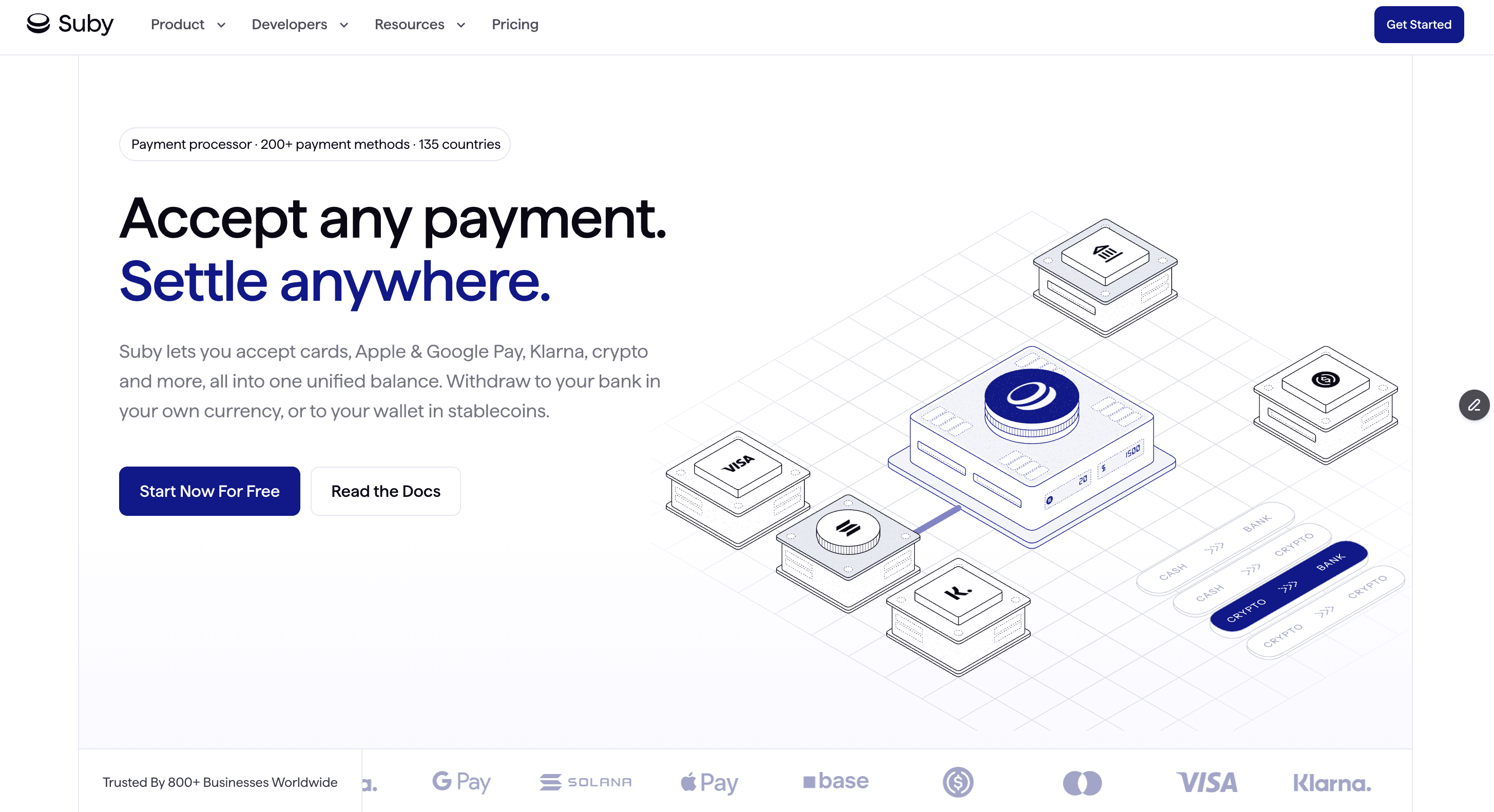
If your biggest headache is not just compliance, but getting paid cleanly across borders, Suby is the most interesting option on this list.
Most Merchant of Record platforms help by taking legal and tax burden off your team. Suby goes one step further in a direction many SaaS operators now care about considerably. It lets customers pay with cards or crypto, while the business receives USDC. That changes the payout conversation completely.
Why Suby stands out
Suby is built for global internet businesses that want a familiar checkout experience for buyers and a simpler settlement flow for the business. You can sell through paylinks, an embeddable checkout, or a developer API with webhooks. That makes it usable for both no-code launches and product-led SaaS teams with custom billing flows.
The practical appeal is straightforward:
Card-first buyer experience: Users can pay with Visa or Mastercard, which removes the usual friction of asking mainstream customers to learn a new payment flow.
Flexible settlement for the business: Suby’s model is simple. Get paid out to your bank account, or in stablecoins (USDC, EURC) to your wallet.
Flexible implementation: You can start with paylinks, move to embedded checkout, or wire it into your product through the API.
Subscription support: It handles recurring billing and one-time payments, which matters for SaaS, memberships, and paid communities.
Suby also offers native Discord and Telegram integrations, useful if your product includes paid access, gated communities, client portals, or private education layers.
If you want a clearer explanation of the MoR model itself, Suby has a useful post on what a merchant of record does.
Suby makes the most sense when your problem is broader than tax. It is for teams that also want simpler cross-border settlement, fewer payout surprises, and a payment stack that does not depend on local banking setup.
Where Suby fits best
Suby is a strong fit for international SaaS, agencies, creators, communities, and developers that want one stack for checkout, subscriptions, and payout handling. It is compelling if your team operates comfortably with wallets and USDC treasury flows.
A few practical strengths stand out:
Operational simplicity: No need to center your payout process around traditional bank rails.
Useful native integrations: Discord and Telegram access management can remove a lot of manual admin if subscriptions unlock access.
Developer readiness: API and webhook support make it easier to automate provisioning, renewals, and customer workflows.
Clear product positioning: It is direct about being a global payment layer where users pay with cards and businesses receive USDC.
There are trade-offs.
USDC-native payout is an advantage for some companies and a constraint for others. If your finance team needs fiat in a local bank account, you need to manage that conversion separately. That is not a flaw in the model. It just means Suby is best for companies that want flexible settlement, whether bank payout or stablecoins (USDC, EURC), not those merely curious about it.
Pricing also needs a current check before you commit. Suby’s official material should be your source of truth, especially because pricing can vary across pages. Verify terms on the product site before signing.
Website: Suby
2. Paddle

A familiar SaaS problem looks like this. Revenue is growing, more customers are coming from outside your home market, and the billing stack that felt manageable at 100 customers starts creating work for finance, support, and engineering every week. Paddle is built for that stage.
Its appeal is straightforward. Paddle is opinionated about how SaaS billing should run, and for many teams that is useful. You get subscriptions, invoicing, tax handling, checkout, and parts of retention operations inside one system instead of stitching them together yourself.
Paddle is often cited in recent MoR comparisons at a standard pricing structure, with the value proposition centered on tax compliance and international selling, as noted earlier from Creem. The headline fee matters, but it is rarely the full decision. The central question is whether the operational load you remove is worth the margin you give up.
Where Paddle is strongest
Paddle tends to work well for software companies with recurring billing complexity already showing up in the business. Seat changes, proration, trials, billing retries, invoicing requests, VAT questions, and cancellation flows all create edge cases. Paddle’s product is designed around those cases rather than treating them as add-ons.
A few strengths usually matter most:
Recurring billing depth: Better fit than a basic payment processor if your pricing model changes over time or customers expect self-service billing controls.
Tax coverage: A common reason founders choose an MoR in the first place. Paddle takes a large part of that burden off the internal team.
Revenue operations support: ProfitWell gives SaaS teams more visibility into churn, recovery, and billing performance.
Developer tooling: APIs, webhooks, and migration support make it easier to connect billing events to provisioning and account lifecycle logic.
That operational layer is where Paddle earns its place. A cheap processor can look attractive in a spreadsheet. It looks different once your team is manually answering invoice requests, handling failed renewals, and tracking tax exposure across countries.
If billing friction is already showing up in retention, this guide on managing SaaS subscription operations is a useful companion read.
Trade-offs founders should weigh
Paddle is not the best fit for every SaaS company.
The first trade-off is cost visibility. Some teams want a very clear net fee model during evaluation, especially if they are comparing MoR providers against Stripe plus separate tax tooling. Paddle can require a more careful review of the total commercial picture, including currency conversion and how your customer mix affects effective cost.
The second trade-off is control. The more you centralize inside Paddle, the more your checkout, invoicing logic, subscription handling, and support workflows start to depend on Paddle’s model. That can be efficient for years. It also means a later migration needs planning.
The third trade-off is settlement philosophy. If your priority is offloading tax and compliance, Paddle is a strong conventional choice. If your priority also includes faster treasury movement and simpler global settlement, options such as Suby, which pay you out to your bank account or in stablecoins (USDC, EURC) to your wallet, introduce a different model. That comparison is less about feature checklists and more about how quickly revenue becomes usable cash, and how much banking overhead your team wants to carry.
Paddle fits best for SaaS companies that want a mature, SaaS-specific MoR and are comfortable paying for a tighter all-in-one system. It is less attractive for teams that want unusual payout structures, broader commerce flexibility, or a settlement model built around digital dollars instead of traditional rails.
Website: Paddle Billing
3. FastSpring
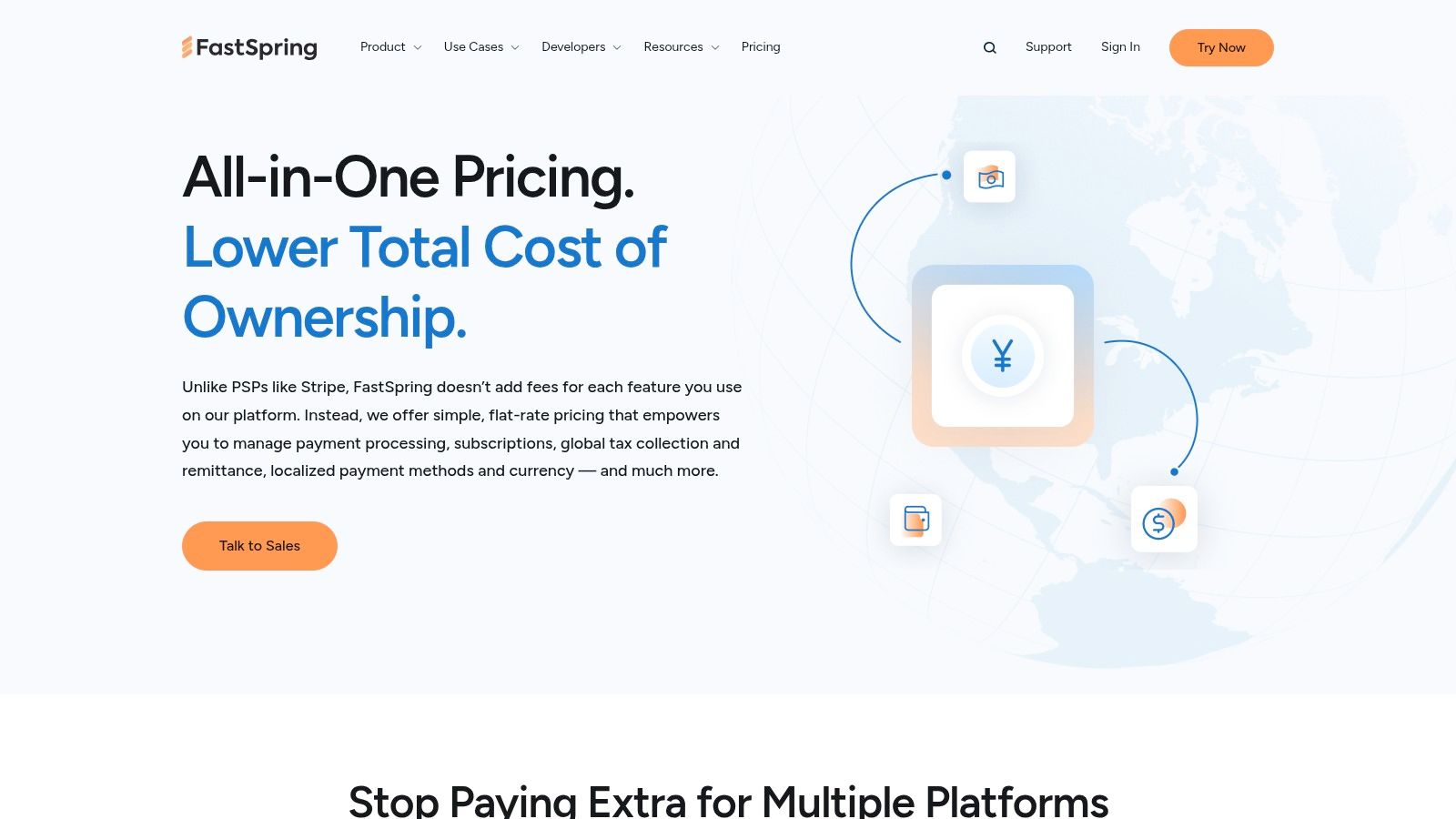
A common FastSpring buyer is a SaaS team that has already outgrown the "Stripe plus a few plugins" phase. Tax registration is getting messy, checkout needs to work across regions, and finance wants fewer edge cases. FastSpring tends to enter the conversation at that point because it has been serving software sellers for a long time and it is built around digital commerce rather than general retail.
That history matters. Mature MoR platforms usually have fewer surprises in areas founders only notice after launch, such as localized payments, renewals, invoicing, and exception handling when a transaction does not fit the happy path.
FastSpring’s core appeal is operational consolidation. It gives software companies one system for checkout, subscription billing, tax handling, and cross-border selling. For a team that wants to stop stitching together payment processing, tax tooling, and billing logic, that can remove a amount of overhead.
It is also a practical fit if recurring revenue is only part of your model. FastSpring has long been used by companies that sell subscriptions, one-time licenses, and downloadable products through the same commerce stack. That is a different buying case from SaaS teams that only need a clean monthly subscription flow.
A few areas where FastSpring usually stands out:
Built for software and digital products: The product shape matches how many SaaS and software vendors sell.
Localized checkout options: Helpful if conversion drops when every buyer sees the same payment experience.
Merchant-of-record coverage: Payments, indirect tax, and compliance sit with the provider instead of your internal team.
Support for mixed revenue models: Useful if you sell subscriptions alongside transactional or license-based offers.
There are trade-offs, and they are the usual ones with an established all-in-one platform.
Commercial terms are not self-serve, so evaluation takes a sales process. The product can also feel heavier than newer tools that target very small SaaS teams first. And once FastSpring owns checkout, billing flows, and parts of the customer lifecycle, changing providers later becomes a migration project, not a weekend task.
Dunning is one example. If failed-payment recovery matters to your retention model, review exactly how FastSpring handles retries, customer communication, and recovery workflows against your own process for managing dunning in SaaS billing.
The bigger strategic question is settlement. FastSpring is a conventional MoR choice. It helps you offload tax and commerce operations through traditional payment rails. If your finance team also cares about how fast revenue becomes usable cash across countries, compare that model against flexible settlement options such as Suby, which pays you out to your bank account or in stablecoins (USDC, EURC) to your wallet. That is less about who covers VAT and more about payout speed, treasury friction, and how many banking steps sit between a sale and working capital.
Best fit
FastSpring fits software companies that want a seasoned MoR with broad digital commerce support and are comfortable buying into a fuller platform model.
It is a weaker fit for businesses selling physical goods, which should instead review the best merchant of record for e commerce, along with highly custom contract billing, or teams that rank payout flexibility and global cash movement above traditional MoR convenience.
Website: FastSpring pricing
4. Lemon Squeezy

A common early SaaS scenario looks like this. You want to start charging globally this week, you do not want to register for VAT in a stack of countries, and you definitely do not want billing operations to become a second product. Lemon Squeezy gets attention because it removes a lot of that setup burden without forcing a long implementation cycle.
It is built for digital products first, and that focus shows. Checkout is straightforward, subscription setup is lighter than older commerce platforms, and the product generally makes sense to a founder or small ops team without much translation.
Pricing simplicity is part of the appeal. Lemon Squeezy presents a flat-fee model and keeps the buying decision easy to understand. That matters at the early stage, because unclear payment costs can turn into margin surprises later.
Where it tends to fit well:
Small SaaS teams and indie founders: Faster setup, less operational overhead, and fewer billing decisions to make up front.
Recurring and usage-based pricing: A practical fit if your plans are not just one monthly subscription.
Software sales with licensing needs: Useful if license keys or product access controls still matter in your flow.
Teams that prefer hosted checkout: Good for getting live quickly without building and maintaining a custom billing frontend.
Lemon Squeezy also covers the unglamorous parts that still affect retention. Failed payments, customer self-serve flows, and renewal recovery all matter once you have a subscriber base. If you want to evaluate that side properly, review how dunning and failed-payment recovery work in SaaS billing, then compare Lemon Squeezy's retry logic and customer comms against your own retention model.
The trade-off is ceiling, not onboarding.
Once a SaaS business starts dealing with procurement-heavy B2B sales, invoicing exceptions, account hierarchies, or finance teams that want tighter control over reporting and payout operations, Lemon Squeezy can start to feel narrow. It solves the "get paid compliantly" problem well. It is less convincing when billing logic becomes part of the product and finance stack.
That is also where the broader MoR decision changes. A traditional provider like Lemon Squeezy reduces tax and compliance workload, but it still follows the usual settlement model. If your company operates across multiple countries and finance cares about how quickly revenue becomes usable cash, compare that with flexible settlement approaches such as Suby, which pays you out to your bank account or in stablecoins (USDC, EURC) to your wallet. The core difference is not only who handles VAT. It is also payout speed, treasury friction, and how many banking steps sit between a successful charge and working capital.
Best fit
Lemon Squeezy fits early-stage SaaS companies that want a clean MoR setup, fast time to launch, and enough subscription infrastructure to avoid building billing in-house.
It is a weaker fit for larger SaaS teams with complex B2B requirements, unusual billing logic, or strong demands around payout flexibility and global cash movement.
Website: Lemon Squeezy pricing
5. Verifone 2Checkout Monetization Platform
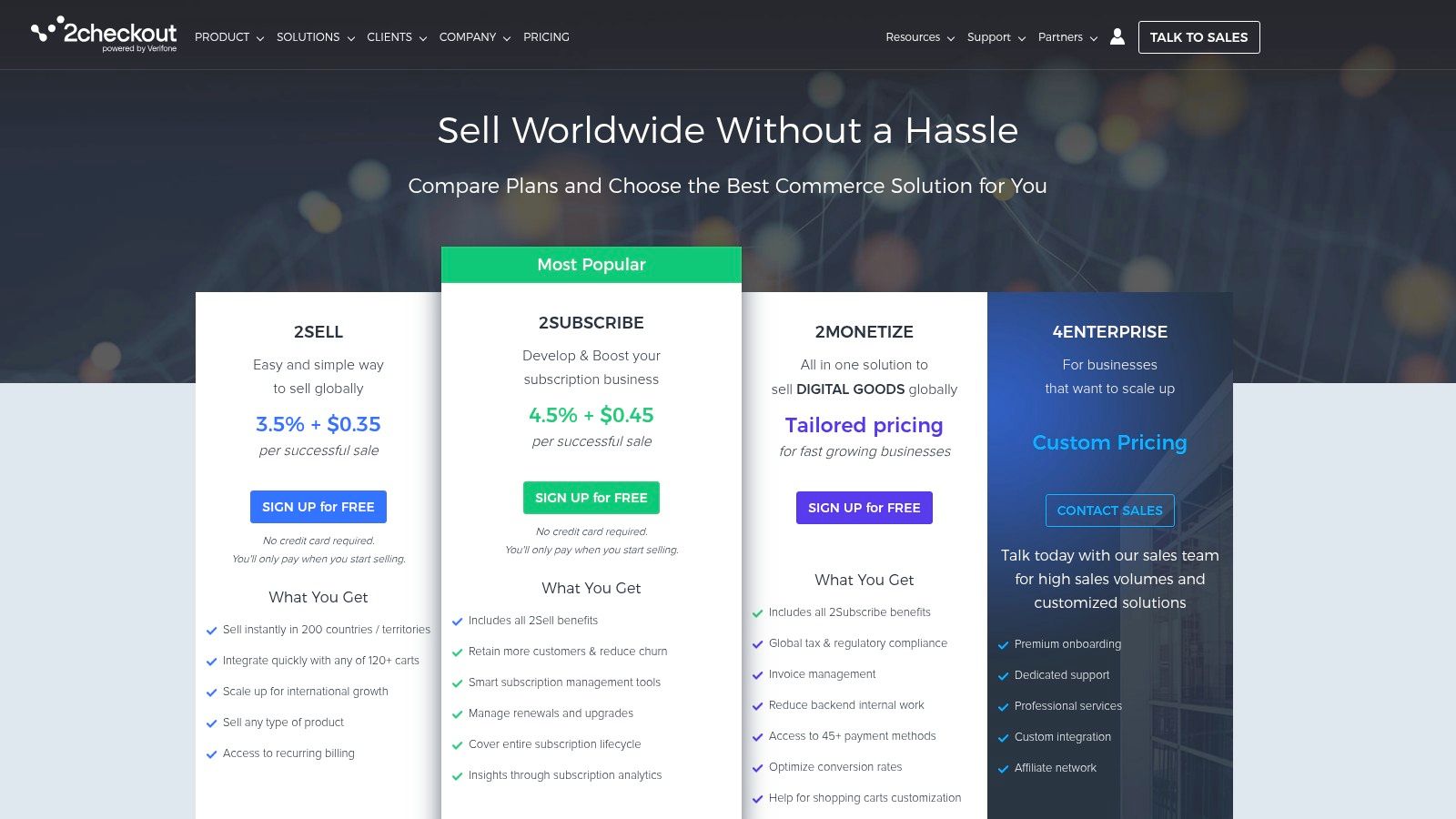
Verifone’s 2Checkout Monetization Platform is the broad-coverage choice. It is less about startup aesthetics and more about geographic reach, payment method breadth, and selling in lots of markets without rebuilding your commerce stack each time you expand.
Where Verifone makes sense
Some SaaS teams do not need the most elegant dashboard. They need customers in more countries to complete checkout.
That is where Verifone wins consideration. Its MoR-style packages are built around global digital sales, subscription management, and regulatory coverage. For companies with wide international reach, that matters more than a newer-feeling product.
The practical value here includes:
Localized payment support: Useful when card coverage alone is not enough in target markets.
Subscription tooling: Enough structure for recurring revenue operations.
Modular monetization options: Better for businesses that need more than one billing pattern.
Established global footprint: Helpful when expansion drives the buying decision.
This is the kind of platform companies choose when they are dealing with international complexity, not preparing for it.
Where smaller SaaS teams struggle
Verifone feels heavier than the newer SaaS-native options.
That is not necessarily bad. Complex products can look complex because they serve complex operations. But for a smaller company, that means longer evaluation cycles, more plan comparison, and increased time spent understanding packaging.
The practical downsides:
Pricing is harder to model upfront: Different plan structures can make comparison slower.
More enterprise feel: Not suitable if you want a self-serve setup and a fast go-live.
May be an excessive platform for your needs: Particularly if your billing model is relatively simple.
I would shortlist Verifone when market coverage is the top concern, particularly if your team knows that payment method localization will affect conversion.
Website: 2Checkout pricing
6. PayPro Global
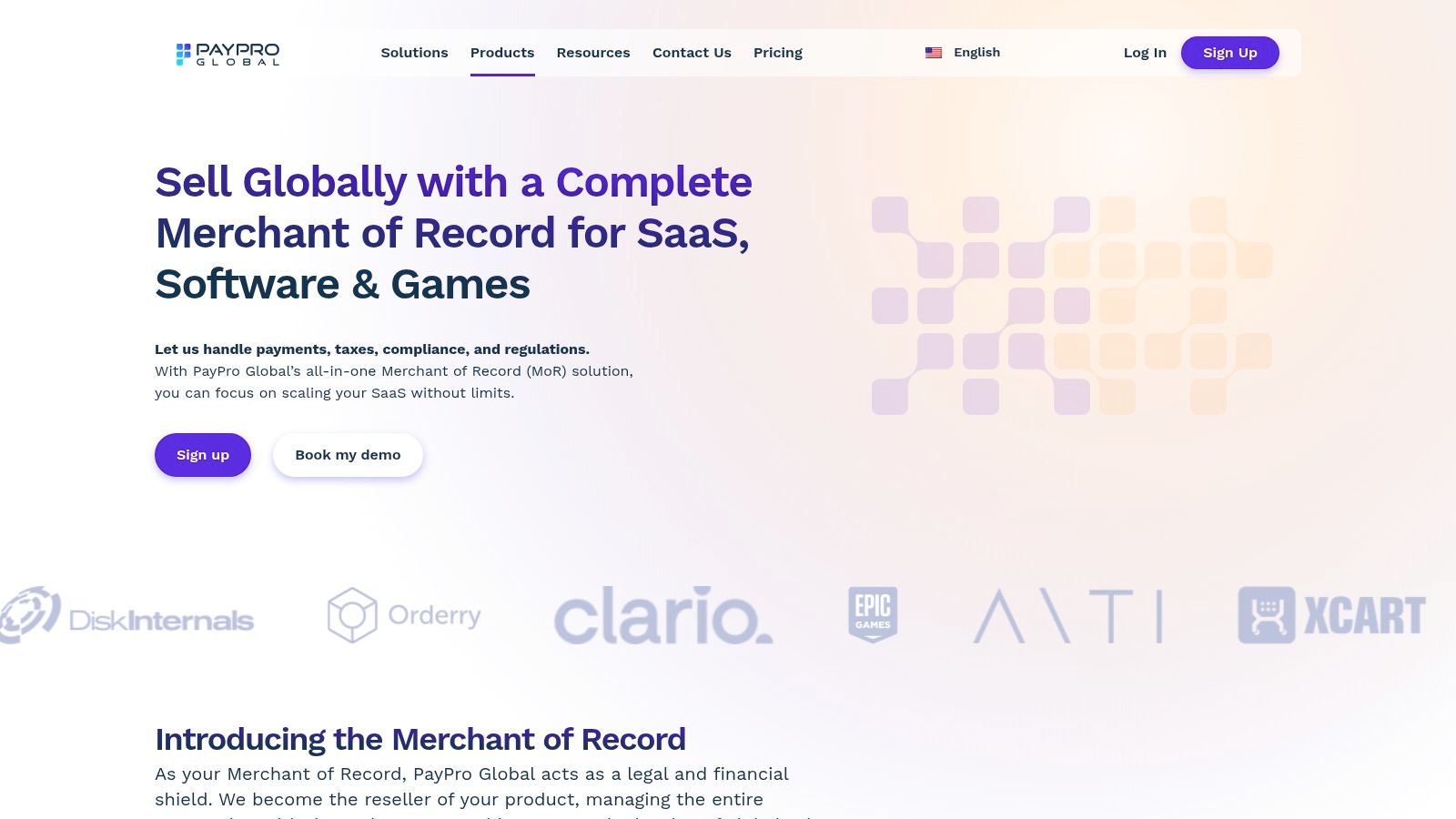
A common SaaS problem looks like this: sales are coming from more countries, finance wants cleaner tax handling, and the team does not want to build billing operations in-house. PayPro Global is one of the vendors that usually enters the conversation at that point.
It has been in the software and digital goods space for a long time, and that matters. Merchant of record vendors are not hard to find. The harder part is finding one that has already handled subscription billing, VAT, chargebacks, invoicing, and cross-border operations at enough scale to make your finance team less nervous.
Where PayPro Global fits
PayPro Global is aimed at SaaS, software, and digital product companies that want one provider to sit in the middle of payments, tax collection, compliance, and recurring billing. That positioning makes sense for teams that have outgrown basic payment processing but are not looking for a highly customized enterprise commerce project.
The appeal is operational clarity.
Instead of stitching together payment tools, tax software, and region-specific workarounds, you get a single vendor responsible for the merchant of record layer. For many companies, that shortens the path to international selling. It also reduces the number of places where revenue operations can break.
The practical advantages usually come down to:
Focused support for software sales: Better aligned with subscription businesses than broad eCommerce platforms built for many product types.
Built-in tax and compliance handling: Helpful if your team wants less direct exposure to sales tax and VAT administration.
Recurring billing and invoicing support: Important for SaaS companies selling annual plans, renewals, or B2B contracts.
Cross-border selling coverage: Useful if growth is coming from markets outside your home region.
The trade-offs to check closely
PayPro Global can be a sensible middle option, but I would not treat it as interchangeable with newer SaaS-native platforms or stablecoin-native models such as Suby.
The difference is not just feature lists. It is operating model. Traditional MoRs solve the legal seller, tax, and payment layer well. The next question is how quickly you get paid, in what currencies, and how much operational friction finance carries after the sale. If cash flow speed and settlement flexibility matter as much as compliance coverage, that deserves direct evaluation during the buying process.
A useful review usually focuses on four areas:
Workflow fit: Confirm your actual pricing structure, invoicing rules, discounts, and renewal logic.
Subscription migration: Ask how active subscriptions are moved and what customer disruption to expect.
Reporting depth: Finance, support, and product teams need reporting that is usable, not just available.
Payout mechanics: Check timing, supported currencies, and how funds move into your operating accounts.
PayPro Global is often strongest for teams that want a proven merchant of record setup without stepping into a heavier enterprise implementation. That said, if your priority is faster access to funds and simpler global treasury operations, compare its payout model against alternatives before you sign.
Website: PayPro Global Merchant of Record
7. Nexway
Nexway is the enterprise operator on this list that many smaller teams will overlook, and many larger teams should not.
Where Nexway fits
Nexway is aimed at companies that need a configurable 360° eCommerce platform around digital products and SaaS. If your environment includes complex workflows, localization requirements, multiple regions, and stakeholder-heavy implementations, that orientation is a positive.
It is less about quick self-serve launch and more for enterprise-grade deployment.
The strong points include:
Configurable workflows: Better suited to teams that need process tailoring.
Localization support: Important when checkout and customer experience differ by market.
Broad digital commerce coverage: Useful for companies selling internationally at scale.
Enterprise service model: Helpful if procurement, legal, finance, and operations need confidence in the setup.
This is the kind of vendor larger organizations are comfortable buying.
Real-world trade-offs
The same enterprise posture that makes Nexway credible can slow things down.
Smaller SaaS teams do not want a consultative sales process. They want to know if the product works, what it costs, and how fast they can migrate. Nexway is not optimized for that style of buying.
The common drawbacks:
Pricing is not public: You will need direct engagement.
Heavier implementation feel: Fine for large businesses, frustrating for lean startups.
May be an excessive platform for your needs: Particularly if your billing model is relatively simple.
Nexway belongs in the conversation if your company has outgrown startup-first billing tools and needs a provider comfortable with complexity from day one.
Website: Nexway Merchant of Record
8. Fungies

Where Fungies.io stands out
Fungies.io focuses on digital-first businesses that want to launch and sell globally with limited development work. SaaS teams can use hosted checkout pages or embedded overlay checkouts, while game studios and creators can build branded web stores for software, games, DLCs, virtual items, templates, courses, plugins, and other digital products.
The practical advantages include:
Merchant of Record coverage: Fungies.io manages global tax calculation, collection, filing, and remittance.
No-code store builder: Businesses can launch branded digital storefronts without developing their own ecommerce infrastructure.
Global payment support: The platform supports more than 250 payment methods across over 150 countries, including markets where Stripe may not be available.
Subscription management: It supports recurring billing, customer portals, and discounts..
Flexible checkout options: Companies can choose between hosted checkout pages and embedded checkout experiences that match their branding.
This makes Fungies.io especially interesting for companies that want to move away from marketplaces and sell directly to customers. Game developers, for example, can create their own web stores instead of depending entirely on platforms that charge marketplace commissions.
Trade-offs founders should weigh
Fungies.io uses a transaction-based pricing model with no monthly fees or setup costs, which simplifies entry and early-stage usage. This model may be less cost-efficient for very high-volume businesses compared to fixed-fee platforms.
The main questions to check during evaluation are:
Whether all your priority countries and local payment methods are supported
How existing subscriptions and customer records would be migrated
Whether the available APIs and webhooks fit your provisioning workflows
How frequently payouts are processed and which settlement currencies are available
Whether the storefront tools provide enough control for your brand and product structure
Best fit
Fungies.io fits SaaS companies, AI businesses, indie game studios, and digital creators that want one platform for storefront creation, checkout, subscriptions, global payments, and tax compliance.
It is particularly useful for smaller teams that want to sell directly to customers but do not want to build and manage several separate commerce tools.
It may be less suitable for large enterprises with highly complex billing workflows or extensive integration requirements.
Website: Fungies.io
Top 8 Merchant-of-Record Comparison for SaaS
ProviderImplementation complexityResource requirementsExpected outcomesIdeal use casesKey advantagesSubyLow to Medium – paylinks, embeddable checkout, APIRequires crypto wallet management + moderate developer integrationFast USDC settlements, mixed card+crypto acceptance, reduced payout frictionInternational SaaS, creators, agencies, freelancers needing fast crypto settlementUSDC-native payouts, subscription + community integrations, predictable feesPaddleMedium – MoR integration and migrationLow internal tax/compliance effort; requires sales for pricingSimplified global compliance, subscription billing, retention analyticsSaaS/apps seeking an integrated subscription-first MoRAll-in-one MoR stack, ProfitWell analytics, mature subscription toolingFastSpringMedium – MoR with localization setupMinimal internal tax work; integration for checkout/localizationEnd-to-end tax/VAT remittance and localized checkoutDigital goods and SaaS sellers focused on international tax handlingFull tax/VAT handling, localized checkout and complianceLemon SqueezyLow – quick, low-code launchLow technical overhead; transparent public feesRapid go-to-market, usage-based billing and license managementIndie/SMB SaaS makers and digital creatorsTransparent pricing, fast setup, usage-based billing and licensesVerifone (2Checkout)High – enterprise-grade modular platformSignificant enterprise onboarding and configurationExtensive geographic/payment coverage and modular monetizationLarge businesses needing many payment methods and localesVery broad payment/currency support and tiered packagingPayPro GlobalMedium to High – MoR with compliance emphasisSales engagement; strong compliance/security requirementsStrong compliance, dispute handling and broad cross-border coverageSaaS, software, games requiring high compliance/securityPCI‑DSS L1 posture, wide payment methods and currency supportNexwayHigh – enterprise-focused configurable platformEnterprise scoping, configurable workflows and localizationScalable MoR with configurable workflows and localizationEnterprises needing complex workflows and large-scale localizationEnterprise-grade workflows, strong regional localization capabilities
Making Your Choice A Quick Migration Checklist
Choosing a Merchant of Record is not just a payments decision. It changes who carries liability, how your revenue operations work, what your customers see at checkout, and how much of your finance workload your team keeps in-house.
That is why the best merchant of record for saas depends less on feature lists and more on what kind of operational pain you are trying to remove.
If your top priority is handing off tax liability, VAT handling, and international compliance to a proven SaaS-focused platform, Paddle and FastSpring are two of the safest places to start. They are established, purpose-built for digital products, and familiar to teams that want one vendor to own many messy parts of global selling.
If you are a smaller SaaS company or an indie founder who wants a lighter setup, Lemon Squeezy is attractive because it lowers the friction to launch. It is easier to understand, faster to evaluate, and a good fit when your billing model is relatively straightforward.
If your company sells across a wide mix of markets and payment preferences, Verifone and PayPro Global become interesting. They are less about sleek startup positioning and more for broad operational coverage. That matters when local payment behavior and international selling complexity are affecting revenue.
If you are in a larger company with more stakeholders, Nexway makes sense, perhaps more than smaller teams expect. Enterprise procurement, localization requirements, and internal system complexity can make a consultative MoR provider a better fit.
Then there is Suby, which belongs in a different part of the decision tree.
Suby is the option to look at when tax and compliance matter, but payout simplicity also matters. It gives businesses an API that allows them to accept payments by card or crypto, and it offers native integrations with Discord and Telegram for subscriptions, paid access, and online communities. The core operational model is simple: users pay with cards, businesses receive USDC. If your team wants global checkout without relying on traditional payout rails and related delays, that can be an advantage.
Before you sign with any provider, run a practical migration review:
Verify pricing for your exact regions, volumes, and product type.
Confirm support for your target countries, currencies, and payment methods.
Review API docs, webhooks, and migration support before sales promises turn into implementation surprises.
Understand payout timing, settlement currency, and refund handling in detail.
Ask how disputes, chargebacks, and customer support escalations are managed.
Check what happens if you need to leave later, especially with active subscriptions and customer data.
The worst MoR choice is not the one with slightly higher fees. It is the one that looks fine in a comparison chart, then breaks when your billing gets more complex, your finance team needs cleaner reporting, or your expansion plan runs into local compliance issues.
Pick the provider that removes your current bottleneck, not the one with the nicest homepage.
Suby is a payment gateway and Merchant of Record. Your customers pay with card, bank transfer, Apple Pay, Google Pay, Klarna, and more, or stablecoins. You get paid out to your bank account, or directly in stablecoins (USDC, EURC) to your wallet, anywhere in the world, no bank account required. For a SaaS choosing a Merchant of Record, that means you hand off the seller-of-record, tax, and compliance burden while revenue becomes usable cash fast, without waiting on traditional payout rails.
