
Gaspard LEZIN
How to Sell Jewelry Online: Your 2026 Guide
Learn how to sell jewelry online with our step-by-step 2026 guide. Master product photography, pricing, marketing, & global payments.
You’ve probably reached the point where your jewelry looks ready to sell, but the online part still feels messy. The pieces are finished, your packaging is decent, and maybe you’ve even posted a few photos on Instagram or listed something on Etsy. But getting from “people like my work” to a store that produces steady orders is where most jewelry sellers get stuck.
That gap usually isn’t about talent. It’s about execution. Jewelry is one of the harder product categories to sell online because shoppers can’t hold the piece, test the clasp, feel the weight, or inspect the finish. They have to trust your photos, your descriptions, your pricing, and your checkout experience.
The upside is real. The global online jewelry market is projected to reach $105.6 billion in 2024, with 13.2% year-over-year growth, and it’s forecast to hit $166 billion by 2029 according to Oberlo’s online jewelry sales statistics. That tells you two things. Buyers are comfortable purchasing jewelry online, and the brands that present well can still win.
Table of Contents
Your Blueprint for a Thriving Online Jewelry Business
Choose online-first products, not just your personal favorites
Photograph for trust, not just beauty
Write descriptions that remove hesitation
Start with real costs, not instinct
Price for conversion and perceived value
Use search intent to shape your listings
Marketplace vs own storefront comparison
Why a hybrid model usually works better
Segment the catalog by channel
Where international sales quietly eat margin
What a smoother global payment setup looks like
Operations that protect your brand
Build traffic with search and useful content
Treat social as a sales channel, not a mood board
Use email and partnerships to extend demand
Do I need legal policies on my jewelry site?
How should I handle custom orders?
Should I make pieces to order or keep inventory?
How do I reduce returns?
Your Blueprint for a Thriving Online Jewelry Business
A lot of jewelers begin the same way. They make strong pieces, get compliments in person, sell a little through friends or local markets, then open an online shop and expect the same bestsellers to carry over. They usually don’t. Online, the product has to do more work. It has to catch attention in a thumbnail, survive comparison shopping, and justify its price without a sales associate standing beside it.
That’s why selling jewelry online needs a system, not just a storefront.

The businesses that last usually get five things right early:
They choose pieces that translate well online. Some designs look striking in person but photograph flat.
They build clean product assets. Good photos and precise descriptions reduce doubt.
They price with discipline. Jewelry margins can disappear fast if you ignore fees, returns, packaging, and paid acquisition.
They choose channels strategically. A marketplace can help with discovery, but your own store gives you control.
They fix payments and operations before scaling. Cross-border sales create friction fast if your payout flow is clunky.
Selling jewelry online gets easier when every product page answers the same silent question: “Can I trust this enough to buy it without touching it?”
If you want a useful outside perspective on the basics, this actionable guide to selling jewelry online is a good companion read. It’s especially helpful if you’re still deciding how broad or narrow your initial catalog should be.
The practical path is straightforward. Start with the pieces most likely to convert online. Present them like premium products. Price them with real numbers behind the scenes. Put them where the right buyers already browse. Then make sure the money movement and post-purchase experience don’t create headaches later.
Preparing Your Jewelry for the Digital Showcase
The online store only performs as well as the assets behind it. If your photos are weak, your descriptions are vague, or your first catalog is full of pieces that only make sense in person, everything downstream gets harder. Ads become expensive, conversion drops, and customer questions pile up.
The first fix isn’t more marketing. It’s better presentation.
Choose online-first products, not just your personal favorites
Not every strong product in a physical setting becomes a strong product online. Some rings look incredible under a showroom light but lose detail in a standard product photo. Some delicate pieces feel special in hand but look too small or too simple on a category page.
Start with a small launch assortment and screen each SKU hard.
Use this checklist:
Visual clarity: Can the piece read at thumbnail size?
Value communication: Will a shopper understand the material, craftsmanship, or design story quickly?
Shipping simplicity: Is it sturdy enough to travel without creating support issues?
Low confusion risk: Does the sizing, scale, or finish create fewer returns?
Gift potential: Pieces bought as gifts often perform well because the purchase trigger is already strong.
A common mistake is uploading the full catalog immediately. A tighter launch is easier to photograph, easier to merchandise, and easier to test.
Practical rule: Your first online collection should be the easiest set of products to explain, photograph, size, and ship. Not the widest set.
Photograph for trust, not just beauty
Jewelry photography fails when it chases “artsy” before it covers the basics. Buyers need to see shape, texture, scale, finish, clasp details, stone setting, and how the piece sits when worn.
A simple setup can still look premium:
Use soft, directional light. Window light works if it’s indirect. If not, use two diffused lights.
Keep the background quiet. White, warm gray, stone, linen, or matte acrylic usually work.
Stabilize the camera. A tripod matters more than expensive gear.
Shoot multiple angles. Front, side, back, clasp, close-up, and worn shot.
Show scale clearly. On-ear, on-neck, on-hand, or beside a familiar reference.
Edit consistently. Correct exposure and color, but don’t over-retouch the metal or stones.
If you’re working with a limited budget, it’s worth reviewing some AI product photography alternatives. They can help with background cleanup and scene generation, but they work best when the original image is already sharp and honest.
A short visual walkthrough helps here:
Write descriptions that remove hesitation
A jewelry description should do more than describe. It should answer the exact concerns that stop the sale.
That means every product page needs two layers. The first is emotional. The second is factual.
Emotional layer
Who is this piece for?
When would they wear it?
What makes it feel different from similar pieces?
Factual layer
Metal type
Stone type
Dimensions
Finish
Weight, if relevant to the buying decision
Closure or backing
Sizing guidance
Care instructions
Here’s the difference in practice.
Weak description: “Elegant gold-plated earrings perfect for any occasion.”
Stronger description: “Teardrop earrings with a warm gold finish and lightweight profile designed for all-day wear. The curved silhouette gives movement without feeling oversized, which makes them easy to dress up for events or wear with a simple knit and jeans.”
Then follow with the specifics. Buyers need both.
A few rules improve most listings fast:
Lead with the product type and key attribute. Don’t hide what it is.
Use plain language for materials. Don’t make shoppers decode your wording.
Address known objections directly. If a necklace is delicate, say that. If a ring runs snug, say that.
Avoid empty luxury language. “Stunning,” “timeless,” and “beautiful” don’t carry the sale on their own.
When people ask fewer clarifying questions before buying, your description is doing its job.
Pricing Your Pieces and Optimizing for Search
Pricing is where many jewelry businesses subtly damage themselves. Some set prices by copying nearby competitors. Others use a simple markup and stop there. Neither approach is enough if you want a healthy online business.
Jewelry e-commerce has a tighter margin for error because conversion is naturally lower. According to Immerss on luxury and jewelry e-commerce conversion, average conversion is 1.19% for luxury and jewelry e-commerce, compared with 3% to 4% for general retail. That means your listing, price, and presentation have to carry more weight per visitor.
Start with real costs, not instinct
Before you decide whether a ring should be priced at one number or another, calculate what it costs to sell.
That includes:
Materials: Metal, stones, findings, plating, packaging
Labor: Bench work, assembly, polishing, quality check
Overhead: Studio costs, software, website tools, photography, email tools
Selling costs: Marketplace fees, payment fees, ad spend, discounts, returns
Fulfillment: Shipping materials, labels, insurance, replacement risk
If you skip overhead and selling costs, your pricing looks profitable on paper and thin in reality.
A simple worksheet is enough at the start. Build it by SKU or by product family. Then review it every time your packaging, shipping, or acquisition costs change. If you're comparing processor costs as part of that exercise, this breakdown of https://www.suby.fi/post/what-are-stripe-fees is useful context because payment fees are often only one part of the full payout cost picture.
Price for conversion and perceived value
Low conversion changes the way you should think about price testing. You can’t assume that a lower price always helps, and you can’t assume that a higher price always signals quality. The right price is the one that fits your brand and still gives the buyer enough confidence to proceed.
In practice, I’ve seen three pricing mistakes come up again and again:
Underpricing to get traction. This attracts the wrong expectations and makes the piece look less credible.
Overpricing without proof. If the photography, materials detail, and brand presentation don’t support the number, shoppers leave.
Using one pricing logic across every channel. Marketplace buyers and branded-store buyers often respond differently to the same item.
If a price feels high, the page needs to work harder. Better close-ups, clearer material details, stronger styling, and tighter copy often matter as much as the number itself.
A better approach is to test deliberately. Adjust one underperforming SKU at a time. Change the price, not the whole store. Watch what happens along with image order, title clarity, and product-page edits. Jewelry shoppers don’t respond to price in isolation.
Use search intent to shape your listings
Search optimization for jewelry isn’t about stuffing keywords into titles. It’s about matching the phrases buyers use when they already know what they want.
The strongest jewelry keywords usually fall into a few buckets:
Keyword type | What the shopper likely wants |
|---|---|
Product-specific | A defined item such as a signet ring or pearl drop earrings |
Material-led | A piece in sterling silver, gold vermeil, or solid gold |
Occasion-led | Gifts, weddings, anniversaries, bridesmaid sets |
Style-led | Minimalist, vintage-inspired, chunky, dainty |
Problem-solving | Tarnish-resistant, hypoallergenic, adjustable |
A listing title should be readable first and optimized second. “Gold vermeil teardrop earrings, lightweight statement drop earrings” is better than a title packed with repeated variations.
Use the same logic in your product description, category page copy, and image alt text. Then support that with content on your site. Buying guides, care articles, and gift pages can capture high-intent search traffic that generic collection pages miss.
One more point matters here. Keywords also reveal price sensitivity. A shopper searching for “solid gold stacking ring” is not behaving like someone searching “cute ring gift under budget.” That difference should influence your copy, photography, and merchandising.
Choosing Your Online Sales Channels
Where you sell changes how you present the product, how much control you keep, and how much margin survives. This isn’t a choice between “easy” and “serious.” It’s a choice between different trade-offs.
Marketplaces are useful because they give you demand and built-in browsing behavior. Your own storefront matters because it gives you control over brand, customer relationship, and retention. Most jewelry businesses eventually need both, but not in the same way.
Marketplace vs own storefront comparison
Factor | Marketplace (e.g., Etsy) | Own Storefront (e.g., Shopify) |
|---|---|---|
Audience access | Built-in discovery from existing shoppers | You have to generate your own traffic |
Brand control | Limited layout and limited differentiation | Full control over design, story, and merchandising |
Trust transfer | Platform trust helps early conversion | You must build trust through presentation and policies |
Fee structure | Easier to start, but fees can compress margin | More control over economics, but more setup work |
Customer ownership | Limited access to customer relationship | Better control over email capture and repeat purchase strategy |
Scalability | Good for testing and discovery | Better for long-term brand building |
SEO flexibility | Constrained by platform rules | Stronger control over category pages, content, and site structure |
Why a hybrid model usually works better
The businesses that scale well rarely rely on one channel forever. They use marketplaces for visibility, then push brand-building into their own store where they control merchandising, bundles, email capture, and post-purchase experience.
That matters even more in jewelry because audience behavior changes by platform. According to Valigara’s analysis of mistakes when selling jewelry online, successful jewelry brands often use distinct product catalogs across different sales channels, with lifestyle-driven presentation on social platforms and more keyword-optimized, specification-heavy listings on marketplaces.
That’s the part many sellers miss. Multi-channel doesn’t mean copy-pasting the same listing everywhere.
Segment the catalog by channel
Think in terms of channel fit.
Social platforms: Strong visual stories, gifting angles, lifestyle styling, new drops
Marketplaces: Clear specs, searchable titles, proven sellers, giftable products, simpler sizing
Own store: Full collections, higher-ticket pieces, bundles, custom work, brand story, education
A practical starting point looks like this:
Launch a few proven products on a marketplace.
Build your branded store around your full identity.
Send social traffic to the branded store when the story matters.
Keep channel-specific photos and copy, even for the same SKU.
A marketplace can help people find you. It won’t build your brand for you.
If you’re early, start where friction is lowest. If you’re already getting traction, start separating discovery from brand ownership. That shift usually marks the difference between a side project and a real online jewelry business.
Setting Up Global Payments and Smooth Operations
The first international orders feel exciting. Then the practical issues appear. A customer in one country wants to pay in a familiar way, your platform settles later than expected, conversion into your home currency eats margin, and support questions start landing about shipping timelines, taxes, and returns.
For many jewelry sellers, it becomes apparent that the store was the easy part.
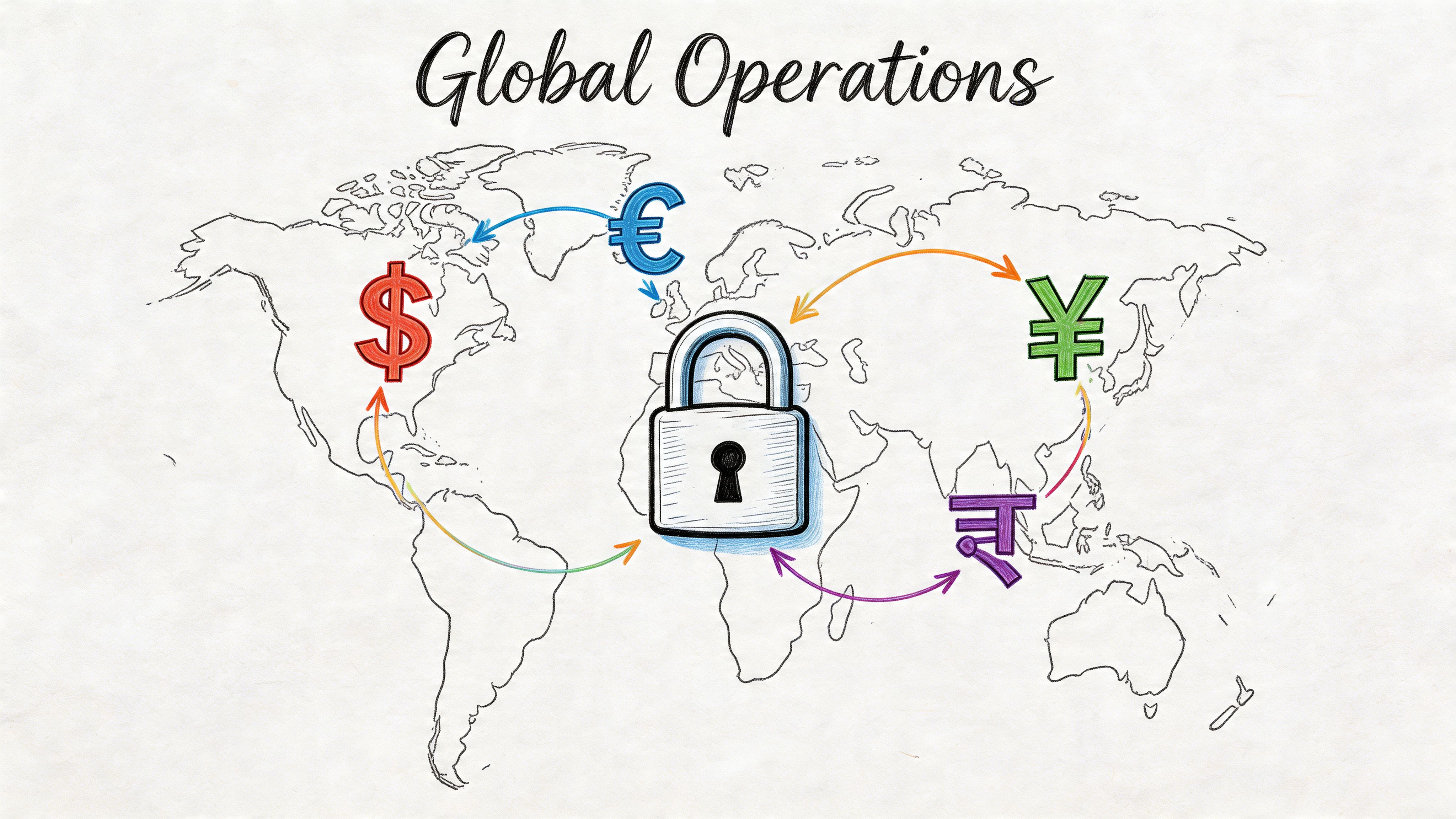
Where international sales quietly eat margin
Cross-border jewelry sales bring real demand, but they also expose weak payment infrastructure fast. The generic guides on how to sell jewelry online usually spend pages on Etsy setup and almost nothing on payout mechanics. That’s a mistake, because payment friction directly changes your usable revenue.
Recent reporting cited in this cross-border payments discussion notes that 62% of small merchants report losing 5% to 15% of revenue to foreign exchange spreads and settlement delays with traditional processors in cross-border e-commerce, and that direct USDC settlements can turn funds into spendable balance in minutes instead of weeks. If you sell internationally, that operational difference matters.
Those losses show up in places sellers often fail to model:
FX conversion spread: The exchange rate is worse than expected.
Delayed settlement: Cash arrives later, which slows inventory restocks and ad spend.
Payout unpredictability: You can’t forecast working capital cleanly.
Stacked operational cost: Refunds, disputes, and support become harder when payment flows aren’t straightforward.
If you’ve only sold domestically, these issues can feel abstract. They stop feeling abstract when a profitable order turns mediocre after conversion and payout friction. The same settlement problem shows up for anyone going global, which is why founders learning to sell software as a service obsess over payout mechanics as much as jewelry sellers should.
What a smoother global payment setup looks like
For a global jewelry business, the cleaner model is simple. Let customers pay the way they already expect to pay, and receive revenue in a predictable settlement asset without relying on slow banking rails.
That’s why more merchants are looking at setups where buyers pay by card and the business receives USDC. It reduces the mismatch between customer preference and merchant settlement needs.
What matters operationally is:
Familiar checkout for the buyer
Predictable settlement for the merchant
Fewer banking delays
Less dependence on opaque FX conversion
A setup you can embed or connect through an API
If you’re reviewing ways to handle cross-border revenue, this guide on https://www.suby.fi/post/how-to-accept-international-payments covers the main practical issues to look at before you commit to a payment stack.
For merchants selling fine jewelry, custom work, or international gift orders, this isn’t a niche concern. It affects cash flow, stock planning, and how confidently you can expand beyond your home market.
International growth gets expensive fast when your checkout works but your payouts don’t.
Operations that protect your brand
Payments are one part of the system. Fulfillment and policy design matter just as much in jewelry because the product is small, valuable, and easy to dispute if your process is sloppy.
A reliable operating baseline includes:
Shipping
Use plain outer packaging.
Add internal protection so the piece doesn’t shift.
Use tracked delivery.
Require signature on higher-risk orders.
Keep shipment notifications clear and proactive.
Insurance
Insure higher-value shipments based on the item and destination risk.
Keep records of product condition before dispatch.
Photograph custom or high-value orders before sealing the parcel.
Returns
Write a return policy that is generous enough to build trust but specific enough to prevent confusion.
Separate rules for custom work, resized items, and made-to-order pieces.
Explain condition requirements clearly.
Legal documents
Publish terms and conditions.
Publish a privacy policy.
Publish shipping and returns policies in plain language.
Make care instructions easy to find.
Tax and customs
Be clear about what the buyer may owe on international orders.
Don’t surprise customers after checkout.
Keep product declarations accurate and consistent.
The stores that run smoothly are rarely the ones with the fanciest design. They’re the ones where each post-purchase step feels controlled, documented, and easy to explain.
Marketing Your Online Jewelry Store
Good jewelry doesn’t market itself. It needs repeated exposure, clear positioning, and enough trust signals that a buyer feels comfortable ordering something personal and often gift-related from a screen.
The strongest marketing mix for jewelry usually combines search, social, email, and selective partnerships. Each channel does a different job.
Build traffic with search and useful content
Search traffic is valuable because it catches buyers with existing intent. They’re already looking for something. Your job is to be the brand that answers the query cleanly.
Useful content for jewelry stores usually falls into a few practical formats:
Gift guides: By occasion, recipient, style, or budget framing
Care content: Cleaning, storage, wear guidance, plating expectations
Education pages: Material differences, sizing help, finish comparisons
Style pages: How to stack rings, layer necklaces, or choose bridal accessories
The key is to make the content transactional enough to support a sale, not just chase traffic. A guide on “how to choose everyday earrings” should naturally lead into your category pages and bestsellers. Some jewelers even package that expertise into a small info product business, selling styling guides alongside the pieces themselves.
Treat social as a sales channel, not a mood board
Jewelry performs well on visual platforms for obvious reasons, but many brands still post like magazines instead of retailers. Nice imagery helps, but content should also move people toward a product.
For jewelry, social isn’t optional. According to Digital Commerce 360’s jewelry ecommerce statistics, 35% of online jewelry sales in the U.S. originate from social media ads, and nearly 50% of online jewelry purchases come from shoppers aged 34 or younger. That audience expects to discover products visually and buy digitally.
A practical social mix usually includes:
Product-first posts: Clear close-ups, short wear clips, styling angles
Founder or studio content: Process, materials, packing orders, sketches
Customer proof: Reposts, reviews, wear photos, gifting moments
Timed campaigns: Holiday, wedding season, graduations, anniversaries
What usually works better than generic “brand awareness” content is simple merchandising. Show the piece. Show it on a person. Show how it moves. Show why it’s worth the price.
The best jewelry content answers one buying question at a time. How it looks, how it fits, how it layers, or why it makes a good gift.
Use email and partnerships to extend demand
Email still matters because jewelry purchases often take time. People browse, compare, wait for an occasion, and come back later. If you don’t capture that interest, you end up paying again to reacquire the same person.
A strong basic flow includes:
Welcome email with your brand point of view and bestselling pieces
Browse or cart follow-up with the exact products viewed
Post-purchase sequence with care tips and related products
Seasonal campaigns tied to gifting moments and launches
Partnerships can help too, especially if they’re tightly aligned. Look for creators, stylists, bridal accounts, or niche communities where the audience already buys accessories. Don’t chase follower counts alone. Relevance beats reach in this category.
If you want a useful model for structured partner incentives, this overview of https://www.suby.fi/post/affiliate-program-saas is worth reading. The mechanics are SaaS-oriented, but the underlying affiliate logic applies well when you want to reward trusted promoters without building a messy manual process.
The stores that win on marketing usually repeat the same core message across channels. Same aesthetic. Same promise. Same reason to buy. That consistency matters more than being everywhere.
Frequently Asked Questions
Do I need legal policies on my jewelry site?
Yes. At minimum, publish clear terms and conditions, a privacy policy, a shipping policy, and a return policy. If you sell custom pieces, add a specific custom-order policy so buyers understand revision limits, production time, and whether deposits are refundable.
How should I handle custom orders?
Use a documented intake process. Confirm materials, sizing, finish, timeline, and approval steps in writing before production starts. Custom work creates the most confusion when expectations live in DMs instead of a formal order summary.
Should I make pieces to order or keep inventory?
Both models can work. Made-to-order reduces dead stock and is often easier for custom or handcrafted brands. Ready inventory gives faster fulfillment and usually supports gifting better. Many sellers use a hybrid model, stocking proven styles and making slower-moving or higher-complexity pieces on demand.
How do I reduce returns?
Most jewelry returns start with mismatch, not fraud. The buyer expected a larger stone, thicker chain, warmer tone, or different fit. Clear scale photos, honest descriptions, and sizing guidance usually prevent more returns than stricter policies do.
Suby is a payment gateway. Your customers pay with card, bank transfer, Apple Pay, Google Pay, Klarna, and more, or stablecoins. You get paid out to your bank account, or directly in stablecoins (USDC, EURC) to your wallet, anywhere in the world, no bank account required. For selling jewelry across borders, that means buyers check out in a familiar way while your international revenue settles predictably, without the FX spreads and payout delays that quietly eat jewelry margins.
